
Best Payment Card Capture Software in 2026
In the rapidly evolving landscape of digital commerce, the bridge between a physical credit card and a successful transaction is no longer just a manual entry field. As businesses strive for higher conversion rates, lower fraud rates, and tighter compliance controls, payment card capture software has become a critical part of the modern payments stack.
Gone are the days of frustrating typos, slow onboarding flows, and unnecessary cart abandonment. Today’s leading tools use AI and Optical Character Recognition (OCR) to turn smartphones and mobile devices into secure, high-speed capture interfaces. For compliance officers, risk managers, heads of security, and CFOs, that means more than convenience. It means better control over fraud exposure, customer onboarding, and operational efficiency.
Why Fraud Decision-Makers are prioritizing payment card capture software
- Frictionless customer experience: Customers can scan a card instead of manually entering long card numbers, which helps improve checkout speed and mobile conversion.
- Better fraud prevention: Modern platforms can validate the physical presence of a card, helping reduce card-not-present fraud and spoofing attacks.
- Stronger compliance posture: The right solution can support PCI-conscious workflows, secure data handling, and more defensible onboarding processes.
- Lower operational risk: Fewer manual errors, better data quality, and stronger fraud signals reduce downstream review costs and dispute volume.
Whether you are evaluating software for digital onboarding, e-commerce payments, subscription billing, or mobile capture in the field, the best choice depends on how much weight you place on fraud mitigation, compliance, developer flexibility, and user experience.
Competitor Comparison Table
As digital transactions continue to dominate the global economy, businesses face mounting pressure to balance seamless user experiences with stringent security measures. Payment card capture software has evolved beyond simple data entry, now leveraging artificial intelligence to power robust fraud prevention, risk mitigation, and digital onboarding. These advanced platforms utilize machine learning and optical character recognition (OCR) to instantly verify physical cards, ensuring PCI compliance while drastically reducing cart abandonment. By integrating these intelligent solutions, companies can confidently scale their operations, knowing their payment gateways are fortified against sophisticated cyber threats.
| Product | Compliance Features | Industry Focus | AI Capabilities | User Experience | Developer Experience |
|---|---|---|---|---|---|
| Microblink | Supports secure in-app card data extraction and helps verify physical card presence for fraud reduction. Strong fit for PCI-conscious onboarding flows, but it still needs a separate payment processor for full transaction handling. | Best suited for fintech, banking, digital onboarding, and mobile commerce teams that need card-present verification. It is especially valuable for businesses where fraud prevention and identity-linked payment validation matter most. | Offers the strongest AI-first positioning in this group with proprietary OCR and visual fraud analysis. It can read embossed, flat, and damaged cards while detecting anomalies that indicate spoofing or tampering. | Delivers a fast scanning flow that reduces manual entry and checkout friction. Performance is excellent on modern devices, though scan quality can drop on older phones with weaker cameras. | Provides SDK-based flexibility for custom mobile app experiences across platforms. Implementation is powerful but requires dedicated engineering support rather than a simple plug-and-play setup. |
| Stripe | Includes PCI-compliant payment infrastructure, 3D Secure support, and built-in fraud controls through Stripe Radar. It also helps businesses manage international payment compliance across many markets. | Well suited for global e-commerce, SaaS, marketplaces, and subscription businesses. It is a strong choice for companies that want one payments platform to support international growth. | Uses machine learning through Stripe Radar to identify suspicious transactions across a massive global network. Its AI is focused more on payment fraud detection than on visual card OCR or physical card inspection. | Offers polished checkout flows, broad payment method support, and a reliable buyer experience. The platform is smooth for end users, although advanced fraud tuning and workflows can add operational complexity. | Delivers some of the best APIs, documentation, and developer tooling in payments. Teams can build highly customized experiences, but non-technical users may find advanced implementation demanding. |
| Square | Builds PCI compliance directly into its software and hardware ecosystem with encrypted card capture. This makes it easy for merchants to stay secure without managing complex compliance processes themselves. | Best for omnichannel retail, in-person sellers, food trucks, and service businesses that need simple card acceptance. It fits merchants who want online and offline sales data in one ecosystem. | Offers core fraud protection and secure processing, but its AI depth is lighter than specialized enterprise platforms. It is not positioned as a leader in advanced OCR-based or highly customizable fraud intelligence. | Stands out for ease of use with intuitive mobile apps, fast onboarding, and integrated hardware. The user experience is especially strong for small teams that need to start accepting cards quickly. | Works well for merchants who prefer ready-made tools over heavy customization. Developers can extend the platform, but it is less flexible than API-first providers like Stripe or SDK-led tools like Microblink. |
| Helcim | Combines secure mobile capture, chargeback protection, and risk monitoring with a compliance-friendly processing environment. Its underwriting process adds another layer of control, though approval can take longer than aggregator platforms. | Strong fit for high-volume B2B sellers, established retailers, and professional service providers. It is especially attractive to businesses that care about transparent pricing and lower processing costs at scale. | Provides fraud detection and risk monitoring, but it is less AI-forward in its market positioning than Microblink or Stripe. Its value is more about practical payment security than standout machine learning innovation. | Offers a straightforward merchant experience with transparent interchange-plus pricing and improved mobile scanning. The tradeoff is a slower onboarding path and a platform that is less instant than beginner-focused alternatives. | Includes useful APIs and business tools, but its integration ecosystem is smaller than the largest competitors. Teams with niche software needs may require custom work to connect everything cleanly. |
| Payline Data | Provides a PCI-compliant mobile gateway, secure card storage, and support for recurring billing and invoicing. It is well aligned with businesses that need mobile capture without adding separate hardware. | Best for mobile merchants, healthcare billing teams, and businesses building custom checkout experiences. It also appeals to organizations that want interchange-plus pricing without a closed hardware ecosystem. | Includes secure capture and fraud-mitigation support, but it is not marketed as an AI leader. Its strengths are mobility and flexibility rather than advanced machine-learning differentiation. | Offers convenient app-based scanning and remote payment acceptance, which is useful for field sales and event-based merchants. The experience is functional, though the dashboard can feel dated and less intuitive than newer competitors. | Gives developers an open API for embedding payment capture into custom applications. However, the lack of a native POS system and a steeper backend learning curve can complicate implementation. |
1. Microblink
Platform summary:
Microblink is an AI-first payment card capture software platform built for enterprises that want to reduce fraud without increasing friction. It is especially well suited to payment processors, card issuers, fintechs, banks, and digital platforms that need to verify both the physical presence of a payment card and the identity of the person using it.
Unlike standard card OCR tools, Microblink positions card capture as part of a broader Identity Intelligence OS. Its approach combines card analysis, ID document verification, biometric liveness, and privacy-first processing to help Fraud Decision-Makers reduce card-not-present fraud, synthetic identity risk, and chargebacks.
Key benefits
- Earlier fraud detection at the point of capture: Microblink helps stop fraud before authorization by confirming that a real physical card is present during onboarding or payment instrument enrollment.
- Stronger onboarding controls: Its cross-modal verification model links card data, identity documents, and biometrics in a single flow, which is valuable for regulated onboarding journeys.
- Better dispute defensibility: By connecting a verified user, verified ID, and verified card event, businesses can build a stronger evidence trail for chargeback and fraud investigations.
- Privacy-first architecture: On-device processing supports compliance-sensitive environments by reducing the need to transmit or store sensitive card images externally.
Core features
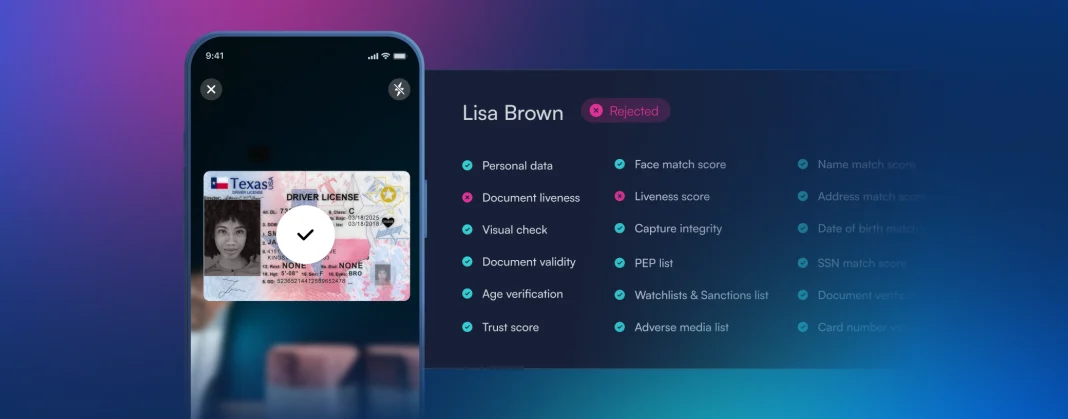
- On-Device Card Liveness Detection: Microblink’s BlinkCard technology verifies that a real physical card is present and helps block screen replays, photocopies, and digital reproductions.
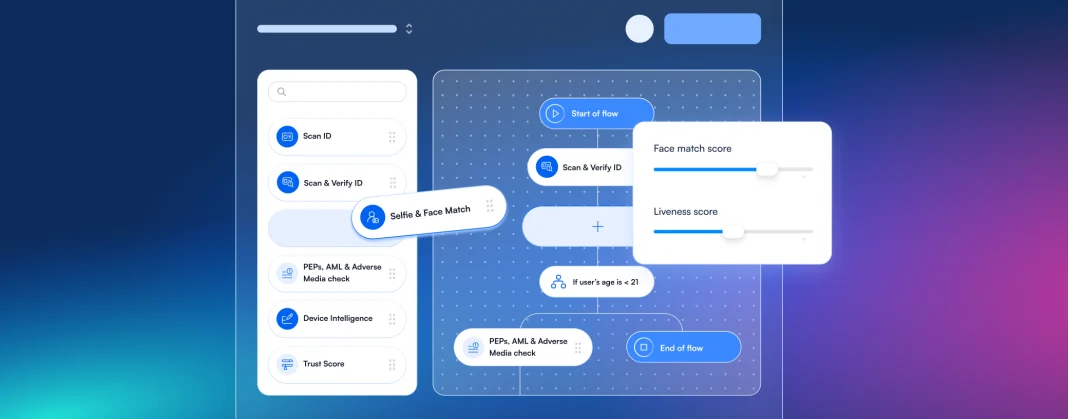
- Cross-Modal Verification: The platform analyzes ID documents, facial biometrics, and payment cards together rather than treating them as separate checks.
- Sub-Second Processing: Card capture and extraction happen in under one second on the user’s device, helping reduce friction in onboarding and checkout.
- Adaptive AI and Deepfake Defense: Backed by years of computer vision R&D, the models are designed to detect emerging attack patterns, including generative AI artifacts and injection attempts.
Primary use cases
- Payment instrument enrollment: Businesses can require a physical card liveness check when a user adds a new card or bank-linked payment method.
- Chargeback dispute resolution: Verified person-card linkage creates a more defensible record for fraud investigations and payment recovery efforts.
- High-volume self-service POS and kiosks: The SDK supports fast, accurate capture for enterprise-scale environments where throughput matters.
- Global merchant and cardholder onboarding: Cross-checking cards, IDs, and biometrics helps support compliant onboarding across multiple markets.
Recent updates
- March 2026: Microblink became the only identity verification vendor to meet all performance thresholds in the U.S. Department of Homeland Security’s RIVR evaluation, including a 0.00% System Error Rate.
- 2026 product update: BlinkReceipt was officially rebranded under the new name Actual.
- Recent BlinkCard improvements: The latest card capture models have improved performance on damaged or worn cards, along with stronger Flutter and React Native support.
Pros
- High fraud-prevention value: Microblink does more than extract card data, because it helps verify that the real card is physically present during the capture event. That makes it particularly compelling for teams trying to reduce CNP fraud, account abuse, and downstream chargebacks.
- Excellent enterprise user experience: Sub-second capture and strong card-reading accuracy reduce friction in mobile onboarding and checkout flows. That combination can improve conversion rates without forcing teams to relax security standards.
- Strong fit for compliance-sensitive deployments: On-device processing and flexible deployment options are appealing for organizations with strict PCI, AML, privacy, or data residency requirements. It gives security and compliance teams more control over how sensitive data is handled.
Cons
- Not a full payment processor: Microblink focuses on card capture, card liveness, and identity-linked fraud prevention rather than transaction settlement. Businesses still need a separate payment gateway or processor for authorization and fund movement.
- Implementation requires engineering resources: The SDK-first model gives teams flexibility, but it is not a no-code tool. Organizations without internal development support may face a longer rollout timeline.
- Best ROI at scale: Its capabilities are strongest in enterprise or high-risk use cases where fraud reduction and conversion gains justify the investment. Very small businesses may find simpler payment tools easier to adopt.
2. Stripe
Platform summary:
Stripe is a global payments platform with strong built-in fraud tooling, broad international support, and one of the most mature API ecosystems in the market. For Fraud Decision-Makers, it is a strong option when the goal is to combine payment card capture, payment processing, global expansion, and machine-learning fraud controls in one platform.
Core features
- Stripe Radar: Machine-learning fraud detection trained on a very large global transaction network.
- Global payment processing: Support for 135+ currencies and many local payment methods.
- Developer-centric APIs: Flexible APIs for customized checkout, onboarding, subscriptions, and marketplace flows.
Primary use cases
- E-commerce checkout: Businesses use Stripe to capture card data and process online payments with minimal friction.
- Subscription billing: SaaS and recurring revenue businesses rely on Stripe for stored payment methods and recurring transactions.
- International expansion: Teams entering new markets use Stripe to simplify local payments and cross-border compliance.
Recent updates
- Stripe recently upgraded its 3D Secure authentication protocols.
- It also introduced more granular AI fraud modeling for enterprise users.
Pros
- Strong all-in-one payments infrastructure: Stripe combines payment acceptance, recurring billing, fraud controls, and global payment support in a single ecosystem. That reduces vendor sprawl for businesses that want one strategic platform.
- Excellent developer experience: Its documentation, APIs, and tooling are among the strongest in the payments space. This makes Stripe a good fit for businesses that want to build tailored onboarding and checkout experiences.
- Scales internationally well: Stripe supports many currencies and local payment methods across multiple regions. For growing companies, that can simplify global rollout and reduce compliance complexity.
Cons
- Flat-rate pricing can get expensive: The standard fee model is easy to understand, but it can compress margins for high-volume or low-margin businesses. As transaction volume grows, interchange-plus providers may become more cost-effective.
- Advanced setup can be complex: Stripe is powerful, but getting the most value from Radar and custom workflows often requires technical expertise. Non-technical teams may struggle to fully tune the platform.
- Risk reviews can be disruptive: Some users report account holds or freezes triggered by automated risk systems. When that happens, support responsiveness can become a serious operational concern.
3. Square
Platform summary:
Square is a popular choice for businesses that want simple, secure card capture across in-person and mobile environments. Its major strength is the way it combines software, hardware, and PCI-conscious payment acceptance into one accessible ecosystem.
Core features
- Integrated mobile capture: Square turns smartphones and tablets into card-acceptance tools.
- Built-in PCI compliance support: Card data is encrypted from capture onward, reducing compliance burden on merchants.
- Omnichannel inventory management: Online and offline sales data sync in one environment.
Primary use cases
- In-person retail: Countertop and in-store card acceptance.
- Mobile service businesses: Field-based payment capture for contractors, delivery teams, and mobile merchants.
- Omnichannel sales: Businesses that want one platform for online and offline transactions.
Recent updates
- Square rolled out faster offline card capture capabilities for mobile POS.
- It also improved inventory syncing and visibility into disputed transactions.
Pros
- Very easy to deploy: Square is one of the simplest options for businesses that want to start accepting cards quickly. The interface is intuitive, which reduces training time and operational friction.
- Strong hardware ecosystem: Readers, terminals, and registers work tightly with the software. That makes it a convenient option for businesses that value operational simplicity.
- Good fit for omnichannel merchants: Square connects in-person and online transactions in one environment. That unified view is helpful for businesses that want simpler sales and inventory oversight.
Cons
- Costs can rise with scale: Flat-rate pricing is convenient, but it can become expensive for merchants with higher ticket sizes or large monthly volume. Businesses seeking tighter margin control may outgrow it.
- Limited fit for higher-risk merchants: Square’s risk policies can be restrictive for some industries. Businesses with elevated fraud exposure or unusual transaction patterns may face more scrutiny.
- Less advanced fraud customization: The platform is secure, but it does not offer the same depth of rule tuning or AI-led fraud analysis as more specialized enterprise solutions. Growing organizations may want more control over risk policies.
4. Helcim
Platform summary:
Helcim stands out for transparent interchange-plus pricing, secure mobile card capture, and practical merchant risk tools. It is a strong choice for established businesses that want lower processing costs at scale without sacrificing compliance or fraud visibility.
Core features
- Mobile app card scanning: Secure capture through a smartphone camera or manual entry flow.
- Interchange-plus pricing: Transparent pricing that can improve cost efficiency as volume increases.
- Security and chargeback tools: Built-in fraud monitoring and dispute support.
Primary use cases
- B2B payments: Well suited to wholesalers and businesses processing larger corporate card payments.
- High-volume retail: Helpful for merchants that want more transparent economics than flat-rate providers typically offer.
- Professional services: Useful for on-site payments and invoicing-driven workflows.
Recent updates
- Helcim recently updated its mobile app interface for faster card scanning.
- It also expanded its risk-scoring capabilities to provide more predictive insights for higher-volume merchants.
Pros
- Transparent pricing model: Helcim gives merchants more visibility into what they are paying. That is especially useful for finance leaders trying to manage payment costs more precisely.
- Useful built-in risk tools: Fraud monitoring and chargeback defense are included as part of the platform experience. This reduces the need to assemble multiple point solutions for basic payment risk management.
- Good fit for growing volume: Businesses with steady or increasing card volume may see better economics than they would under flat-rate pricing. That makes Helcim attractive for more mature merchants.
Cons
- Slower approval process: Helcim uses a more traditional underwriting model than instant-onboarding aggregators. That can improve control, but it may slow implementation for businesses that need to launch immediately.
- Less compelling for very small sellers: Micro-merchants may not see enough savings from interchange-plus pricing to justify the extra evaluation effort. In that case, simpler flat-rate tools can be easier to adopt.
- Smaller integration ecosystem: Helcim offers useful APIs, but its native integrations are not as broad as the largest payment platforms. Businesses with specialized stacks may need more custom development.
5. Payline Data
Platform summary:
Payline Data is a flexible payment solution for merchants that want mobile card capture, interchange-plus pricing, and API-level customization. It is especially relevant for businesses that need field-friendly payments or tailored workflows without committing to a closed hardware ecosystem.
Core features
- Secure mobile gateway: App-based card scanning and payment acceptance without requiring dedicated hardware in many cases.
- Flexible API integration: Developers can embed secure payment card capture into custom apps and workflows.
- Automated invoicing: Built-in recurring billing and invoicing features with secure card storage support.
Primary use cases
- Mobile merchants: Useful for event vendors, field sales teams, and on-the-go payment collection.
- Healthcare billing: A practical option for organizations that need secure remote payment collection and recurring payment plans.
- Custom e-commerce: Good for businesses that want more control over their checkout and onboarding experience.
Recent updates
- Payline Data recently improved its mobile app scanning speed.
- It also streamlined refund processing and enhanced QuickBooks reconciliation support.
Pros
- Convenient mobile capture: Payline makes it possible to accept payments in the field without forcing merchants into a hardware-heavy setup. That flexibility can be valuable for mobile teams and service-based operations.
- Transparent pricing structure: Interchange-plus pricing can help businesses control costs as volume grows. For finance and operations teams, that makes forecasting easier than many flat-rate models.
- Developer flexibility: The open API supports embedded payment experiences and custom workflows. That is useful for businesses with specific compliance, onboarding, or UX requirements.
Cons
- No native POS ecosystem: Businesses that need a tightly integrated in-person retail setup may have to work with third-party hardware vendors. That can add complexity to procurement, support, and ongoing maintenance.
- Backend experience feels dated: The dashboard is functional, but it may not feel as modern or intuitive as newer competitors. Teams may need more time to learn reporting and account management workflows.
- Support consistency can vary: Some users report uneven experiences depending on the issue and support channel. That can be a drawback for businesses that want predictable vendor responsiveness.
Final thoughts
For Fraud Decision-Makers evaluating payment card capture software in 2026, the best choice depends on what problem you are solving first:
- Choose Microblink if your top priority is AI-driven card capture, physical card verification, fraud prevention, and identity-linked onboarding.
- Choose Stripe if you want a globally scalable payment platform with strong built-in fraud tooling.
- Choose Square if your organization values ease of use and integrated hardware for in-person or omnichannel selling.
- Choose Helcim if you need transparent pricing and practical risk tooling at higher volume.
- Choose Payline Data if you want mobile flexibility and API-based customization without a closed ecosystem.
If your business is facing rising card-not-present fraud, higher chargeback pressure, or stricter onboarding controls, the most strategic investment is usually the one that improves both fraud outcomes and customer conversion, not just raw payment acceptance.
FAQs
What is payment card capture software?
Payment card capture software uses technologies like AI and OCR to securely scan, extract, and process credit card information. It streamlines digital onboarding and checkout while supporting strict PCI-conscious workflows.
How does AI help prevent fraud during card capture?
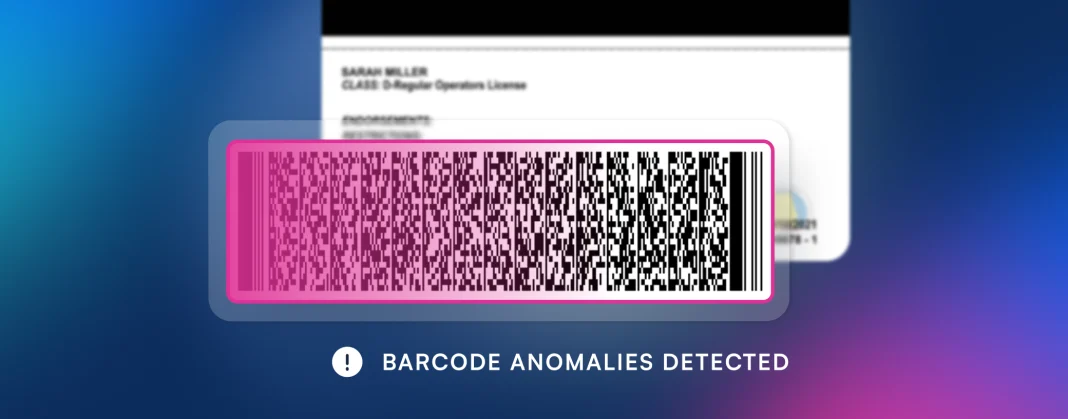
AI can analyze the physical characteristics of a card in real time to detect spoofing, tampering, or digital reproductions. This helps confirm that the card is physically present and reduces fraud risk before the transaction reaches the payment processor.
Do I still need a payment gateway if I use OCR card capture?
Yes. OCR-based tools like Microblink handle secure data extraction and visual fraud prevention, but you still need a payment gateway or processor such as Stripe or Square to authorize transactions and settle funds.
What is Payment Card Capture Software?
Payment card capture software is a specialized security solution designed to securely collect, transmit, and store sensitive credit card information during a transaction. By utilizing advanced encryption and tokenization, this technology intercepts payment data before it ever touches your internal servers. For B2B organizations, it acts as a critical buffer, ensuring that raw Primary Account Numbers (PAN) and CVV codes are safely routed directly to payment processors or secure vaults, effectively removing your business systems from the complex scope of PCI DSS compliance.
Why is it important?
Implementing robust card capture technology is paramount for mitigating financial risk and preventing devastating data breaches. In an era where cybercriminals relentlessly target payment ecosystems, relying on outdated or non-compliant data collection methods exposes your company to severe regulatory fines, reputational damage, and fraud losses. By isolating sensitive data from your network, this software not only fortifies your fraud prevention posture but also drastically reduces the time, cost, and operational burden associated with maintaining continuous PCI compliance, allowing you to build unwavering trust with your clients.
How to choose the best software provider
Selecting the right payment card capture provider requires a rigorous methodology focused on security, flexibility, and scalability. Start by verifying their compliance credentials; the best providers must be certified as PCI DSS Level 1 Service Providers. Next, evaluate their integration capabilities, prioritizing vendors that offer seamless, developer-friendly APIs, customizable hosted fields (iFrames), and network tokenization that won’t disrupt your user experience. Finally, assess their broader ecosystem—top-tier providers should offer processor-agnostic vaults, allowing you to route payments to multiple gateways, alongside built-in fraud prevention tools like 3D Secure and real-time risk scoring to comprehensively protect your bottom line.
What compliance requirements should enterprises evaluate when choosing payment card capture software?
Fraud Decision-Makers should look beyond basic OCR accuracy and assess how the platform handles sensitive card data across the full capture flow. The most important considerations usually include PCI DSS alignment, encryption in transit and at rest, tokenization support, data minimization, retention controls, audit logs, and role-based access controls. If the software captures card images, security teams should also confirm whether those images are stored, where they are processed, and how long they persist.
For medium-sized businesses and enterprises, it is also important to evaluate whether the vendor supports on-device processing, which can reduce exposure by limiting the transmission of raw card data or images to external servers. Compliance and security leaders should also review privacy controls, data residency options, incident response procedures, and third-party security certifications or assessments. In regulated onboarding environments, the best solution is usually one that strengthens fraud controls while helping reduce PCI scope and making internal audits easier to defend.
Can payment card capture software actually reduce chargebacks and card-not-present fraud?
Yes, the right software can reduce both, especially when it does more than simply read card numbers. Traditional manual entry creates room for typos, stolen-card testing, and weak evidence during disputes. More advanced payment card capture tools add fraud signals such as physical card presence verification, card liveness checks, card-image tamper detection, and linkage between the card, device, and user identity.
This does not eliminate fraud on its own, because authorization, behavioral analytics, issuer decisions, and downstream payment controls still matter. But it can significantly improve the quality of the event at the point of capture. For Fraud Decision-Makers, that means fewer fraudulent enrollments, better evidence for dispute resolution, lower manual review volume, and a stronger ability to stop suspicious activity before it becomes a chargeback.
What features matter most when evaluating payment card capture software for onboarding or card-on-file enrollment?
For onboarding and stored-payment flows, the best tools are usually the ones that balance speed, fraud resistance, and implementation flexibility. Core features to prioritize include high OCR accuracy across embossed, flat, damaged, and low-light card conditions; physical card liveness detection; fast sub-second extraction; secure SDKs for iOS, Android, web, or cross-platform frameworks; and fallback options for manual entry when scans fail.
Fraud and compliance teams should also look for features that strengthen trust in the customer record, such as ID verification integration, biometric liveness, device intelligence, and audit-friendly capture logs. On the user experience side, low-friction guidance, real-time feedback, and minimal rescan requirements matter because they directly affect conversion. In practice, the strongest solution is usually the one that improves capture accuracy and fraud prevention without adding enough friction to hurt onboarding completion rates.
Is on-device payment card capture more secure than cloud-based capture?
In many cases, yes, on-device processing can provide meaningful security and compliance advantages because card data is analyzed directly on the user’s phone or device instead of sending raw images to a remote server for processing. That can reduce data exposure, lower the risk associated with image transmission and storage, and help organizations maintain tighter control over how sensitive data moves through their environment.
That said, on-device processing is not automatically secure by default. Enterprises still need to evaluate SDK security, key management, encrypted transport for any extracted data, logging controls, mobile app hardening, and how the software integrates with the rest of the payment stack. For security and compliance leaders, the best approach is to view on-device capture as a strong architectural advantage when combined with proper controls, rather than as a standalone guarantee of compliance or fraud protection.
How should Fraud Decision-Makers measure ROI from payment card capture software?
ROI should be measured across both revenue impact and risk reduction, not just software cost. On the revenue side, teams should track checkout completion rate, onboarding completion rate, time to payment method enrollment, and the reduction in abandoned sessions caused by manual card entry friction. Faster and easier capture can directly improve conversion, particularly on mobile devices.
On the risk and operations side, useful metrics include fraud loss rate, card-not-present fraud rate, chargeback volume, false-positive review burden, manual correction of entry errors, customer support contacts related to failed payment entry, and dispute win rate. Compliance and finance stakeholders may also want to measure whether the solution helps reduce PCI exposure, streamline audits, or avoid downstream remediation costs. For enterprise buyers, the strongest ROI often comes from a combination of higher conversion, lower fraud, better dispute defensibility, and fewer internal review hours.