
El mejor software de verificación de identidad en 2026: las mejores soluciones de IA para el fraude, el riesgo y el cumplimiento normativo


In 2026, choosing the right ID verification software is no longer just an onboarding decision. For compliance officers, risk managers, heads of security, and finance leaders, it is a core control for fraud prevention, regulatory resilience, and customer conversion.
AI-driven fraud has raised the stakes. Deepfakes, synthetic identities, document injection attacks, and organized fraud rings are putting pressure on legacy verification flows that rely on static document checks or manual review alone. At the same time, enterprises still need to meet KYC, KYB, AML, privacy, and data residency requirements without introducing unnecessary friction for legitimate users.
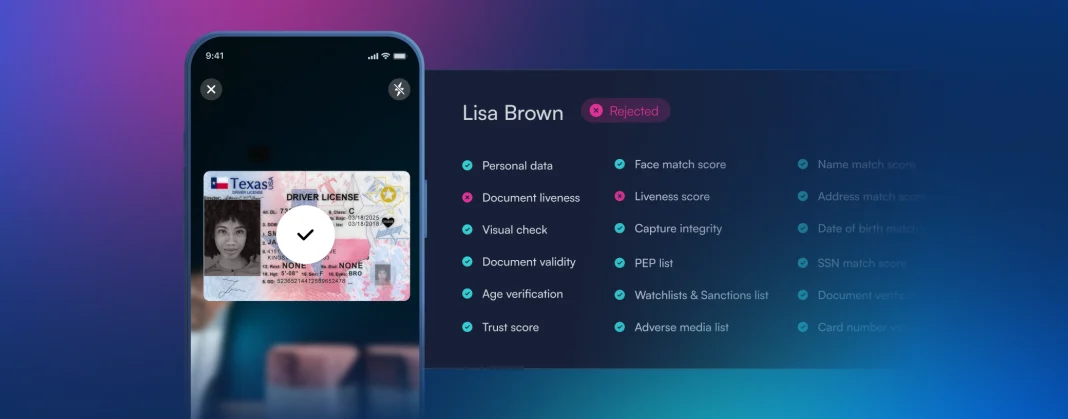
The best ID verification platforms now combine document intelligence, biometrics, liveness detection, workflow automation, and global coverage. This guide compares five leading vendors for Fraud Decision-Makers evaluating solutions for secure digital onboarding, stronger compliance controls, and scalable fraud defense.
Competitor Comparison Table
| Software | Compliance Features | Industry Focus | AI Capabilities | User Experience | Developer Experience |
|---|---|---|---|---|---|
| Microblink | Strong KYC support with document verification and liveness checks, but no native AML watchlist screening. | Privacy-sensitive businesses, fintech, and global digital onboarding teams. | High-precision OCR, selfie-to-ID matching, and passive liveness with deepfake defense. | Fast, low-friction, on-device verification that minimizes data exposure. | Flexible SDKs offer deep customization, but implementation requires technical resources. |
| Sumsub | Comprehensive KYC, KYB, AML, sanctions screening, and transaction monitoring in one platform. | Regulated industries such as fintech, crypto, banking, and marketplaces. | Risk-based automation, behavioral monitoring, and enhanced deepfake detection. | Configurable verification journeys help balance compliance rigor with conversion. | Feature-rich platform with strong workflow control, though setup can be complex for smaller teams. |
| iDenfy | KYC and AML screening with human review support for higher-risk edge cases. | Startups, iGaming, crypto, and other high-risk or fast-growing sectors. | AI verification backed by 24/7 manual review and 3D active liveness detection. | Pay-per-approved pricing reduces wasted spend and supports accessible onboarding. | Straightforward to adopt, though support and extras are more limited on lower-tier plans. |
| Veriff | Strong identity verification and age verification capabilities, with compliance-friendly global document support. | Global platforms, financial services, mobility, and digital services expanding internationally. | Automated verification, biometric analysis, and protection against face morphs and injection attacks. | Very fast verification flows with broad document coverage for international users. | Well-documented SDKs for web and mobile, though support may vary by customer tier. |
| Trulioo | Robust KYC and KYB coverage powered by global data sources and region-specific routing rules. | Large enterprises, multinational platforms, and B2B onboarding operations. | Database-first identity matching with adaptable verification logic across jurisdictions. | Works well where document collection is difficult, though flows can be more enterprise-oriented. | Unified API is powerful for complex deployments, but setup often requires significant engineering effort. |
1. Microblink
Platform summary
Microblink is an AI-first identity verification platform built for enterprises that need speed, privacy, and strong fraud defenses at scale. It processes more than 10 million IDs per month across 140+ countries and is especially well suited to organizations that want a mobile-first onboarding experience without sacrificing control over sensitive user data.
For Fraud Decision-Makers, Microblink’s biggest value lies in its ability to combine high-precision document capture with biometric verification and passive liveness in a low-friction flow. Its on-device capabilities are especially relevant for teams managing GDPR, CCPA, data residency, or privacy-sensitive onboarding requirements.
Target audience: Compliance, risk, fraud, and digital onboarding leaders at medium-sized businesses and enterprises that need privacy-centric identity verification with strong document intelligence.
Key benefits
- Captures and extracts identity data in under a second, reducing manual entry and onboarding abandonment.
- Supports on-device processing to minimize exposure of sensitive PII and strengthen privacy posture.
- Helps enterprises defend against deepfakes, synthetic identities, and adversarial injection attacks.
- Offers flexible deployment options across cloud, on-premise, and secure on-device environments.
Core features
- Global ID OCR, MRZ, and NFC extraction: Proprietary computer vision reads data from a broad range of identity documents quickly and accurately.
- Advanced biometric authentication: Selfie-to-ID matching helps confirm the presenter is the legitimate document owner.
- Passive liveness detection: Detects spoofing attempts in the background without requiring users to perform extra actions.
- Adaptive AI fraud defense: Identifies manipulated documents, synthetic IDs, and evolving AI-driven attack patterns.
Primary use cases
- Seamless customer onboarding: Automates identity capture through smartphone-based flows that reduce friction and improve completion rates.
- Privacy-centric KYC programs: Supports document verification and identity proofing in environments where data protection is a major requirement.
- Synthetic and stolen identity prevention: Helps stop fraudulent applicants before they enter the platform.
- Age verification: Enables secure ID-based age checks for regulated or age-restricted products and services.
Recent updates
- Upgraded passive liveness detection to improve resistance to AI-generated deepfakes and injection attacks.
- Rolled out adaptive Agentic AI defenses designed to evolve alongside emerging fraud patterns.
- Published new identity intelligence research focused on the rise of AI-powered identity fraud.
Pros
- Exceptional OCR accuracy for global ID capture.
- On-device processing supports stronger privacy and faster performance.
- Highly customizable SDKs enable branded verification experiences.
Cons
- Requires developer integration rather than a simple no-code deployment.
- Does not include built-in AML watchlist screening as a core feature.
- Enterprise-grade pricing may be expensive for smaller teams.
Unique selling point
Microblink stands out for its on-device AI document scanning that combines high-speed data extraction with strong user privacy.
Limitations
- Performance can depend on end-user device camera quality.
- Teams looking for a plug-and-play AML suite may need additional vendor integrations.
- Technical implementation is more flexible than turnkey, which may not suit every buyer.
2. Sumsub
Platform summary
Sumsub is a full-cycle verification and compliance platform designed to unify KYC, KYB, AML, sanctions screening, and transaction monitoring. It is a strong option for enterprises that want centralized workflow orchestration across onboarding and ongoing risk management rather than point solutions for individual verification steps.
For Fraud Decision-Makers managing multiple jurisdictions, Sumsub’s appeal is its ability to apply risk-based workflows, regional rules, and ongoing monitoring from a single platform. It is particularly relevant for organizations operating in highly regulated sectors with complex compliance obligations.
Target audience: Compliance and risk teams at medium-to-large regulated businesses that need an all-in-one onboarding and monitoring platform.
Core features
- Workflow orchestration: Builds dynamic verification paths based on geography, user risk, or business rules.
- Unified KYC and KYB: Verifies individuals, businesses, and beneficial owners within one platform.
- AML and sanctions screening: Supports onboarding controls for regulated industries.
- Ongoing transaction monitoring: Tracks post-onboarding behavior for suspicious activity and money laundering indicators.
Primary use cases
- Global market expansion: Applies localized verification logic across multiple regulatory environments.
- Corporate onboarding: Streamlines KYB and UBO verification for B2B platforms and financial services firms.
- High-risk fraud mitigation: Supports fintech, crypto, and marketplace teams that need strong compliance coverage beyond initial onboarding.
Recent updates
- Expanded deepfake detection and strengthened KYB data coverage.
- Introduced enhancements to its Fraud Hub to better identify coordinated fraud ring activity.
Pros
- Combines KYC, KYB, AML, and transaction monitoring in one platform.
- Supports highly customizable, risk-based verification workflows.
- Offers strong compliance coverage for complex international operations.
Cons
- Pricing can be too high for startups or low-volume teams.
- The platform can feel overwhelming due to its broad feature set.
- Built-in human review options are less central than automation.
Unique selling point
Sumsub differentiates itself with a full-cycle compliance platform that unifies identity, business verification, and ongoing risk monitoring.
Limitations
- Setup and rule configuration can involve a steep learning curve.
- Smaller teams may need more internal compliance expertise to get full value.
- Complex KYB edge cases can still require manual handling.
3. iDenfy
Platform summary
iDenfy uses a hybrid model that combines automated AI verification with a 24/7 in-house human review team. That mix makes it appealing to businesses that want better edge-case resolution than a fully automated vendor can always provide, especially in higher-risk sectors.
For Fraud Decision-Makers, iDenfy’s pay-per-approved pricing model is one of its clearest advantages. It aligns spend more closely with successful onboarding outcomes, which can be attractive for growth-stage businesses that want predictable fraud prevention costs.
Target audience: Startups, high-growth platforms, and regulated businesses that want a balance of automation, human review, and flexible pricing.
Core features
- Human-in-the-loop review: Adds a manual check layer for ambiguous cases and elevated fraud risk.
- Pay-per-approved pricing: Charges only for successful verifications rather than all attempts.
- 3D liveness detection: Helps block masks, replay attacks, and presentation fraud.
- Global document support: Recognizes documents from more than 200 countries and territories.
Primary use cases
- Cost-controlled onboarding for growing businesses: Reduces wasted spend from failed or fraudulent attempts.
- iGaming and crypto compliance: Supports sectors that often face strict regulatory scrutiny and spoofing risk.
- International identity verification: Helps businesses onboard users across many regions without relying on a narrow document set.
Recent updates
- Launched 3D active liveness detection improvements.
- Expanded automated AML screening with broader sanctions and PEP monitoring.
Pros
- Pay-per-approved pricing helps control verification costs.
- 24/7 human review adds protection for edge cases and fraud attempts.
- Broad document coverage supports international onboarding.
Cons
- Unused prepaid credits can expire and reduce pricing flexibility.
- Lower-tier plans may lack dedicated account support.
- Background screening capabilities are more limited outside the US.
Unique selling point
iDenfy uniquely blends AI verification, round-the-clock human review, and a pay-per-approved pricing model designed for growing businesses.
Limitations
- Seasonal or fluctuating volumes may not align well with expiring credit structures.
- Support experience can vary depending on plan level.
- Some deeper screening features are less globally mature than core ID verification.
4. Veriff
Platform summary
Veriff is built for speed, automation, and international scale. Its broad document coverage and fast decisioning make it a compelling choice for enterprises that prioritize conversion rates and need to verify users across a wide range of countries and document formats.
For Fraud Decision-Makers running high-volume onboarding programs, Veriff’s main strength is operational efficiency. It can deliver verification outcomes quickly while supporting an unusually large set of global IDs, including non-Latin scripts.
Target audience: Global digital platforms, financial services providers, and enterprises expanding into new markets that need broad document coverage and fast verification.
Core features
- 12,000+ document types: Supports one of the largest document libraries in the category.
- Fast automated decisions: Delivers results in seconds to reduce onboarding drop-off.
- Cross-platform SDKs: Supports web, iOS, and Android with a consistent user experience.
- Biometric analysis: Helps defend against face morphs, injection attacks, and other spoofing tactics.
Primary use cases
- High-volume fintech onboarding: Processes large applicant volumes without major operational bottlenecks.
- Global user acquisition: Supports expansion into regions with diverse document types and scripts.
- Digital age verification: Helps enforce age restrictions for gaming, social, and regulated digital services.
Recent updates
- Strengthened its biometric engine to better detect AI-generated face morphs and injection attacks.
- Added biometric re-authentication workflows for returning users.
Pros
- Supports over 12,000 document types for broad global reach.
- Delivers fast automated verification decisions that help conversion rates.
- Provides polished SDKs and documentation across major platforms.
Cons
- Pay-per-attempt pricing can become expensive when users fail or abandon flows.
- Basic plans offer limited data retention without added cost.
- Customer support may be slower for non-enterprise clients.
Unique selling point
Veriff’s biggest advantage is its exceptional global document coverage combined with very fast automated identity checks.
Limitations
- Cost predictability can be harder under high-failure or high-abandonment flows.
- Long-term compliance storage may require higher-tier plans.
- Support responsiveness may vary by account size.
5. Trulioo
Platform summary
Trulioo is best known for its database-first electronic identity verification (eIDV) model and its extensive Global Gateway of authoritative data sources. Rather than relying primarily on document capture, it excels at matching users and businesses against registries, bureaus, and localized sources across many jurisdictions.
For Fraud Decision-Makers in multinational organizations, Trulioo is especially useful when identity verification needs to work across fragmented regulatory systems or in regions where document-first flows are less practical. Its combined KYC and KYB capabilities also make it a strong option for enterprise B2B onboarding.
Target audience: Large enterprises, multinational platforms, and B2B onboarding teams that need global data-source coverage and flexible jurisdictional routing.
Core features
- Global database access: Connects to hundreds of authoritative identity data sources.
- Unified KYC and KYB API: Supports both individual and business verification through one integration.
- Dynamic routing: Sends verification requests to the most appropriate regional source based on jurisdiction and need.
- Database-first verification logic: Useful in markets where document collection is inconsistent or impractical.
Primary use cases
- Multinational compliance management: Centralizes identity strategy across diverse markets and local laws.
- Business verification: Automates company, director, and UBO checks for faster B2B onboarding.
- Alternative identity verification: Confirms users in regions where digital footprints or registries are more reliable than document capture.
Recent updates
- Expanded its Global Gateway with more localized data sources for emerging markets.
- Increased coverage in additional markets across Africa and Southeast Asia.
Pros
- Massive global data network enables strong database-first verification.
- Supports both KYC and KYB through a unified API approach.
- Adapts well to regional compliance requirements across international markets.
Cons
- Best suited to large enterprises rather than small startups.
- Implementation can be complex and resource-intensive.
- Biometric verification is not as central as its data-matching strengths.
Unique selling point
Trulioo excels at database-driven identity verification by connecting businesses to a vast global network of authoritative data sources.
Limitations
- Implementation timelines can be longer than simpler document-centric tools.
- Pricing is generally geared toward enterprise-scale deployments.
- Buyers prioritizing biometrics first may find other platforms more specialized.
What is Identity Verification Software?
Identity verification software is a specialized technology designed to confirm that an individual is exactly who they claim to be in the digital world. By leveraging advanced tools like government-issued document scanning, biometric facial recognition, and AI-driven liveness detection, these platforms allow businesses to securely authenticate users during onboarding and high-risk transactions. In an era where digital interactions are the norm, this software acts as your digital front door, ensuring only legitimate customers gain access to your services while keeping malicious actors out.
Why is it Important?
Implementing robust identity verification is no longer just a best practice; it is a critical necessity for regulatory compliance and fraud prevention. For businesses across all sectors, failing to properly verify users can lead to severe consequences, including hefty non-compliance fines related to KYC (Know Your Customer) and AML (Anti-Money Laundering) regulations. Beyond strict compliance, a strong ID verification process protects your bottom line from sophisticated identity theft, account takeover fraud, and financial crime, ultimately fostering a secure environment that builds lasting trust with your genuine customers.
How to Choose the Best Software Provider
Selecting the right identity verification partner requires a strategic methodology focused on balancing rigorous security with a frictionless user experience. When evaluating and ranking the best ID verification providers, we prioritize platforms that offer high verification accuracy rates, extensive global document coverage, and seamless API integration capabilities. Furthermore, the ideal provider must demonstrate strict adherence to international data privacy laws and offer customizable workflows, allowing you to scale your fraud prevention efforts dynamically without adding unnecessary friction to your customer onboarding process.
What should Fraud Decision-Makers prioritize when choosing ID verification software in 2026?
The best ID verification software is not just the tool with the most features. For Compliance Officers, Risk Managers, Heads of Security, Internal Auditors, and CFOs, the right choice depends on how well the platform reduces fraud, supports compliance, and protects conversion rates at scale.
Key evaluation criteria should include:
- Fraud defense depth: Look beyond basic document checks. Strong platforms should detect deepfakes, synthetic identities, document tampering, face morphing, replay attacks, and injection attacks.
- Document and identity coverage: Global businesses need support for a wide range of document types, languages, and jurisdictions.
- Biometric verification and liveness: Selfie-to-ID matching and liveness detection help confirm the user is a real person and the legitimate document owner.
- Privacy and data handling: If your organization operates under GDPR, CCPA, or strict internal data governance standards, review whether the vendor supports on-device processing, regional hosting, or data minimization.
- Compliance fit: Some vendors focus mainly on identity proofing, while others also offer AML screening, KYB, sanctions checks, and transaction monitoring. Your decision should reflect whether you need a point solution or a broader compliance stack.
- User experience and conversion: Verification should be accurate, but also fast and low-friction. Poor capture flows or unnecessary review steps can increase abandonment.
- Deployment flexibility: Enterprise teams often need cloud, hybrid, on-premise, or mobile SDK options depending on their security and infrastructure requirements.
- Operational control and reporting: Audit logs, workflow configuration, review queues, and analytics matter for internal oversight and regulator readiness.
- Integration effort: Evaluate APIs, SDKs, implementation timelines, and the level of engineering resources required.
- Pricing model: Pay-per-attempt, pay-per-approved, and enterprise licensing each affect predictability differently depending on your failure rates and onboarding volume.
In practice, the strongest vendors are those that align security, compliance, and customer experience rather than forcing a tradeoff between them.
How is ID verification software different from AML screening or full KYC/KYB platforms?
ID verification software is one part of a larger trust and compliance workflow. It is important to distinguish it from AML screening and broader KYC or KYB systems when evaluating vendors.
ID verification software typically focuses on confirming that:
– A government-issued identity document is authentic
– The person presenting it is real and physically present
– The selfie matches the ID portrait
– The extracted identity information is accurate enough for onboarding
This usually includes technologies such as:
– OCR and document data extraction
– Document authenticity analysis
– Selfie-to-ID face matching
– Liveness detection
– Fraud signal detection for manipulated or synthetic identities
KYC platforms may include ID verification, but often add:
– Rules-based onboarding workflows
– Risk scoring
– Case management
– Identity data orchestration
– Audit trails and reporting
KYB platforms extend verification to businesses by checking:
– Company registration details
– Directors and beneficial owners
– Corporate structure
– Business legitimacy and ownership
AML screening tools focus on financial crime controls such as:
– Sanctions screening
– Politically exposed persons (PEP) checks
– Adverse media monitoring
– Ongoing transaction monitoring
– Suspicious activity detection
For many Fraud Decision-Makers, the key question is whether they need:
– A best-in-class ID verification layer that can integrate into an existing compliance stack, or
– An all-in-one platform that combines identity verification with AML and KYB controls
If fraud prevention, user experience, and privacy are top priorities, a specialized identity verification solution may be the right foundation. If your team also needs centralized regulatory workflows, you may prefer a broader compliance platform.
Why does on-device ID verification matter for privacy, security, and compliance?
On-device verification can be especially valuable for enterprises that handle sensitive personal data or operate in highly regulated environments. Instead of sending every image and data point to the cloud for processing, some parts of the verification flow are completed directly on the user’s device.
This matters for several reasons:
- Reduced exposure of sensitive data: Less raw PII may need to transit or persist in centralized systems.
- Stronger privacy posture: Data minimization supports compliance strategies under frameworks like GDPR and CCPA.
- Better performance: On-device capture and processing can improve speed and responsiveness, especially in mobile onboarding.
- Lower network dependency: Verification quality may be more resilient in variable connectivity conditions.
- Greater data residency flexibility: Organizations with strict regional handling requirements may benefit from limiting where sensitive data is processed.
For Fraud Decision-Makers, on-device processing can also support internal governance objectives by reducing the attack surface associated with identity data collection and storage.
That said, on-device verification is not automatically better in every environment. Buyers should still assess:
– What data is processed locally versus sent to the server
– Whether biometric templates or images are stored
– How auditability is preserved
– What fallback flows exist for low-quality cameras or unsupported devices
– Whether cloud-side fraud checks still complement the local processing layer
In short, on-device verification is most relevant when privacy, performance, and controlled data handling are strategic requirements rather than optional benefits.
What is the difference between passive and active liveness detection, and which is better for fraud prevention?
Liveness detection helps determine whether the person presenting during verification is a real human being rather than a photo, replay, mask, deepfake, or injected media stream. The two main approaches are passive and active liveness.
Passive liveness works in the background without asking the user to perform specific actions. The system analyzes signals such as texture, movement patterns, depth cues, reflections, image integrity, and presentation anomalies during a normal selfie capture.
Benefits of passive liveness:
– Lower friction for legitimate users
– Faster completion times
– Better mobile onboarding experience
– Less abandonment caused by confusing prompts
Active liveness asks the user to complete a challenge, such as turning their head, blinking, smiling, or following instructions on screen.
Benefits of active liveness:
– Can add an extra hurdle against some presentation attacks
– May be useful in higher-assurance or step-up verification flows
– Can provide another layer for edge cases or manual review escalation
For most enterprise onboarding teams, the best question is not “Which is universally better?” but “Which best fits our risk model and conversion goals?”
In many cases:
– Passive liveness is ideal for primary onboarding because it minimizes friction and supports higher conversion.
– Active liveness may be useful for step-up verification, high-risk cohorts, suspicious sessions, or regulated use cases requiring stronger proof of presence.
As AI-generated fraud becomes more advanced, liveness should not be evaluated in isolation. Stronger fraud prevention comes from combining:
– Liveness detection
– Selfie-to-ID matching
– Document authenticity checks
– Injection attack detection
– Behavioral or device risk signals
– Manual review for edge cases where needed
A low-friction liveness layer is often best for user experience, but it should be backed by broader anti-spoofing and anti-deepfake controls.
Can ID verification software prevent deepfakes and synthetic identity fraud on its own?
Not entirely. ID verification software is a critical control, but no single tool can fully eliminate modern identity fraud by itself. Deepfakes, synthetic identities, and coordinated fraud campaigns require layered defenses.
Strong ID verification software can help by:
– Detecting manipulated or forged identity documents
– Matching the selfie to the ID portrait
– Using liveness checks to identify spoofing attempts
– Identifying signs of injection attacks or face morphs
– Extracting and validating identity data for consistency
However, synthetic identity fraud often combines real and fake information in ways that may not be fully visible through document and biometric checks alone. Similarly, deepfake attacks are evolving quickly and may exploit weaknesses in isolated verification steps.
Fraud Decision-Makers should view ID verification as part of a broader control framework that may also include:
– Device intelligence
– Velocity and behavioral analytics
– Phone, email, and account reputation checks
– Database verification or identity corroboration
– AML and sanctions screening where applicable
– Ongoing monitoring after onboarding
– Manual review for high-risk anomalies
– Internal fraud rules and case management
The most resilient approach is to stop fraud as early as possible during onboarding while continuing to monitor for suspicious behavior later in the customer lifecycle.
So while advanced ID verification software is one of the most important frontline defenses in 2026, it works best when integrated into a layered fraud and risk strategy rather than treated as a standalone cure-all.