
Deepfake Verification That Stops Synthetic Identity Fraud

Deepfakes have moved from internet novelty to operational threat.
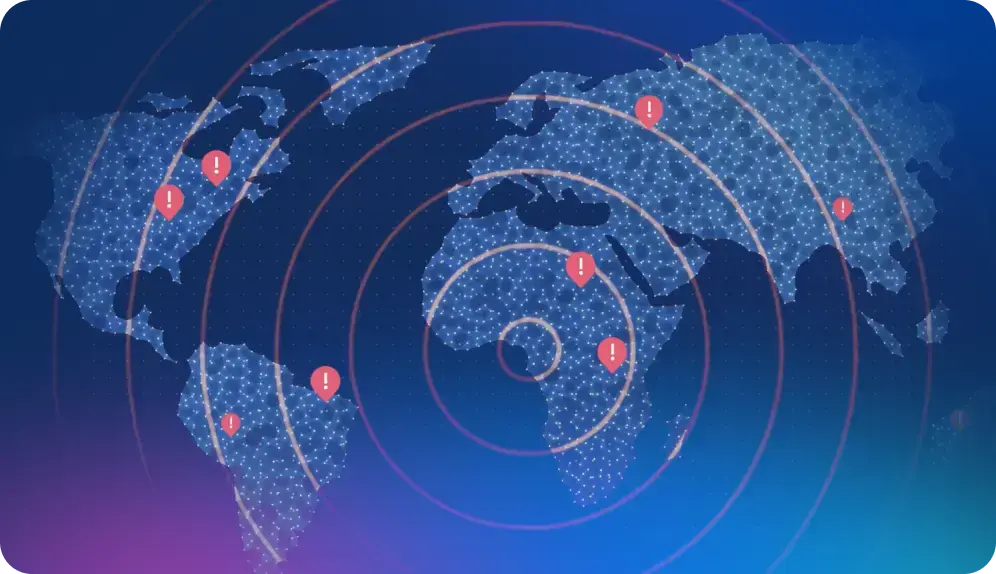
What started as manipulated videos has evolved into highly convincing identity forgeries capable of bypassing traditional verification systems. Fraudsters are now using AI-generated faces, synthetic documents, and real-time manipulation to impersonate legitimate users during onboarding and authentication.
What Is Deepfake Verification?
Deepfake verification is the process of detecting whether an identity interaction—such as a selfie, video, or document—has been manipulated or artificially generated.
It applies to:
- Remote identity verification (KYC onboarding)
- Account recovery and authentication
- High-risk transactions
How Deepfakes Are Created
Understanding the threat requires understanding the tools.
Modern deepfakes are typically generated using:
- Generative Adversarial Networks (GANs) to create realistic faces
- Face-swapping models that overlay one identity onto another
- Voice synthesis tools for social engineering attacks
- AI-assisted document editing for identity fabrication
The barrier to entry has dropped dramatically. What once required technical expertise can now be done with consumer-grade tools.
This has shifted fraud from opportunistic to industrialized.
Deepfake Fraud Risks in Identity Verification
Deepfakes introduce new failure modes into identity systems:
1. Synthetic Identity Fraud
Fraudsters combine real and fake data to create entirely new identities, often backed by AI-generated visuals.
2. Account Takeover
Attackers impersonate real users using deepfake video or image injection during authentication.
3. Onboarding Fraud
Fake users pass identity checks using manipulated documents and spoofed biometrics.
4. Injection Attacks
Instead of presenting a real face to the camera, attackers inject pre-recorded or generated media directly into the verification stream
How Deepfake Verification Works
Modern deepfake verification combines multiple detection layers into a single decision.
1. Liveness Detection
Confirms the user is physically present and not a replay, screen, or mask.
This includes:
- Motion-based checks
- Texture and depth analysis
- Challenge-response interactions
Advanced systems achieve iBeta Level 2 Presentation Attack Detection, capable of detecting sophisticated spoofing attempts.
2. Face Matching
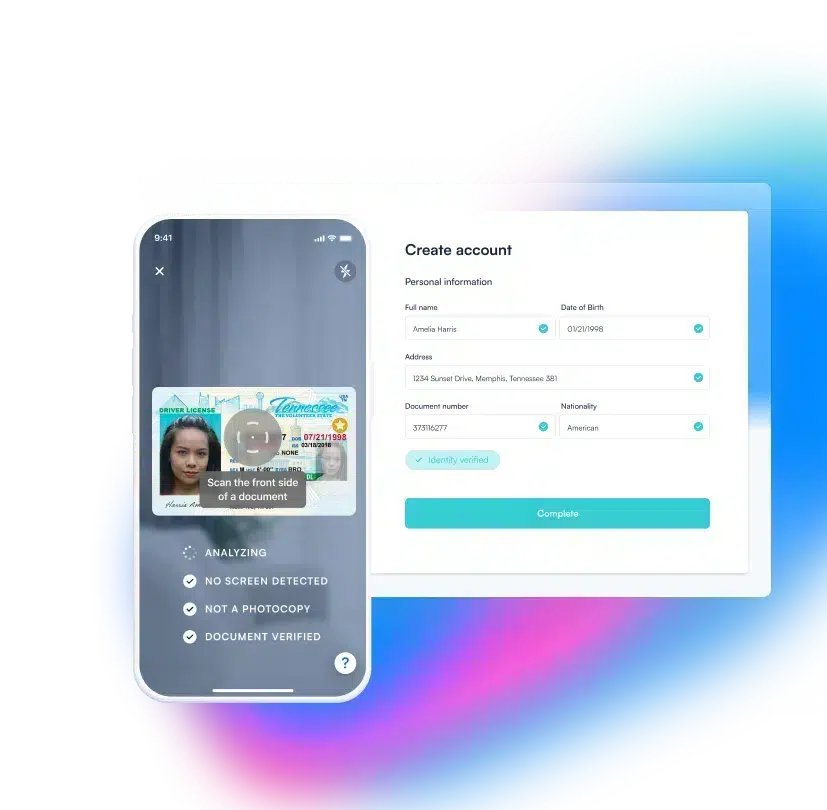
Compares the live capture to the portrait on a government-issued ID.
This ensures:
- The person is real
- The person matches the claimed identity
3. Injection Attack Detection
Identifies whether the input is coming from:
- A real camera feed
- A screen or virtual source
- A manipulated stream
This is critical as attackers move beyond physical spoofing into digital injection.
4. AI-Based Deepfake Detection
Machine learning models analyze:
- Pixel-level inconsistencies
- Lighting and shadow anomalies
- Temporal irregularities across frames
These models are trained continuously using synthetic fraud data to stay ahead of new attack patterns.
5. Multi-Signal Risk Analysis
The most effective systems combine:
- Document verification
- Biometrics
- Device and behavioral signals
Deepfakes rarely fail one check. They fail when multiple signals are evaluated together.
Challenges: Accuracy, False Positives, and Limitations
Deepfake detection is not perfect.
Key challenges include:
- False positives: legitimate users flagged due to poor lighting or device quality
- Evolving attack methods: models must continuously adapt
- Latency constraints: detection must happen in real time
- User friction: excessive checks degrade the experience
The goal is not zero risk. It’s risk reduction without unacceptable friction.
How to Implement Deepfake Verification in Your Organization
A practical implementation strategy includes:
1. Start with High-Risk Flows
Focus on:
- Account onboarding
- Password resets
- High-value transactions
2. Layer Your Signals
Combine:
- Document verification
- Biometrics
- Behavioral data
Avoid relying on a single control.
3. Automate First, Escalate Second
Use AI-driven decisioning to:
- Approve low-risk users instantly
- Flag only edge cases for review
4. Optimize for User Experience
Ensure:
- Fast capture flows
- Clear instructions
- Minimal retries
Security that frustrates users will be bypassed or abandoned.
5. Continuously Monitor and Adapt
Deepfake threats evolve quickly.
Your detection strategy must evolve with them.
Why Microblink
Microblink approaches deepfake verification as part of a broader Identity Intelligence OS—a system designed for continuous identity control across the customer lifecycle.
Key capabilities include:
- iBeta Level 2-certified liveness detection
- On-device analysis to preserve high-frequency signals critical for deepfake detection
- AI-driven fraud detection trained on synthetic attack data
- Unified decisioning across document, biometric, and behavioral signals
This enables organizations to detect sophisticated deepfake attacks while maintaining fast, low-friction user experiences.