
Los mejores proveedores de API de KYC en 2026: las mejores soluciones de IA para la incorporación digital y la prevención del fraude


For Fraud Decision-Makers, choosing the right KYC API is no longer just a technical buying decision. It directly affects onboarding conversion, fraud losses, audit readiness, and how efficiently compliance teams can scale across products, geographies, and risk tiers.
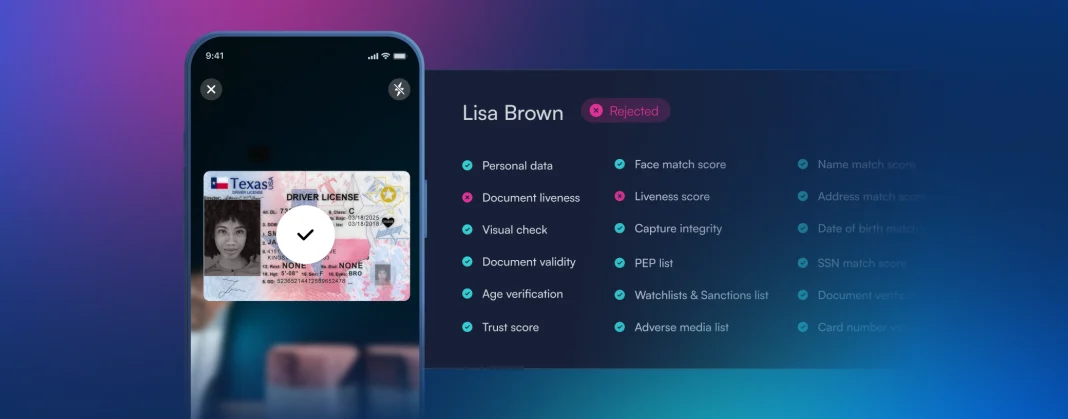
A strong KYC API helps businesses automate identity verification by combining document capture, data extraction, biometric checks, and risk signals into a single workflow. That matters because manual reviews alone cannot keep pace with synthetic identity fraud, deepfakes, mule activity, and increasingly complex AML and CTF obligations. The right provider can reduce false rejects, improve first-pass approvals, and give compliance leaders the controls they need to apply more friction only when risk justifies it.
For medium-sized businesses and enterprises, the value goes beyond verification speed. Modern KYC platforms can also support KYB, liveness detection, sanctions screening, transaction monitoring, and region-specific compliance workflows. That means fewer disconnected vendors, stronger operational visibility, and better support for global expansion. At the same time, developer experience and end-user experience remain critical. If the integration is too complex or the verification flow causes customer drop-off, the compliance stack can become a growth bottleneck.
Below, we compare five leading KYC API providers for 2026, including Microblink, Signzy, Trulioo, Sumsub, and iDenfy. Each one serves a different priority, whether that is frictionless onboarding, all-in-one compliance coverage, global reach, crypto readiness, or pricing efficiency in fraud-heavy environments.
Table with competitors
| Provider | Compliance Features | Industry Focus | AI Capabilities | User Experience | Developer Experience |
|---|---|---|---|---|---|
| Microblink | Strong document verification and biometric liveness detection, but limited native AML and KYB support. | Retail banking, e-commerce, and telecom teams that prioritize fast, low-friction onboarding. | Advanced OCR, high-speed document extraction, passive liveness, and some offline-capable processing. | Excellent mobile-first flow with fast scans and intuitive capture guidance that helps reduce drop-off. | Well-documented SDKs and APIs, though deeper customization can require more technical effort. |
| Signzy | Broad compliance stack covering KYC, KYB, AML, UBO checks, tax-ID validation, and CKYC automation. | Global fintechs, B2B marketplaces, and financial institutions needing unified compliance operations. | OCR, liveness checks, deepfake detection, agentic automation, and AI-generated trust scoring. | Configurable low-code journeys support smooth launches, though the platform can feel heavy for simpler needs. | Modular APIs and low-code tooling are flexible, but implementation and workflow mapping can be complex. |
| Trulioo | Robust KYC, KYB, and AML capabilities backed by a large global data network across 195 countries. | Cross-border payments, global marketplaces, and international trading platforms. | Data-source-driven identity matching at scale with strong orchestration for global verification coverage. | Useful for international onboarding, but country-level match quality can vary and increase manual reviews. | Single API access is a plus, though sandbox behavior, webhook testing, and error handling can be challenging. |
| Sumsub | Comprehensive KYC, KYB, AML, transaction monitoring, and Travel Rule support in one platform. | Crypto exchanges, iGaming operators, and other high-risk or globally regulated businesses. | Advanced rules engines, risk monitoring, fraud detection, and sector-specific compliance automation. | Highly customizable onboarding flows help match friction to risk, although the admin experience has a learning curve. | Feature-rich APIs and workflow tools are powerful, but new teams may need more time to master the platform. |
| iDenfy | KYC, AML, KYB, and human-assisted verification with a strong focus on cost-efficient approvals. | High-fraud businesses, regulated iGaming platforms, and budget-conscious fintech startups. | Hybrid AI plus 24/7 human review, large document coverage, and solid handling of difficult edge cases. | High approval rates and a supportive fallback for poor-quality submissions, but some reviews take longer than instant flows. | Commercially attractive pay-per-approved pricing is easy to understand, though setup and rule tuning take time. |
1. Microblink
Microblink is a developer-first identity verification platform built for enterprises that need fast, low-friction onboarding at scale. Its core strength is computer vision, combining sub-second document extraction, biometric checks, and strong mobile capture performance. For Fraud Decision-Makers, Microblink stands out when conversion, user experience, and fraud prevention all need to improve at the same time.
Platform Summary
Microblink is engineered to help global organizations automate identity verification without sacrificing speed or control. Based on the materials provided, the platform processes more than 10 million IDs monthly across 140+ countries and supports high-volume environments with a 99.99% uptime SLA.
Best fit for: Compliance, fraud, and risk leaders at enterprises that want conversion-preserving KYC with strong document verification and biometric intelligence.
Key Benefits
- Conversion-preserving onboarding. Microblink is designed to reduce customer friction during the highest-drop-off stage of onboarding. That matters for teams trying to improve approval rates without loosening risk controls.
- Enterprise-grade scale and performance. The platform can process up to 95 document scans per second, which supports large onboarding peaks and multinational rollouts. This makes it a practical choice for businesses where verification latency can hurt both revenue and user trust.
- Future-ready fraud defense. Microblink positions identity verification as an intelligence layer, not just a document check. Its capabilities are aimed at stopping synthetic identities, deepfakes, bots, and AI-generated documents before they become downstream fraud losses.
- Global consistency. With support for more than 2,500 ID document types across 195+ countries and territories, organizations can standardize verification across regions. That reduces the need to manage fragmented onboarding logic market by market.
Core Features
- Advanced AI-powered fraud detection and KYA. Microblink uses proprietary Know Your Actor technology, behavioral analytics, and cross-modal liveness checks to distinguish legitimate users from bots and AI-generated fraud attempts. This helps compliance teams address emerging attack vectors that traditional OCR-only verification cannot catch.
- Blazing-fast, adaptive ID capture. The platform delivers sub-3-second document extraction without forcing users into a rigid bounding frame. That flexibility improves capture success in poor lighting, off-angle shots, and other real-world conditions.
- Biometric matching and passive liveness detection. Microblink uses biometric verification to confirm the person presenting the document is physically present and matches the ID. This creates a stronger defense against spoofing, presentation attacks, and account takeover attempts.
- Developer-friendly APIs and SDKs. Microblink offers SDKs, REST endpoints, code samples, and a sandbox environment across common languages and platforms. That supports faster deployment for web, mobile, and backend teams building enterprise onboarding flows.
Primary Use Cases
- Frictionless customer onboarding. Enterprises use Microblink to verify users during account creation in real time. This can improve first-pass approval performance while reducing abandonment caused by clunky manual verification steps.
- Continuous KYC and AML support. Financial institutions and crypto firms can use Microblink as part of broader compliance workflows that require audit-ready identity records. It is especially useful where identity intelligence needs to feed larger AML, Travel Rule, or fraud orchestration stacks.
- High-risk transaction step-ups. Businesses deploy Microblink’s biometric checks for account recovery, withdrawals, and other sensitive events. This enables risk-based friction, so more verification is introduced only when transaction context warrants it.
Recent Updates
- DHS RIVR benchmark success in March 2026. Microblink became the only identity verification vendor to meet all performance thresholds in the U.S. Department of Homeland Security’s RIVR evaluation. The reported results included a 0.00% System Error Rate, 3.15% Document False Reject Rate, and 0.88% Document False Accept Rate.
- 100% deepfake detection on IDNet. Backed by its in-house Fraud Lab, Microblink achieved a 100% deepfake detection rate on the DHS-backed IDNet benchmark. That is especially relevant for FDMs concerned about rapidly increasing generative AI fraud.
- Product rebranding. Microblink’s BlinkReceipt product was rebranded as “Actual.” While separate from KYC, it signals ongoing product evolution across the company’s AI portfolio.
Limitations
- Limited native AML coverage. Microblink is strongest in document and biometric verification rather than full built-in sanctions and watchlist screening. Organizations that need broader AML functionality may still need an additional vendor or partner integration.
- Performance can depend on device quality. Because some capabilities leverage edge processing, older devices may experience slower scans or lower capture performance. That can affect user consistency in device-diverse customer bases.
- Enterprise-style commercial model. Pricing is not fully transparent on the public site and typically requires direct sales engagement. That may be less convenient for smaller teams looking for quick, self-serve cost comparisons.
Pros & Cons
Pros
- Exceptional verification speed. Microblink’s document capture and extraction are built to reduce onboarding friction at the point where drop-off is often highest. For growth-minded compliance teams, that speed can translate directly into higher completion rates.
- Strong mobile-first user experience. The guided document and selfie flows are intuitive and help users complete verification correctly on the first try. This is particularly valuable for businesses where most onboarding happens on smartphones.
- Helpful offline and edge-processing support. Some functionality can operate in low-connectivity environments where cloud-only verification may struggle. That gives global businesses more resilience across different network conditions.
Cons
- Limited built-in AML functionality. Teams that need sanctions screening, watchlist checks, or broader compliance orchestration will usually need another integration. That can add complexity to vendor management and workflow design.
- Advanced customization can be technically demanding. While the developer tooling is strong, deeper implementation work may still require experienced engineering resources. Smaller technical teams may need more time to fully optimize the deployment.
- Pricing may be better suited to established enterprises. Buyers generally need to go through sales, which reduces upfront pricing clarity. For early-stage companies, that can make budgeting and vendor comparison slower.
Unique Selling Point
Microblink’s core differentiator is its ability to deliver fast, conversion-friendly identity verification without weakening fraud controls. For enterprises that view onboarding completion rates as a strategic metric, that balance is difficult to match.
2. Signzy
Signzy is an AI-driven compliance platform built for organizations that need more than basic identity verification. It combines KYC, KYB, AML, UBO checks, and tax-ID validation into a more unified operating layer. For FDMs managing international growth or complex onboarding flows, its breadth is a major advantage.
Platform Summary
Signzy is best suited to fintechs, B2B platforms, and financial institutions that want a broader compliance stack rather than a single-point document verification tool. Its “One Touch” approach and low-code options make it appealing for teams trying to move quickly without stitching together multiple providers.
Core Features
- One Touch KYC with deepfake detection. Signzy combines OCR, liveness checks, and deepfake detection within one workflow. This helps businesses launch global onboarding programs that are more resilient against AI-generated fraud.
- Comprehensive KYB and UBO checks. The platform connects individual identity verification to business registry, ownership, and tax validation workflows. That is useful for firms onboarding merchants, vendors, or corporate customers rather than only consumers.
- Agentic CKYC infrastructure. Signzy automates search, validation, and monitoring tasks across jurisdictions. This reduces manual compliance workload and can improve review efficiency for stretched risk teams.
Primary Use Cases
- Global fintech expansion. US-based fintechs use Signzy to enter new markets while maintaining localized compliance controls. Its wide document and regulatory support can reduce the need to replace vendors as expansion accelerates.
- B2B marketplace verification. Platforms verifying both individual sellers and legal entities can use Signzy to keep onboarding more centralized. This helps reduce operational fragmentation across consumer and business verification flows.
- Real-time transaction monitoring. Financial institutions use Signzy to detect suspicious activity beyond onboarding. That supports a more continuous approach to fraud and compliance risk management.
Recent Updates
- Agentic CKYC rollout. Signzy introduced Agentic CKYC to automate search and validation tasks. This update is aimed at reducing repetitive manual processes for compliance teams.
- Mule Shield launch. The company also added Mule Shield, which uses AI-generated trust scores to identify potential mule accounts. That makes it particularly relevant for digital banks and payment providers.
Limitations
- Implementation can be complex. Signzy’s breadth is valuable, but it can also make initial workflow mapping more resource intensive. Teams often need input from legal, compliance, and engineering before deployment is well tuned.
- Regional pricing can be harder to forecast. Costs may vary significantly based on geography and use case. That can create budgeting uncertainty for organizations scaling into multiple markets at once.
- May feel heavy for simple needs. Companies looking only for lightweight ID verification may find the platform broader than necessary. In those cases, the extra functionality can increase setup effort without delivering immediate value.
Pros & Cons
Pros
- Broad and unified compliance coverage. Signzy brings together KYC, KYB, AML, UBO, and tax-related checks in one platform. This can reduce the operational burden of managing multiple point solutions.
- Strong support for international growth. Its wide document and geography coverage helps businesses scale without repeatedly sourcing local vendors. That can simplify procurement and improve consistency across regions.
- Flexible low-code deployment. Teams can launch tailored journeys faster even without building every flow from scratch. This can shorten time to value for compliance teams with limited engineering bandwidth.
Cons
- Setup can be resource intensive. The platform often requires meaningful cross-functional input before workflows are production-ready. That can slow deployment for leaner organizations.
- Cost planning may be less predictable. Geography-based pricing can complicate forecasting for businesses entering new markets. CFOs and procurement teams may need more scenario planning up front.
- Overbuilt for basic document verification. Businesses with narrow requirements may not need the full stack. In those cases, implementation complexity can outweigh the benefits.
Unique Selling Point
Signzy’s strongest advantage is the way it connects consumer KYC with business verification and broader compliance operations. That makes it especially attractive for organizations that want a more unified onboarding and risk infrastructure.
3. Trulioo
Trulioo is a global identity verification provider known for its large data network and international coverage. Its model is especially attractive to enterprises that need to verify users across many countries through a single provider. For FDMs focused on global scale, Trulioo’s reach is its defining strength.
Platform Summary
Trulioo is designed for cross-border businesses that need broad KYC, KYB, and AML support backed by data-source-driven verification. It is a natural fit for organizations that care more about international coverage and scalability than ultra-lightweight deployment.
Core Features
- Global data reach across 450+ sources. Trulioo connects to a large network of data providers to verify identities across 195 countries. This breadth is valuable when document-only verification is insufficient or local data access matters.
- Unified API architecture. The platform supports both consumer and business verification from a single integration point. That can simplify architecture for teams running multiple onboarding streams.
- Automated regional adaptation. Trulioo adjusts checks based on the jurisdiction involved. This helps businesses apply local verification logic without manually rebuilding every workflow by country.
Primary Use Cases
- Cross-border payment compliance. Payment providers use Trulioo to verify users across different countries while satisfying remittance and AML obligations. Its global coverage is especially relevant where sender and receiver locations vary widely.
- International marketplace expansion. Global platforms use it to onboard users across many regions without depending on a patchwork of local vendors. This supports faster rollout into new geographies.
- High-risk trading platform verification. Multi-national trading businesses use Trulioo to support strict onboarding requirements for higher-risk accounts. The platform’s global data network helps support those checks at scale.
Recent Updates
- Expanded global data network. Trulioo increased its data coverage to over 450 sources. The goal was to improve identity match rates in emerging and operationally complex markets.
Limitations
- Verification quality can vary by country. Broad coverage does not always mean uniform performance. Businesses still need to test pass rates carefully in their highest-priority markets.
- Error handling can be challenging. Developers may find webhook failures and troubleshooting less straightforward than expected. This can extend implementation or QA timelines.
- Enterprise pricing may limit accessibility. The commercial model is typically more aligned with larger buyers. Smaller companies may find minimum commitments difficult to justify.
Pros & Cons
Pros
- Exceptional global reach. Trulioo’s data network makes it one of the strongest options for international identity verification. That is especially important for firms entering harder-to-reach jurisdictions.
- Strong fit for scaling across countries. Companies can often use one provider instead of managing multiple regional vendors. This can simplify governance, contracting, and reporting.
- Highly scalable infrastructure. The platform is built for large onboarding volumes across markets. That makes it a practical option for enterprises with rapid growth expectations.
Cons
- Performance is not equally strong everywhere. Match quality can differ significantly by country or data source. Teams may need to tune workflows market by market.
- Developer troubleshooting may take longer. Sandbox behavior and error interpretation are not always as intuitive as teams would like. That can create friction during rollout.
- Pricing is geared toward enterprise buyers. Earlier-stage firms or lower-volume programs may struggle to make the economics work. Procurement timelines may also be longer.
Unique Selling Point
Trulioo’s main differentiator is its global data network. If international verification coverage is the top priority, it is one of the most compelling options in this group.
4. Sumsub
Sumsub is a full-cycle compliance platform that extends well beyond onboarding. It combines KYC, KYB, AML, transaction monitoring, and Travel Rule tools in a single system. For FDMs in high-risk sectors, that breadth makes it a strong candidate for end-to-end compliance operations.
Platform Summary
Sumsub is especially well aligned with crypto, iGaming, and other heavily regulated or fraud-exposed industries. Its value comes from combining onboarding controls with ongoing monitoring and highly configurable workflows.
Core Features
- Full-cycle compliance orchestration. Sumsub covers identity verification, business verification, and AML checks within one platform. This helps organizations manage risk across the full customer lifecycle rather than only at sign-up.
- Advanced transaction monitoring. The platform uses rules engines and risk signals to detect suspicious financial behavior after onboarding. That gives compliance teams a more continuous monitoring layer.
- Crypto-specific Travel Rule tooling. Sumsub includes features designed for virtual asset service providers that need to meet crypto transfer compliance obligations. This makes it especially relevant for firms navigating evolving digital asset regulation.
Primary Use Cases
- Cryptocurrency exchange compliance. Crypto platforms use Sumsub to manage onboarding, wallet-related risk, and ongoing monitoring in one environment. That can reduce the need for separate specialist tools.
- iGaming age and identity verification. Betting operators use it to enforce age restrictions and prevent fraudulent or abusive accounts. This supports both regulatory compliance and fraud prevention.
- High-risk global orchestration. Businesses with varied customer risk tiers use Sumsub to tailor verification friction dynamically. That is valuable when one-size-fits-all onboarding would either hurt conversion or weaken controls.
Recent Updates
- Upgraded transaction monitoring. Sumsub enhanced its monitoring capabilities with more advanced AI-driven detection logic. This is aimed at improving suspicious activity identification after onboarding.
- Enhanced Travel Rule support. The company also expanded its crypto compliance tooling. That supports firms adjusting to stricter digital asset regulation in Europe and the US.
Limitations
- Billing can be expensive in fraud-heavy environments. Because pricing is often pay-per-completed, rejected or abusive sessions can still drive cost upward. That can be a concern for businesses dealing with large volumes of synthetic applications.
- Data residency setup can be complex. Multi-national organizations may need careful architecture planning to satisfy local data storage requirements. This adds implementation overhead for globally distributed programs.
- Less tailored to some US banking workflows. Traditional US financial institutions may find certain local requirements better served elsewhere. That does not negate the platform’s strengths, but it can matter in highly specific use cases.
Pros & Cons
Pros
- True all-in-one compliance platform. Sumsub combines KYC, AML, transaction monitoring, and Travel Rule support in one system. This can reduce vendor sprawl and improve operational visibility.
- Very strong for crypto and other high-risk sectors. Its workflows map well to industries dealing with elevated fraud pressure and evolving regulation. That specialization is a major advantage for complex risk environments.
- Highly customizable onboarding logic. Compliance teams can adjust friction and risk controls without relying entirely on engineering for every change. This helps teams respond faster to shifting fraud patterns.
Cons
- Costs can climb in high-fraud environments. Rejected or abusive traffic may still generate meaningful spend under some billing models. Budget owners should model fraud-volume scenarios carefully.
- Steeper learning curve. The platform’s feature depth can make adoption slower for new administrators. Teams may need training before they can use the full system confidently.
- Not always the best fit for narrow traditional banking use cases. Some US-centric institutions may need more localized workflows than Sumsub is strongest at providing. Requirements should be tested early.
Unique Selling Point
Sumsub’s differentiator is lifecycle coverage. It is one of the strongest options here for organizations that want onboarding, monitoring, and sector-specific compliance in one platform.
5. iDenfy
iDenfy takes a hybrid approach to identity verification by combining AI automation with 24/7 human review. That model is particularly useful for businesses that care about approval quality, edge-case recovery, and cost control. For FDMs in fraud-heavy segments, its pricing model is one of its biggest advantages.
Platform Summary
iDenfy is well suited to regulated businesses that want stronger support for difficult verification cases without building a large internal review team. Its pay-per-approved model also makes it appealing for companies trying to avoid spending on large volumes of rejected fraud attempts.
Core Features
- Hybrid AI and human review. iDenfy uses AI for automation and routes flagged cases to trained human reviewers when needed. This helps recover legitimate users that pure automation might reject.
- Pay-per-approved pricing. Customers are charged only when a verification is successfully approved. That can create more predictable economics in fraud-heavy environments.
- 16,000+ document library. The platform supports a very broad set of ID types, including obscure regional documents and non-Latin scripts. This improves usability for globally diverse customer bases.
Primary Use Cases
- Cost-sensitive fintech onboarding. Startups and growth-stage fintechs use iDenfy to control verification costs as they scale. The pricing model can be especially attractive when fraud attempt volumes are high.
- High-fraud environment mitigation. Businesses targeted by repeat bad actors use iDenfy to avoid paying for large numbers of rejected applicants. That can improve budget efficiency without relaxing controls.
- iGaming edge-case handling. Regulated gaming operators use the hybrid review layer to deal with damaged or lower-quality IDs. This helps preserve legitimate approvals while still screening out fraud.
Recent Updates
- Expanded document coverage. iDenfy increased support to more than 16,000 document types. This was aimed at improving approval rates across diverse geographies.
- Enhanced 24/7 review layer. The company also improved its human review operations for faster edge-case handling. That supports sub-minute resolution goals even when manual intervention is needed.
Limitations
- Setup can take time. Initial implementation and risk tuning may require more effort than teams expect. That is especially true when configuring scoring thresholds and workflows for multiple markets.
- Country-specific rule configuration requires manual input. Administrators may need to spend time on blocklists and geographic risk parameters. This can slow down rollout for complex international programs.
- Human review can introduce slight delays. The manual backstop improves accuracy, but it is not always as instant as a fully automated flow. Expectations should be set accordingly for time-sensitive onboarding experiences.
Pros & Cons
Pros
- Very cost-efficient for fraud-heavy use cases. The pay-per-approved model helps businesses avoid paying for large volumes of rejected bad actors. That can materially improve economics for teams battling bot or synthetic identity traffic.
- Human review is a valuable safety net. Legitimate users with damaged documents or unusual cases have a better chance of successful completion. This also reduces the burden on internal compliance analysts.
- Broad document coverage improves approval potential. Support for obscure IDs and non-Latin scripts is useful for international user bases. That can help reduce unnecessary manual escalations.
Cons
- Implementation may take longer than expected. Teams often need time to tune workflows and risk scoring before the system performs smoothly at scale. This can delay time to full production value.
- Risk configuration is not always simple. Administrators may face a trial-and-error process when adjusting country-level controls and thresholds. That can be challenging for lean compliance teams.
- Human intervention can slightly slow the flow. The tradeoff for higher accuracy is that some cases will not feel instant. Businesses prioritizing maximum speed may prefer a more automation-only model.
Unique Selling Point
iDenfy stands out for pairing AI automation with always-on human review while charging on a pay-per-approved basis. That combination is particularly compelling for businesses balancing fraud pressure, customer fairness, and cost control.
Final Takeaway
For 2026, the best KYC API depends on what your organization is optimizing for:
- Choose Microblink if your top priority is fast, low-friction onboarding with strong document and biometric verification.
- Choose Signzy if you want a broader compliance stack that connects KYC, KYB, AML, and tax-related workflows.
- Choose Trulioo if global verification coverage and access to international data sources matter most.
- Choose Sumsub if you need full-cycle compliance, ongoing monitoring, and strong support for high-risk sectors like crypto.
- Choose iDenfy if you want cost-efficient verification with human-assisted edge-case handling.
For most Fraud Decision-Makers, the right shortlist should be based on five factors: fraud profile, geographic footprint, onboarding volume, internal engineering capacity, and whether you need point verification or a broader compliance operating system.
What is a KYC API?
A Know Your Customer (KYC) API is a set of programming protocols that allows businesses to seamlessly integrate identity verification and compliance checks directly into their existing platforms or onboarding workflows. Instead of relying on manual document reviews, a KYC API connects your system to global data registries, biometric verification tools, and document authentication services in real-time. This technology enables automated, secure, and frictionless identity proofing for new users, operating entirely in the background of your application to verify that a customer is exactly who they claim to be.
Why is it important?
In today’s digital-first economy, leveraging a robust KYC API is critical for balancing strict regulatory compliance with a seamless customer experience. It acts as your first line of defense against sophisticated fraud, money laundering, and identity theft, ensuring you meet stringent global AML (Anti-Money Laundering) mandates without frustrating legitimate users. By automating the verification process, B2B and B2C businesses can drastically reduce customer drop-off rates during onboarding, lower operational costs associated with manual compliance reviews, and protect their platforms from the devastating financial and reputational impacts of regulatory breaches.
How to choose the best software provider
Selecting the best KYC API provider requires a rigorous methodology focused on verification accuracy, global coverage, and integration flexibility. Start by evaluating the provider’s data sources and biometric capabilities to ensure they offer high match rates and advanced liveness detection to thwart deepfakes and spoofing attacks. Next, assess their global reach and adaptability to local regulatory nuances, ensuring the API can scale seamlessly as your business enters new international markets. Finally, prioritize vendors that offer comprehensive developer documentation, low-latency response times, and customizable rule engines, which empower your compliance team to tailor risk thresholds to your specific industry needs.
What is a KYC API, and how is it different from a full identity verification platform?
A KYC API is an application programming interface that lets your product connect to identity verification capabilities such as document capture, OCR, selfie matching, liveness detection, sanctions screening, or watchlist checks. In practical terms, it is the technical layer your developers use to trigger and manage verification steps inside your onboarding flow.
A full identity verification or compliance platform usually includes the API plus additional infrastructure such as:
- Workflow orchestration
- Case management tools for analysts
- Manual review queues
- AML and sanctions monitoring
- KYB and UBO verification
- Audit logs and reporting
- Ongoing risk monitoring after onboarding
This distinction matters when evaluating vendors. Some providers are strongest at point solutions like document verification and biometrics, while others offer a broader compliance operating system. If your team only needs fast identity checks embedded into an app, a focused KYC API may be enough. If you need onboarding, transaction monitoring, KYB, Travel Rule support, and operational tooling for compliance teams, a broader platform may be the better fit.
How should Fraud Decision-Makers evaluate the best KYC API provider for their business?
The best KYC API is not just the one with the most features. It is the one that matches your fraud profile, customer geography, onboarding flow, and internal operating model. Fraud Decision-Makers should typically assess providers across five areas:
- Fraud prevention strength: Can the provider detect synthetic identities, deepfakes, presentation attacks, document tampering, and bot-driven abuse?
- Conversion impact: Does the verification flow help legitimate users complete onboarding quickly, especially on mobile devices?
- Compliance coverage: Do you only need KYC, or also AML screening, KYB, UBO checks, transaction monitoring, and audit-ready reporting?
- Global performance: Does the vendor perform well in your priority countries, not just claim broad geographic coverage?
- Implementation and operations: How easy is the API to integrate, test, monitor, and maintain over time?
It is also important to ask practical questions during evaluation, such as:
- What are pass rates and false reject rates by country and document type?
- How does pricing behave in fraud-heavy environments?
- Is there a human review fallback for edge cases?
- What data residency and privacy controls are available?
- How flexible are rules, step-up verification, and workflow customization?
For most medium-sized businesses and enterprises, the right decision comes down to balancing customer experience, fraud loss reduction, compliance readiness, and operational efficiency.
Which features matter most in a modern KYC API for 2026?
In 2026, basic OCR and selfie checks are no longer enough for many regulated or fraud-exposed businesses. The most important KYC API features now usually include:
- Document verification: Accurate extraction and validation across a wide range of IDs, including international documents and non-Latin scripts
- Biometric matching: Comparing a selfie or live face capture against the identity document
- Liveness detection: Confirming the user is physically present and not using a replay, mask, injected media file, or deepfake
- Fraud detection signals: Identifying tampered documents, synthetic identities, bots, mule patterns, and AI-generated attacks
- Risk-based workflow controls: Applying more friction only when risk justifies it
- AML and sanctions screening: Checking users against watchlists, PEPs, and sanctions databases when required
- KYB and UBO support: Important for platforms onboarding businesses, merchants, vendors, or counterparties
- Developer tooling: Clear APIs, SDKs, sandbox support, webhooks, and reporting that reduce implementation time
- Audit and compliance controls: Logging, decision records, and review traceability for auditors and regulators
The priority order depends on your use case. A consumer fintech may care most about mobile UX and liveness quality. A crypto platform may need monitoring and Travel Rule support. A global marketplace may prioritize cross-border coverage and KYB. The key is to choose a provider that is strong in the capabilities you actually need, rather than paying for a stack that does not fit your workflow.
Should we choose a best-of-breed KYC API or an all-in-one compliance platform?
This depends on whether your organization is optimizing for onboarding performance, broader compliance coverage, or simpler vendor management.
A best-of-breed KYC API is often the better choice when:
- You want the strongest possible document verification and biometric UX
- Onboarding conversion is a top business metric
- You already have separate AML, fraud, or case management systems
- Your engineering team prefers to assemble a modular stack
An all-in-one compliance platform is often better when:
- You need KYC, KYB, AML, monitoring, and reporting in one place
- Your compliance team wants fewer vendors and less operational fragmentation
- You are entering multiple regulated markets and need broader workflow coverage
- You want one system of record for identity and compliance decisions
The tradeoff is usually depth versus breadth. Focused KYC vendors may offer better user experience and stronger point-solution performance in areas like document capture and liveness. Broader platforms may reduce integration sprawl and improve operational visibility, but they can be heavier to implement and administer.
For many enterprises, the decision should come down to total operating model fit, not feature count alone. If identity verification is the biggest pain point, start there. If fragmented compliance operations are the bigger issue, an all-in-one platform may create more long-term value.
What pricing and implementation questions should we ask before selecting a KYC API vendor?
Pricing and implementation details can have as much impact as fraud accuracy. Before signing with a KYC API provider, teams should clarify both the commercial model and the real deployment effort.
Important pricing questions include:
- Are we charged per attempt, per session, per completed check, or per approved user?
- Do failed, fraudulent, or abandoned sessions still generate cost?
- Are AML, KYB, manual review, and ongoing monitoring priced separately?
- Are there minimum commitments, geographic surcharges, or overage fees?
- How will costs scale if fraud attacks spike or if we expand to new markets?
Important implementation questions include:
- How long does production deployment usually take?
- Are mobile SDKs, web SDKs, and backend APIs all available?
- How reliable and realistic is the sandbox environment?
- What support exists for webhooks, retries, error handling, and observability?
- Can rules and verification flows be changed without a full engineering release?
- What internal resources will be needed from engineering, compliance, legal, and security?
It is also smart to run a pilot using your real customer mix. A provider that looks strong in a demo may underperform on your actual device base, document types, or customer geographies. Reviewing pass rates, false rejects, manual review rates, and cost per approved user during a pilot will give a much clearer picture than headline marketing claims alone.