La technologie est en constante évolution, tout comme nous.
Apprenez avec nous.

Lately, a new kind of anxiety has been surfacing in tech circles. Not about breaches or outages, but about agency. We;re read...
Agentic payments represent a fundamental shift in how digital transactions are initiated, authorized, and monitored. Instead...
Agentic commerce is not just e-commerce with better autocomplete. It’s a structural shift in how transactions happen. Autonom...
An agent-to-agent protocol, often shortened to A2A protocol, defines how autonomous systems securely communicate, exchange id...
Commerce is entering a new phase. Instead of users clicking through every step of a transaction, AI-powered agents are beginn...
As identity verification systems face increasingly sophisticated threats, from synthetic identities to real-time deepfakes, t...
Deepfake detection has moved from an abstract security concern to a frontline risk priority. As synthetic media attacks grow...
Synthetic media attacks are no longer a theoretical risk or a future problem. They are actively being used to bypass identity...
Document fraud has evolved far beyond blurry photocopies and obvious forgeries. Today’s attackers use high-quality templates...
Fraud has outgrown rules engines and manual review queues. Synthetic identities, stolen credentials, and automated attacks no...
This week, Microblink hosted a group of fraud, risk, and identity leaders for something intentionally different. A gathering...
Payment fraud is no longer confined to stolen cards and simple rule evasion. Today’s attacks blend synthetic identities, auto...
As financial crimes become increasingly sophisticated in 2026, banks and financial institutions must adopt advanced technolog...
Navigating the complex landscape of financial regulations requires robust AI solutions for fraud, risk, and compliance. Moder...
Artificial intelligence is reshaping the fraud landscape, but not always in the ways headlines suggest. In Microblink’s lates...
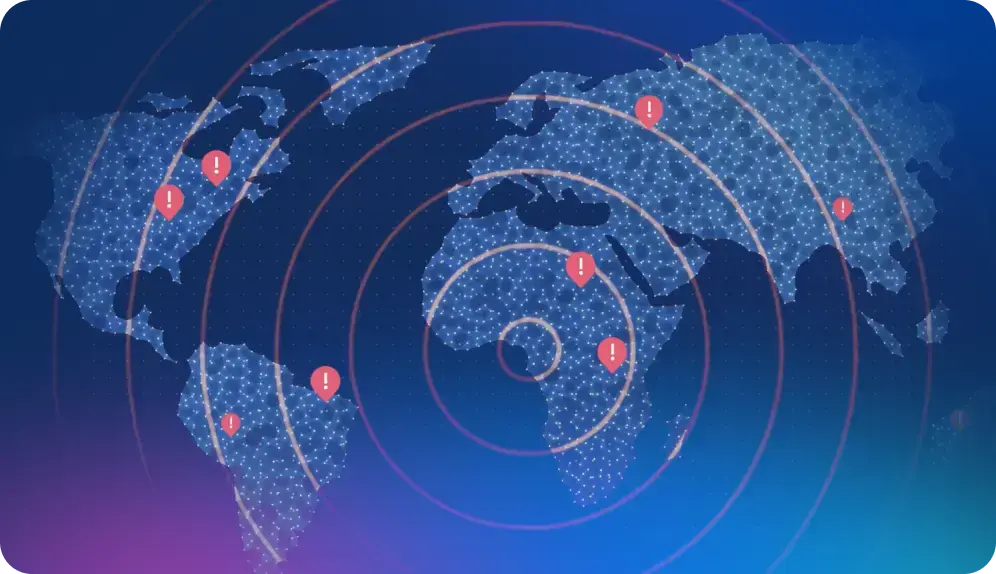
L'IA n'a pas seulement accéléré la fraude. Elle en a fait un véritable système. Nous avons analysé des millions d'interactions liées à l'identité afin de cartographier l'évolution des attaques d'usurpation d'identité selon les régions, les types d'attaques et les niveaux de sophistication — et d'identifier ce que les organisations doivent repenser pour rester dans la course.
Consultez les données