
Top Crypto AML Compliance Solutions in 2026
Navigating the complex landscape of digital assets requires robust AI fraud prevention solutions, risk, and compliance tools to protect institutions from sophisticated financial crimes. As regulatory scrutiny intensifies globally, leveraging advanced digital onboarding and compliance tools is no longer optional but essential for survival. These AI-driven platforms empower organizations to detect suspicious activities, streamline identity verification, and maintain seamless regulatory adherence without compromising the user experience.
For compliance officers, risk managers, heads of security, compliance managers, CFOs, and other Fraud Decision-Makers, the challenge is rarely choosing a single capability. In practice, the strongest crypto compliance stack often combines identity verification at onboarding, ongoing wallet and transaction monitoring, and real-time intervention when suspicious activity appears.
| Theme | Microblink | TRM Labs | Chainalysis | Elliptic | Phalcon Compliance |
|---|---|---|---|---|---|
| Compliance Features | AI-powered ID verification, biometric liveness checks, and document fraud detection for onboarding. Strong for KYC entry controls, but not built for native on-chain monitoring. | Wallet screening, transaction monitoring, entity due diligence, sanctions detection, and deep cross-chain tracing. Designed for ongoing crypto AML investigations and risk operations. | Continuous transaction monitoring, real-time alerts, risky wallet blocking, and broad entity attribution. Especially strong for enterprise reporting and regulator-trusted investigations. | Holistic wallet and transaction screening with bank-friendly risk scoring and sanctions exposure analysis. Well suited for institutions that need crypto controls aligned with traditional AML frameworks. | Real-time transaction scoring, pre-settlement blocking, smart contract threat screening, and automated suspicious transaction reporting. Focuses on stopping risky activity before execution completes. |
| Industry Focus | Crypto exchanges, wallets, and fintech platforms that need fast global onboarding. Best fit for businesses prioritizing identity verification over blockchain forensics. | VASPs, banks, regulators, and law enforcement teams managing complex blockchain risk. Strong choice for organizations handling investigations and institutional compliance. | Government agencies, leading exchanges, and large compliance teams. Built for high-volume environments that need mature forensic intelligence and strong external credibility. | Traditional financial institutions and banks entering digital assets. Especially relevant for firms bridging legacy compliance processes with crypto operations. | DeFi protocols, exchanges, and crypto-native platforms exposed to smart contract and wallet threats. Best aligned with teams that need real-time protection at the transaction layer. |
| AI Capabilities | Uses machine learning for document extraction, tamper detection, spoof resistance, and biometric liveness. Its AI is optimized for identity assurance at the moment of signup. | Combines exposure scoring with behavioral analytics to identify structuring and obfuscation patterns. Its AI helps surface risk even before wallet attribution is confirmed. | Applies AI to fraud detection, entity mapping, and transaction risk assessment across a massive dataset. It is particularly strong at connecting blockchain activity to real-world actors. | Uses holistic analytics to follow value across chains, swaps, and wallet ecosystems. Its AI output is translated into formats that traditional compliance teams can act on quickly. | Delivers sub-100 millisecond risk scoring using a large address-label database and exploit-aware analysis. Its AI is tuned for technical on-chain threats and transaction interception. |
| User Experience | Very fast scanning and low-friction onboarding help reduce abandonment during signup. The experience is polished for end users, especially on mobile flows. | Powerful for analysts, but the depth of data and tooling creates a steeper learning curve. Teams usually need training to unlock the platform’s full value. | Offers strong visualization and alerting, but it is best suited to trained compliance operators. Smaller teams may find it less approachable without dedicated expertise. | Provides clear risk metrics that map well to institutional review processes. It is more methodical than ultra-fast, which works well for banks but less so for some DeFi workflows. | Optimized for speed, so end users can transact without noticeable delay. This makes it attractive for trading platforms and dApps where latency matters. |
| Developer Experience | Requires SDK integration into web or mobile apps, so engineering involvement is necessary. It is flexible for product teams, but not a no-code compliance dashboard. | Supports enterprise integrations, but implementation and analyst onboarding can be heavier. Best for organizations with technical and compliance resources already in place. | APIs are available, but real-time blocking and deeper integrations can be technically cumbersome. Engineering teams may need meaningful effort to optimize workflows. | Typically sold and deployed through an enterprise process rather than a lightweight self-serve model. Integration is structured, but less developer-native than crypto-first tools. | Built for direct integration into transaction flows with customizable risk rules and a simple API. It is the most developer-centric option for teams that want fast deployment and active blocking. |
1. Microblink
Platform summary: Microblink is an AI-powered identity verification platform built to secure digital onboarding for enterprise crypto exchanges, wallets, and Web3 platforms. Its Identity Intelligence OS is designed for Fraud Decision-Makers who need to improve conversion, stop synthetic and stolen identities, and support compliance with frameworks such as FATF Travel Rule, MiCA, and FinCEN requirements.
Key benefits
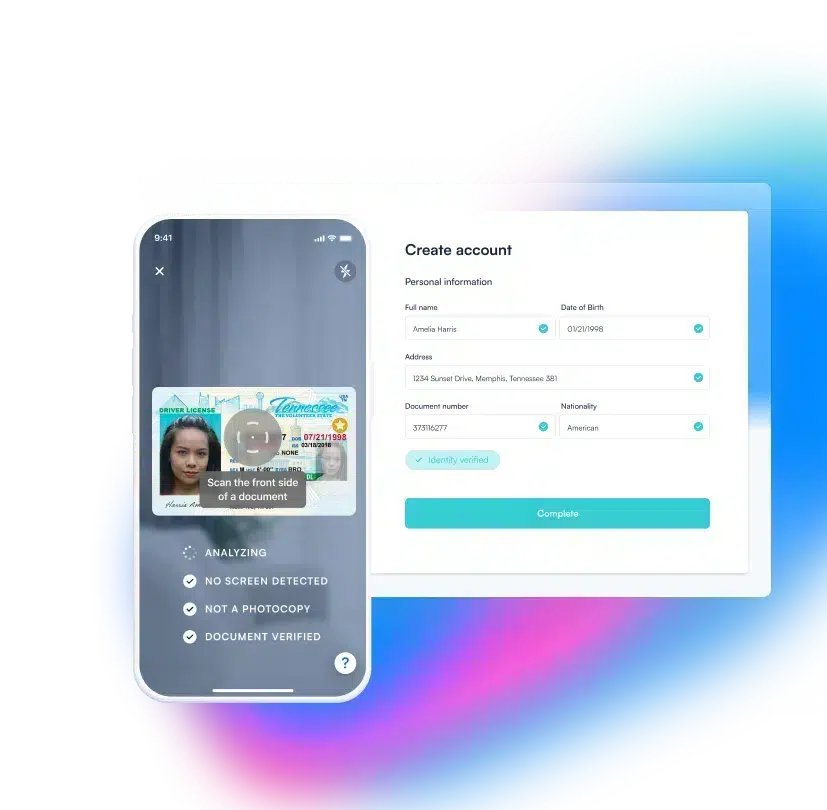
- Preserves conversion while strengthening KYC controls. Microblink is built for fast, low-friction onboarding, which matters for crypto businesses where signup abandonment directly impacts growth. Instead of forcing the same high-friction workflow on every user, it supports a more risk-based approach.
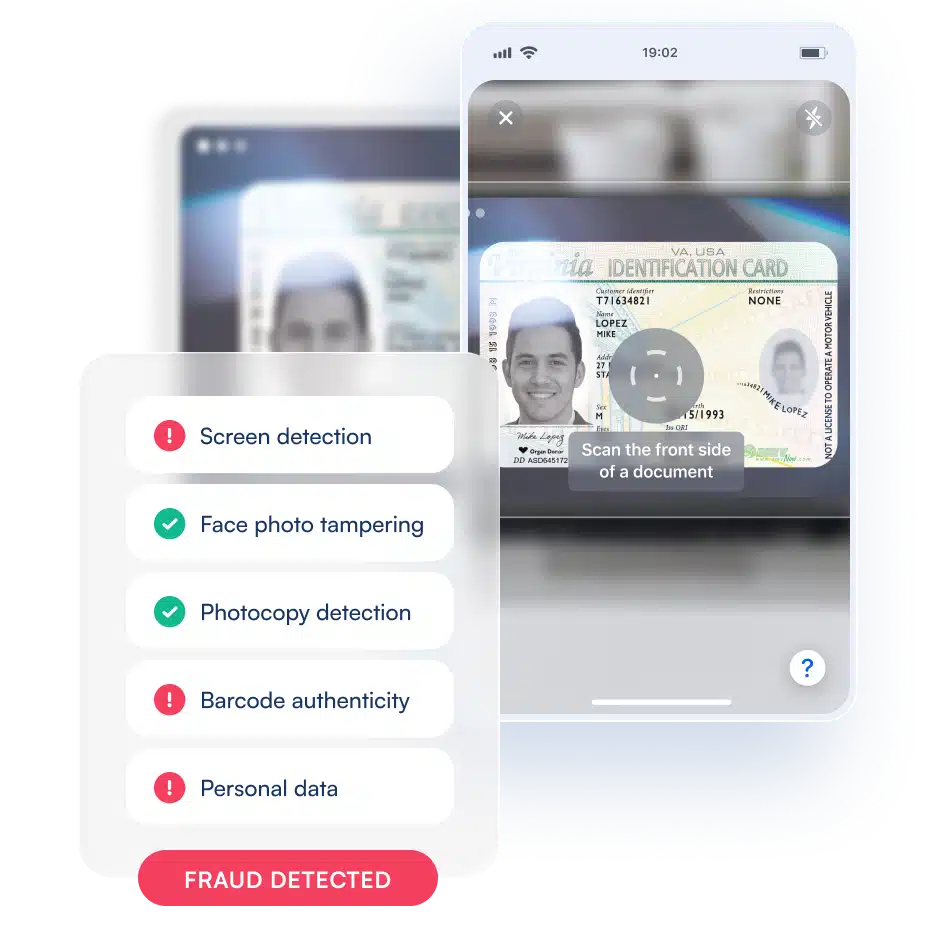
- Stops identity fraud before funds move. By verifying the real person behind the account, Microblink helps reduce exposure to synthetic identities, document fraud, and deepfake-driven account creation. That gives compliance and security teams a stronger first line of defense.
- Supports global scale with consistent compliance controls. Coverage across 2,500+ document types in 195+ countries and territories makes it easier to standardize onboarding across jurisdictions. For multinational operators, that reduces operational fragmentation.
- Improves privacy posture with flexible deployment options. On-device processing can help minimize sensitive data exposure and align better with privacy expectations. That is especially relevant for organizations balancing compliance obligations with data minimization requirements.
Core features
- Adaptive ID Capture and Risk-Based KYC: Microblink delivers sub-3-second document extraction and a 40% higher capture success rate by guiding users through variable lighting and angles without rigid bounding frames.
- Cross-Modal Fraud Defense: The platform combines document verification, facial biometrics with liveness, and BlinkCard payment card intelligence in a unified decisioning layer.
- Global Compliance Coverage: Microblink supports over 2,500 ID document types across 195+ countries and territories through a single integration.
- Proactive AI Fraud Lab Defenses: Its in-house Fraud Lab generates more than 100,000 synthetic attack images monthly to train models against emerging fraud tactics.
Primary use cases
- Account and exchange onboarding: Verifies new users quickly while screening for synthetic and stolen identities before they gain access.
- High-value withdrawal verification: Adds biometric step-up verification for large trades or transfers to new wallets to reduce account takeover risk.
- Account recovery protection: Requires a live biometric match before restoring access to users claiming lost credentials.
- Fiat on/off-ramp security: Uses physical card liveness detection to confirm the user is holding the payment card used to fund the crypto account.
Recent updates
- March 2026 DHS RIVR evaluation success: Microblink became the only identity verification vendor to meet all performance thresholds in the U.S. Department of Homeland Security’s RIVR evaluation, achieving a 0.00% System Error Rate.
- 100% deepfake detection: The company achieved a 100% deepfake detection rate on the DHS-backed IDNet benchmark.
- Product rebranding: BlinkReceipt has been rebranded to Actual, with the same underlying capabilities continuing under the new name.
Limitations
- No native on-chain transaction monitoring. Microblink is strongest at onboarding and identity assurance rather than blockchain forensics. Teams that need wallet screening, transaction tracing, or ongoing AML surveillance will need a complementary crypto analytics platform.
- Implementation still requires technical ownership. The platform offers APIs and SDKs for flexibility, but deployment is not purely no-code. Organizations without engineering support may need additional planning during rollout.
- Not built for wallet flow tracing across chains and bridges. Microblink does not investigate how crypto assets move after the user enters the platform. Its value is in verifying who the user is, not where funds travel on-chain.
2. TRM Labs
Platform summary: TRM Labs is a blockchain intelligence and crypto AML platform focused on transaction monitoring, wallet screening, sanctions screening software, and deep cross-chain tracing. It is best suited to VASPs, banks, regulators, and enterprise compliance teams that need investigative depth across complex blockchain ecosystems.
Core features
- Combines exposure scoring with behavioral analytics to detect structuring, obfuscation, and other suspicious patterns before attribution is complete.
- Traces assets across 50 blockchains and more than 640 cross-chain bridges in a unified graph.
- Brings wallet screening, transaction monitoring, and entity due diligence into a single interface.
Primary use cases
- Tracing extorted or stolen funds across multiple chains, bridges, and mixers for investigations.
- Detecting sanctions evasion through intermediaries such as OTC brokers or payment service providers.
- Performing due diligence on Virtual Asset Service Providers before partnerships or onboarding decisions.
Recent updates
TRM Labs recently enhanced its AI-driven behavioral risk detection and expanded cross-chain tracing coverage to more than 640 bridges, reinforcing its strength in multi-chain investigations.
Limitations
- The platform can be complex for new users. Its breadth is a strength, but it also creates a steeper learning curve. Teams often need training before they can use the investigative workflows efficiently.
- Pricing is more enterprise-oriented than startup-friendly. That makes TRM Labs a stronger fit for larger institutions with established compliance budgets. Smaller crypto firms may find the cost harder to justify early on.
- It does not handle onboarding identity verification natively. TRM Labs is strongest once wallets, transactions, and counterparties are already in scope. Businesses still need another solution for front-end KYC and identity checks.
3. Chainalysis
Platform summary: Chainalysis is one of the most established names in blockchain forensics and entity attribution, widely used by government agencies and large financial institutions. It is best suited to organizations that need regulator-trusted intelligence, large-scale transaction monitoring, and strong evidentiary support for investigations.
Core features
- Provides continuous monitoring and real-time alerts for crypto transactions.
- Detects and blocks risky wallets while assessing exposure across smart contracts, pools, and other crypto entities.
- Offers visualization tools that map fund flows and connect blockchain activity to real-world actors.
Primary use cases
- Supporting law enforcement and government investigations involving stolen funds and criminal networks.
- Automating transaction monitoring and suspicious activity reporting for major exchanges.
- Screening DeFi exposure across smart contracts and liquidity pools.
Recent updates
Chainalysis introduced new AI-powered fraud detection capabilities and expanded blockchain coverage to support more emerging tokens and smart contract structures.
Limitations
- It is widely seen as one of the most expensive options in the market. That can place it outside the budget range of smaller crypto businesses or lean compliance teams. For many organizations, the value is strongest at enterprise scale.
- It often requires trained analysts to operate effectively. The platform’s depth and graph-based intelligence are powerful, but not fully self-explanatory. Teams without specialist compliance talent may struggle to extract full value.
- Real-time integration can require meaningful engineering effort. Some users report that API deployment and transaction-blocking workflows are technically demanding. That can extend implementation timelines for teams with limited developer capacity.
4. Elliptic
Platform summary: Elliptic is a crypto risk management platform designed to align digital asset monitoring with the needs of traditional financial institutions. It is particularly relevant for banks and enterprise compliance teams that want crypto controls expressed in formats familiar to traditional AML programs.
Core features
- Screens the broader wallet ecosystem rather than isolated assets, helping follow funds across swaps and chains.
- Produces risk scores and reporting designed for banking AML software workflows.
- Delivers real-time wallet and transaction screening with sanctions exposure visibility.
Primary use cases
- Helping banks safely launch crypto custody and trading services with traditional AML alignment.
- Tracking chain-hopped deposits designed to obscure source of funds.
- Monitoring wallets for links to sanctioned individuals, jurisdictions, or illicit actors.
Recent updates
Elliptic recently upgraded its Holistic Screening technology to improve tracing through decentralized exchanges and cross-chain bridges.
Limitations
- Its analytical depth can be intimidating for less specialized teams. Effective use often requires both crypto fluency and traditional financial crime knowledge. That can lengthen ramp-up time for newer teams.
- The product is tailored primarily to large institutions. That makes it compelling for banks and established enterprises, but potentially less flexible for fast-moving DeFi organizations. Startups may find the operating model more structured than they prefer.
- Pricing is not fully transparent up front. Organizations generally need to go through a sales cycle to understand fit and cost. For smaller businesses, the reported entry point can feel high compared with narrower tools.
5. Phalcon Compliance
Platform summary: Phalcon Compliance, developed by BlockSec, takes a more proactive approach to crypto AML and security by focusing on pre-settlement transaction blocking. It is best suited to exchanges, DeFi protocols, and crypto-native teams that need fast, developer-friendly controls at the transaction layer.
Core features
- Monitors and blocks transactions while they are still pending.
- Returns risk scores in under 100 milliseconds to preserve user experience in high-speed environments.
- Uses a database of more than 400 million address labels curated for technical on-chain threat detection.
Primary use cases
- Blocking malicious smart contract interactions in real time for DeFi protocols.
- Instantly evaluating incoming exchange deposits for illicit exposure.
- Automating suspicious transaction report generation based on risk rules.
Recent updates
Phalcon Compliance launched stronger real-time blocking support for Layer 2 ecosystems and expanded its address-label database to more than 400 million labels.
Limitations
- It does not yet have the same long-standing market track record as older incumbents. Conservative institutions may prefer vendors with more years of regulatory visibility and procurement history. That can make vendor approval more involved in highly formal environments.
- Its strengths are concentrated in crypto-native, on-chain risk. Organizations that need broader fiat-oriented AML workflows may need complementary products. It is not designed to be a complete identity-first compliance suite.
- It is less suited to onboarding-heavy compliance programs on its own. Phalcon excels at transaction-layer prevention, not front-end KYC. Teams still need separate tooling to verify who the user is before crypto activity begins.
What is Crypto AML Compliance?
Crypto Anti-Money Laundering (AML) compliance refers to the regulatory frameworks, internal policies, and advanced technologies designed to prevent digital assets from being exploited for financial crimes. Top crypto AML compliance solutions leverage sophisticated blockchain analytics, automated Know Your Customer (KYC) protocols, and real-time transaction monitoring to trace the flow of funds across decentralized networks. By de-anonymizing wallet addresses and flagging suspicious activities, these platforms allow Virtual Asset Service Providers (VASPs) to operate securely within the bounds of global financial regulations while keeping bad actors out of their ecosystems.
Why is it important?
Implementing robust crypto AML measures is no longer optional; it is a critical requirement for survival in the modern digital economy. Regulatory bodies worldwide are aggressively tightening their grip on the crypto space, enforcing strict mandates like the FATF Travel Rule and the EU’s MiCA framework. Failing to comply can result in crippling financial penalties, loss of operating licenses, and irreparable reputational damage. Furthermore, a proactive approach to fraud prevention builds essential trust with institutional partners, banking institutions, and everyday users, ultimately driving mainstream adoption and long-term business growth.
How to choose the best software provider
Selecting the right crypto AML compliance partner requires a strategic methodology focused on technological capability, regulatory adaptability, and seamless integration. When evaluating top KYC solution providers, prioritize solutions that offer extensive multi-chain blockchain coverage and real-time risk scoring to catch illicit transactions before they settle. Additionally, look for platforms with highly customizable rule engines that can instantly adapt to shifting global regulations, alongside developer-friendly APIs that integrate smoothly into your existing KYC finance software workflows without creating unnecessary friction for your legitimate customers.
What should Fraud Decision-Makers look for in a crypto AML compliance solution in 2026?
The best crypto AML compliance solution is rarely just a wallet screening tool or just an onboarding platform. For most exchanges, fintechs, banks, and digital asset businesses, the right stack combines several layers of control:
- Identity verification at onboarding: You need to know who the customer is before they can transact. This includes document verification, biometric liveness, fraud checks, and controls against synthetic or stolen identities.
- Wallet and counterparty screening: Screening wallet addresses against sanctions lists, illicit exposure databases, scam labels, and risky entities is essential before allowing deposits, withdrawals, or transfers.
- Transaction monitoring: Ongoing monitoring helps detect suspicious behavior after onboarding, including structuring, chain hopping, mixer exposure, sanctions evasion, and unusual activity patterns.
- Real-time alerting or blocking: Some businesses need pre-transaction intervention, especially for high-risk withdrawals, DeFi interactions, or high-speed trading flows.
- Case management and reporting: Compliance teams need audit trails, investigator workflows, and support for suspicious activity reporting and internal reviews.
- Global coverage and regulatory adaptability: Support for multiple jurisdictions, asset types, and evolving frameworks matters, especially for medium-sized and enterprise organizations operating across markets.
For most Fraud Decision-Makers, the practical question is not “Which single vendor does everything?” but rather “Which combination of tools gives us strong onboarding controls, ongoing crypto risk visibility, and operational efficiency?” That is why many teams pair an identity verification platform with a dedicated blockchain analytics or transaction monitoring provider.
Is identity verification enough for crypto AML compliance, or do companies also need on-chain monitoring?
Identity verification alone is not enough for a complete crypto AML program. It is a critical first line of defense, but it does not show where funds come from, how assets move across chains, or whether a wallet is linked to illicit activity.
A complete program usually includes two distinct layers:
- Identity and onboarding controls: These help confirm that the person opening the account is real, present, and using legitimate documents. This reduces account opening fraud, synthetic identities, mule accounts, and account takeover risks.
- On-chain monitoring and wallet screening: These help assess blockchain-specific risk, such as sanctions exposure, links to darknet markets, ransomware, mixers, hacks, scams, or suspicious transaction patterns.
For example, a user may pass KYC successfully but still attempt to deposit funds from a high-risk wallet. On the other hand, a clean wallet does not remove the need to verify the identity of the account holder. Both controls are necessary because they answer different risk questions:
- KYC answers: “Who is this user?”
- Blockchain analytics answers: “What is the risk of this wallet or transaction?”
For that reason, many organizations use a layered model: identity verification for onboarding and account protection, plus a crypto AML platform for wallet screening, tracing, and transaction monitoring.
How do crypto AML solutions differ for exchanges, banks, and DeFi platforms?
The core compliance goals are similar, but the operational needs are different depending on the business model.
Crypto exchanges typically need:
– Fast, low-friction onboarding to reduce abandonment
– Identity verification and fraud prevention at signup
– Deposit and withdrawal wallet screening
– Ongoing transaction monitoring
– Alerts for suspicious user behavior and suspicious counterparties
Banks and traditional financial institutions usually prioritize:
– Controls that align with existing AML for banks and sanctions frameworks
– Clear risk scoring and documentation for internal review
– Auditability, governance, and regulator-ready reporting
– KYC for banks that supports enterprise integration with traditional compliance processes
– Support for teams that may be newer to blockchain investigations
DeFi protocols and crypto-native platforms often care more about:
– Real-time transaction scoring with minimal latency
– Smart contract interaction screening
– Pre-settlement blocking of risky activity
– Technical risk signals tied to exploits, hacks, and malicious contract behavior
– Developer-friendly APIs and direct workflow integration
Because of these differences, the “best” platform depends heavily on what the organization actually needs to control. An exchange may value onboarding conversion and strong KYC, a bank may value auditability and familiar risk frameworks, and a DeFi protocol may prioritize speed and transaction interception. Fraud Decision-Makers should evaluate solutions against their operating model, regulatory exposure, and internal team maturity rather than assuming one tool fits every environment equally well.
Can one crypto AML platform handle KYC, sanctions screening, transaction monitoring, and fraud prevention on its own?
Sometimes a vendor covers multiple areas, but in practice, many organizations still use more than one solution because crypto compliance spans different technical and operational domains.
These functions are related but not identical:
- KYC and identity verification focus on document validation, liveness, identity fraud prevention, and customer onboarding.
- Sanctions and wallet screening focus on whether a wallet or entity is linked to restricted or illicit activity.
- Transaction monitoring focuses on ongoing behavioral analysis and suspicious flow detection.
- Fraud prevention may include account takeover protection, withdrawal step-up authentication, payment card verification, and blocking risky interactions in real time.
It is common for one vendor to be strongest in one area and less complete in another. For example:
– An identity platform may excel at reducing synthetic identity fraud but lack native blockchain tracing.
– A blockchain intelligence platform may be strong in wallet attribution and cross-chain analysis but not handle front-end user verification.
– A transaction-layer tool may block risky activity quickly but still require separate onboarding and customer identity controls.
For medium-sized businesses and enterprises, the most effective approach is often a composable compliance stack. That means selecting tools that work well together rather than forcing a single platform to cover every need imperfectly. The goal is not tool consolidation at all costs; it is stronger risk coverage, cleaner operations, and fewer gaps between onboarding, monitoring, and intervention.
How can a company choose the right crypto AML compliance stack without overbuying or creating operational complexity?
A good selection process starts with the company’s actual risk profile, not with vendor branding or feature volume. Fraud Decision-Makers should map tools to specific workflows and control gaps.
Start by asking:
- Where is our biggest risk today?
Is it identity fraud at signup, sanctions exposure in wallet activity, suspicious transaction patterns, or smart contract interactions? - What kind of business are we running?
An exchange, bank, custody provider, fintech, and DeFi protocol each need different controls. - How mature is our internal team?
Some tools assume trained analysts and investigators. Others are easier for leaner compliance teams to operationalize. - How real-time do our decisions need to be?
If you need to stop risky withdrawals or protocol interactions before execution, latency and integration design matter much more. - What regulations and jurisdictions apply to us?
Teams operating across countries need strong document coverage, audit trails, sanctions support, and adaptable workflows. - Do we need identity controls, on-chain controls, or both?
Many organizations need both, but not every vendor handles both well.
A practical buying framework is:
- Secure onboarding first so bad actors do not enter easily.
- Add wallet and transaction monitoring to manage post-onboarding crypto risk.
- Layer in real-time intervention where business velocity and risk justify it.
- Verify integration effort and reporting workflows before purchase, not after.
For many enterprises, the most sustainable stack is one that combines:
– a strong identity verification solution for onboarding and account protection,
– a dedicated blockchain intelligence platform for wallet screening and transaction monitoring,
– and, where necessary, real-time blocking or step-up controls for high-risk events.
That approach usually gives better coverage than relying on a single category of tool while helping avoid unnecessary overlap and compliance inefficiency.