
Os melhores softwares bancários de combate à lavagem de dinheiro em 2026: soluções de IA para combate à fraude e conformidade


For fraud decision-makers in banking, AML software selection is no longer just a compliance exercise. In 2026, it is a strategic decision that affects onboarding conversion, operational efficiency, investigator workload, audit readiness, and overall exposure to financial crime.
Traditional rule-based systems still play a role, but they are increasingly limited against synthetic identity fraud, mule activity, cross-border laundering networks, deepfakes, and fast-moving payment threats. Modern AML platforms now combine AI, graph analytics, document intelligence, sanctions screening, and workflow automation to help institutions detect more risk with less friction.
The strongest platforms typically excel in one or more of these areas:
- Digital identity verification and KYC onboarding
- Real-time sanctions screening, PEP, and adverse media monitoring
- Transaction monitoring and anomaly detection
- Network analytics and entity resolution
- Investigation workflows and regulatory reporting
- Explainable AI and auditability for regulators
Below is a side-by-side look at leading AML software options for banks, fintechs, credit unions, and large financial institutions evaluating fraud and compliance technology in 2026.
Competitor Comparison Table
| Product | Compliance Features | Industry Focus | AI Capabilities | User Experience | Developer Experience |
|---|---|---|---|---|---|
| Microblink | Strong KYC onboarding with global ID verification, document fraud checks, and biometric liveness detection. | Digital banks, fintechs, and institutions prioritizing remote onboarding. | Document AI, OCR, facial matching, and liveness models optimized for onboarding fraud prevention. | Very smooth customer onboarding with low friction and fast capture flows. | Flexible mobile SDKs and web APIs; straightforward integration, though broader AML coverage requires additional tools. |
| ComplyAdvantage | Real-time sanctions, PEP, adverse media, customer screening, and transaction monitoring with explainable risk scoring. | Mid-market banks, digital banks, and fintechs needing agile compliance operations. | Agentic AI, generative case summaries, dynamic risk scoring, and continuously updated risk intelligence. | Modern experience for investigators, but advanced features can feel dense for new teams. | Cloud-native APIs and configurable rules engine; setup and tuning can take time in high-volume environments. |
| SAS Anti-Money Laundering | Enterprise transaction monitoring, network analysis, investigation workflows, and SAR automation. | Tier 1 global banks and large institutions with complex risk and regulatory requirements. | Machine learning, graph analytics, anomaly detection, and explainable AI on large-scale datasets. | Powerful for expert analysts, but less approachable for teams seeking simplicity. | Highly extensible and scalable, though implementation and maintenance usually require specialized technical resources. |
| NICE Actimize | Unified AML, fraud, and trade surveillance with entity-centric risk models and strong audit trails. | Large enterprises and major financial institutions needing broad financial crime coverage. | AI-infused anomaly detection, adaptive monitoring, and cross-channel behavioral analysis. | Comprehensive analyst view, though the platform can feel heavy for smaller teams. | Supports deep customization and multiple deployments, but complex requirements often need vendor services. |
| Quantexa | Entity resolution, contextual investigations, and risk scoring built around linked data and hidden relationships. | Global banks and enterprises handling cross-border investigations and fragmented data estates. | Contextual decision intelligence, dynamic network generation, and graph-based relationship analytics. | Rich visual investigation tools, though analysts may need training to fully use graph workflows. | Strong integration potential for complex environments, but success depends on substantial data engineering and data quality. |
| Nasdaq Verafin | Transaction monitoring, fraud detection, SAR filing, and consortium-based analytics across participating institutions. | North American banks and credit unions, especially mid-market institutions. | Consortium data analytics, cross-institutional pattern detection, and integrated fraud/AML monitoring. | Known for intuitive workflows and practical usability for compliance teams. | Cloud-native delivery simplifies adoption, but value is strongest within its network and geographic footprint. |
1. Microblink
Platform summary
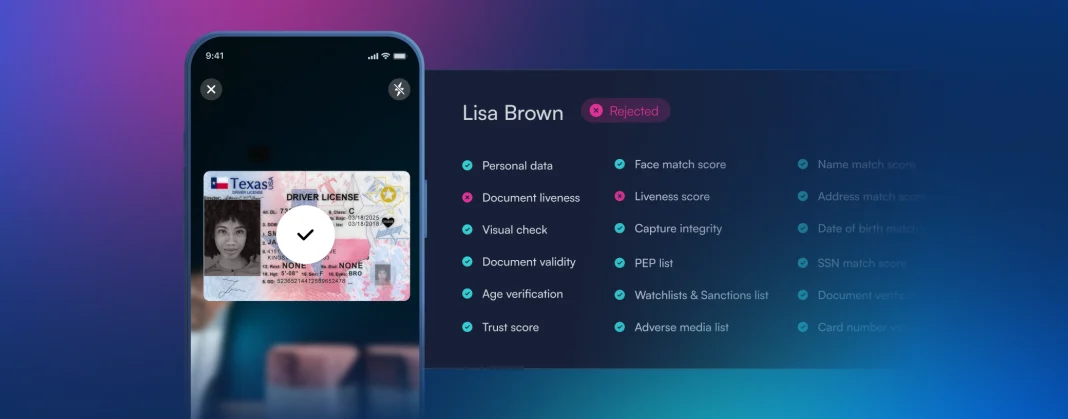
Microblink is best understood as the front-door defense layer in a modern AML stack. It specializes in identity verification, document authentication, biometric liveness detection, and low-friction onboarding, helping banks stop bad actors before they enter the system.
For fraud decision-makers, that matters because many downstream AML failures begin with weak onboarding controls. Microblink is especially well suited to digital banks, fintechs, and enterprise institutions that need to verify customers remotely at scale without increasing abandonment rates. While its strongest value is in onboarding and identity fraud prevention, it also supports broader compliance workflows with watchlist screening, explainable decisioning, and integration flexibility.
Key benefits
- Reduces onboarding friction while strengthening KYC and AML controls.
- Detects synthetic identities, spoofing attempts, and document tampering early in the customer journey.
- Supports enterprise scale with high-speed document processing across 140+ countries.
- Balances compliance rigor with strong customer experience and developer-friendly deployment.
Core features
- On-device AI and computer vision: Captures and extracts identity data in under a second while minimizing unnecessary exposure of sensitive customer information.
- Biometric liveness detection: Confirms the real presence of the applicant and helps block presentation attacks and deepfake-driven onboarding fraud.
- Global document verification: Supports broad ID coverage with AI models trained to handle diverse document types and formats.
- Watchlist screening and explainable audit trails: Helps teams consolidate onboarding risk signals and maintain transparent records for internal governance and regulatory review.
Primary use cases
- Frictionless digital onboarding: Enables sub-3-second document verification and liveness checks during remote account opening.
- Real-time identity fraud prevention: Stops forged IDs, synthetic identities, and account takeover attempts before accounts are approved.
- Automated KYC workflows: Reduces manual data entry and improves auditability by populating customer records with verified identity data.
Recent updates
- Introduced agentic AI capabilities to orchestrate onboarding, fraud detection, and compliance workflows more autonomously.
- Enhanced global document AI models for stronger extraction accuracy, particularly across diverse and emerging-market IDs.
- Released new research on AI-powered identity fraud trends to help institutions adapt to evolving deepfake and synthetic fraud risks.
Limitations
- Microblink is strongest in identity verification and onboarding, not deep backend transaction monitoring.
- Older mobile hardware can affect biometric capture quality in some edge cases.
- Organizations seeking full AML lifecycle coverage may still need integrations with additional transaction monitoring or investigation platforms.
Pros
- Fast and accurate ID scanning with broad global document coverage.
- Excellent onboarding experience with low user friction.
- Strong biometric liveness and anti-spoofing protection.
Cons
- Does not provide native transaction monitoring at the same depth as full-suite AML platforms.
- Focused mainly on the onboarding stage of AML.
- Full AML coverage may require third-party integrations depending on the institution’s stack.
2. ComplyAdvantage
Platform summary
ComplyAdvantage is a cloud-native AML platform built for institutions that want faster screening, real-time risk intelligence, and more automation in investigative workflows. Its core appeal is agility: teams can screen customers, monitor transactions, and assess risk against constantly changing sanctions, PEP, and adverse media datasets.
For mid-market banks, digital banks, and fintech fraud prevention programs, it stands out for explainable risk scoring and growing agentic AI functionality that reduces manual work inside investigations.
Core features
- Real-time sanctions, PEP, and adverse media screening.
- Agentic AI workflows that gather data and draft case summaries.
- Explainable AI models with transparent risk rationale.
- Configurable rules engine for customer and transaction monitoring.
Primary use cases
- Continuous customer screening for sanctions and PEP exposure.
- Real-time payment monitoring across fast-moving rails.
- Adverse media detection that helps identify reputational and compliance risk earlier.
Recent updates
- Expanded agentic AI capabilities to automate more of the investigation lifecycle.
- Added deeper generative AI functions for case preparation and internal risk-data querying.
- Improved automated support for suspicious activity reporting workflows.
Limitations
- Initial setup and rule tuning can be time-consuming, especially in high-volume environments.
- Pricing can scale quickly for institutions with very large monitoring volumes.
- Teams moving from legacy systems may need time to adapt to the platform’s feature depth.
Pros
- Real-time sanctions and watchlist data updates.
- Advanced agentic AI and automated case summarization.
- Flexible rules engine with explainable risk scoring.
Cons
- Initial tuning can be complex and time-consuming.
- Costs can rise quickly with higher transaction volumes.
- Interface and workflows may overwhelm less experienced teams.
3. SAS Anti-Money Laundering
Platform summary
SAS Anti-Money Laundering is designed for large, complex financial institutions that need heavy-duty analytics, broad transaction monitoring, and advanced investigation tools. It is particularly strong in high-scale environments where institutions must process massive datasets and detect subtle patterns that simpler tools can miss.
For global banks and enterprises with mature analytics teams, SAS remains a serious option because of its depth in machine learning, network analysis, and explainable modeling.
Core features
- Enterprise transaction monitoring across very large data volumes.
- Deep network analytics and graph-based investigation support.
- Automated case management and reporting workflows.
- Explainable machine learning models for audit and regulatory defensibility.
Primary use cases
- Monitoring millions of daily transactions across global banking operations.
- Visualizing hidden links between entities, accounts, and suspicious behavior.
- Automating suspicious activity reporting across multiple jurisdictions.
Recent updates
- Enhanced SAS Viya integration for faster data ingestion and processing.
- Improved support for integrating third-party data sources.
- Focused recent updates on reducing time-to-detection for complex cross-border laundering schemes.
Limitations
- Typically requires specialized IT, analytics, and data science resources.
- Enterprise implementations can be lengthy, especially with legacy system integration.
- Total cost of ownership is often higher than lighter cloud-native alternatives.
Pros
- Very powerful analytics and machine learning engine.
- Highly scalable for large global banking environments.
- Strong network analysis and visualization capabilities.
Cons
- Requires specialized technical and analytical staff.
- Implementation timelines can be long.
- High total cost of ownership for smaller institutions.
4. NICE Actimize
Platform summary
NICE Actimize offers a mature, enterprise-grade financial crime platform that brings AML, fraud prevention solutions, and trade surveillance together in one environment. Its entity-centric approach is a major differentiator, allowing banks to assess risk at the customer or organization level rather than relying only on isolated transaction alerts.
This makes it a strong fit for large institutions that want a unified view of customer risk, extensive audit trails, and broad coverage across multiple financial crime use cases, including mortgage fraud detection.
Core features
- Entity-centric risk modeling across customers, accounts, and channels.
- Adaptive machine learning for changing fraud and laundering typologies.
- Unified AML, fraud, and surveillance workflows.
- Strong reporting and audit trail capabilities for regulatory readiness.
Primary use cases
- Building a 360-degree customer risk view across business lines.
- Detecting anomalous behavior in high-volume payment environments.
- Maintaining clear evidence trails for regulator examinations and internal investigations.
Recent updates
- Improved detection for real-time payment rails such as FedNow and RTP.
- Introduced AI-driven analyst workbenches to support alert prioritization.
- Continued strengthening adaptive models for emerging financial crime patterns.
Limitations
- The platform can be resource-intensive to operate.
- Tailoring the solution for niche requirements may require vendor or professional services.
- Smaller institutions may find the platform more complex than necessary.
Pros
- Broad end-to-end platform spanning AML, fraud, and surveillance.
- Mature entity-centric risk modeling across channels.
- Strong compliance reporting and audit trail support.
Cons
- Can be resource-intensive to operate.
- Customizations often require vendor or professional services.
- May be too complex for smaller financial institutions.
5. Quantexa
Platform summary
Quantexa is known for contextual decision intelligence and excels where AML programs struggle with fragmented data, hidden relationships, and cross-border complexity. Rather than evaluating events in isolation, Quantexa helps institutions build context around customers, entities, counterparties, and networks.
That makes it especially relevant for enterprises with data silos, international exposure, or frequent investigations into beneficial ownership and linked-party risk.
Core features
- Advanced entity resolution across internal and external data sources.
- Dynamic network analytics to expose hidden relationships.
- Contextual risk scoring based on network behavior, not just individual activity.
- Visualization tools for graph-driven investigations.
Primary use cases
- Investigating cross-border laundering networks operating across multiple jurisdictions.
- Reducing false positives by using business context and relationship mapping.
- Discovering ultimate beneficial owners behind complex corporate structures.
Recent updates
- Expanded integrations for third-party corporate registry and external data.
- Released improved visualization tools for less technical investigators.
- Continued investment in contextual analytics for large-scale enterprise investigations.
Limitations
- Performance depends heavily on strong data quality and governance.
- Integrating many disparate data sources can be a significant engineering effort.
- Analysts may need training to fully leverage graph-based workflows.
Pros
- Excellent entity resolution across fragmented datasets.
- Powerful graph and contextual investigation capabilities.
- Helps break down data silos in large organizations.
Cons
- Performance depends heavily on strong data quality.
- Integration across multiple data sources can be complex.
- Analysts may face a steep learning curve.
6. Nasdaq Verafin
Platform summary
Nasdaq Verafin takes a consortium-based approach to AML and fraud detection, making it especially attractive to North American banks and credit unions that want to detect cross-institutional threats. Its strength is not just monitoring what happens inside one institution, but surfacing patterns that become visible when intelligence is shared across a network.
For mid-market institutions that want practical workflows, fraud and AML convergence, and easier regulatory filing support, Verafin is a compelling option.
Core features
- Cross-institutional analytics powered by consortium data.
- Unified fraud detection and AML case management.
- Automated SAR and CTR filing workflows.
- Cloud-native delivery model with practical usability for compliance teams.
Primary use cases
- Detecting laundering rings that move funds across multiple institutions.
- Monitoring wires and ACH for account takeover and business email compromise activity.
- Supporting leaner compliance teams with efficient, scalable workflows.
Recent updates
- Expanded its data pool after joining Nasdaq’s broader ecosystem.
- Added enhanced AI capabilities for risks such as human trafficking and elder financial exploitation.
- Continued strengthening consortium intelligence value for participating institutions.
Limitations
- Best suited to North American institutions rather than global banks.
- Value depends in part on network participation and consortium activity.
- Some very large banks may want more customization than the platform typically emphasizes.
Pros
- Unique cross-institutional analytics through consortium data.
- Combines fraud detection and AML in one platform.
- Well suited for mid-market banks and credit unions.
Cons
- Most valuable primarily in North American markets.
- Effectiveness depends on consortium participation.
- Less customizable than some enterprise-focused competitors.
How to choose the right AML software in 2026
For fraud decision-makers, the best platform is usually the one that aligns with your institution’s biggest exposure:
- If your main challenge is digital onboarding fraud and KYC efficiency, Microblink is strongest at the identity layer.
- If you need agile sanctions screening and AI-assisted investigations, ComplyAdvantage is a strong fit.
- If you operate at global bank scale with very large datasets, SAS Anti-Money Laundering is built for that complexity.
- If you want broad financial crime convergence across AML and fraud, NICE Actimize is a leading enterprise option.
- If your problem is fragmented data and hidden network relationships, Quantexa stands out.
- If you are a North American bank or credit union looking for practical AML plus consortium intelligence, Nasdaq Verafin is worth close review.
In practice, many institutions do not choose one tool to do everything. They build a layered stack: identity verification at onboarding, real-time screening, transaction monitoring, graph investigation, and reporting. That is often the most effective way to reduce fraud losses, control compliance costs, and improve regulator confidence.
FAQs
What is AML software and why do banks need it?
AML software helps financial institutions detect, investigate, and report suspicious activity related to money laundering, terrorist financing, sanctions exposure, and related financial crime. Banks need it to meet regulatory obligations, reduce operational risk, and protect their reputation.
How does AI improve AML compliance?
AI improves AML compliance by spotting patterns traditional rules often miss, reducing false positives, automating manual research, and updating risk detection more dynamically as new fraud typologies emerge. For compliance teams, that usually translates into faster investigations and better use of analyst time.
Why is identity verification important in an AML program?
Identity verification is the first control point in the AML lifecycle. If a bank allows a synthetic or stolen identity through onboarding, every downstream control becomes harder. Strong document verification, biometric checks, and fraud detection at account opening reduce risk before a bad actor can transact.
Final takeaway
There is no universal “best” AML platform for every bank in 2026. The right choice depends on your institution’s fraud patterns, compliance maturity, customer journey priorities, and internal technical resources.
For organizations that want to strengthen the earliest and most vulnerable part of the AML lifecycle, Microblink stands out for fast, low-friction identity verification and onboarding fraud prevention. For teams evaluating broader AML stacks, the rest of the market offers strong options across screening, monitoring, network analytics, and collaborative intelligence.
The key is to choose technology that not only detects risk, but also fits your operating model, investigator capacity, and customer experience goals.
What is Banking AML Software?
[Banking Anti-Money Laundering (AML) software](https://microblink.com/resources/blog/banking-aml-software/) is a specialized suite of compliance and risk management tools designed to help financial institutions detect, prevent, and report suspicious activities linked to financial crimes. These advanced platforms leverage artificial intelligence, machine learning, and dynamic rules-based algorithms to monitor customer transactions in real-time, screen entities against global sanctions and PEP (Politically Exposed Persons) watchlists, and facilitate rigorous Know Your Customer (KYC) onboarding. By automating complex data analysis, AML software empowers banks to identify hidden risk patterns and illicit money flows with precision.
Why is it Important?
In an era of increasingly sophisticated financial fraud, deploying robust AML software is a critical safeguard for a bank’s operational integrity, bottom line, and reputation. Regulatory bodies worldwide are enforcing strict compliance mandates, and failing to meet these standards can result in crippling multi-million-dollar fines, loss of operating licenses, and irreversible brand damage. Beyond regulatory adherence, modern AML solutions drastically reduce false positives and streamline manual review times, allowing compliance teams to operate more efficiently and focus their valuable resources on investigating genuine threats rather than managing administrative backlog.
How to Choose the Best Software Provider
Selecting the right AML software provider requires a rigorous evaluation methodology centered on technological agility, integration capabilities, and vendor reliability. To choose the best solution, decision-makers should prioritize platforms that offer seamless API integration with existing core banking systems and feature customizable rule engines that can quickly adapt to shifting regulatory landscapes. Furthermore, evaluate vendors based on their use of advanced machine learning models for continuous threat detection improvement, their historical track record within the financial sector, and their commitment to enterprise-grade data security, ensuring the platform aligns perfectly with your institution’s unique risk profile.
What features should banks prioritize when evaluating AML software in 2026?
Banks should start by matching software capabilities to their highest-risk exposure, not by looking for the broadest feature list. For many institutions, the most important areas are onboarding risk controls, sanctions and PEP screening, transaction monitoring, alert investigation workflows, reporting, and auditability. If the bank is growing digitally, identity verification, document fraud detection, and biometric liveness checks should be high on the list because weak onboarding can create risk that downstream monitoring cannot fully fix.
Fraud decision-makers should also evaluate how well a platform handles false-positive reduction, data integration, explainable AI, and investigator productivity. A strong AML solution should not just generate alerts; it should help teams prioritize cases, understand why risk was flagged, and move efficiently from detection to disposition and regulatory reporting. For larger institutions, graph analytics, entity resolution, and cross-channel risk visibility can be especially important for identifying mule networks, beneficial ownership risk, and organized laundering activity.
Finally, practical fit matters as much as raw capability. Teams should assess implementation complexity, API quality, deployment model, model transparency, vendor support, and total cost of ownership. The best platform is usually the one that aligns with the institution’s customer journey, compliance maturity, internal technical resources, and regulatory expectations.
Should a bank choose an all-in-one AML platform or a layered AML stack?
That depends on the institution’s size, risk profile, and existing infrastructure. An all-in-one AML platform can be attractive because it simplifies vendor management, centralizes workflows, and may offer a more unified view of customer and transaction risk. For institutions that want one core system for screening, monitoring, investigations, and reporting, a single platform can reduce operational complexity and make governance easier.
A layered stack is often the better choice when a bank has specialized needs in different parts of the AML lifecycle. For example, a bank may use one provider for identity verification and KYC onboarding, another for sanctions screening, and another for transaction monitoring or graph investigations. This approach can deliver stronger performance in each area, especially when fraud threats differ across onboarding, payments, and case management. It is particularly useful when digital account opening, synthetic identity fraud, or cross-border network analysis are major priorities.
The tradeoff is integration effort. Layered stacks can provide better precision and flexibility, but they require clean data flows, thoughtful orchestration, and strong ownership across compliance, fraud, risk, and engineering teams. For many medium and large institutions, the most effective strategy is a hybrid model: a core AML platform supported by best-in-class tools at critical control points such as onboarding or network analytics.
How important is explainable AI in AML software selection?
Explainable AI is increasingly critical because AML teams need to justify decisions internally and externally. Regulators, auditors, model risk teams, and senior leadership all want to understand why a customer, transaction, or entity was flagged as risky. If an AI model improves detection but operates like a black box, it can create governance problems, slow analyst adoption, and make regulatory reviews more difficult.
In practical terms, explainability helps investigators work faster. When a platform clearly shows the risk factors behind an alert—such as document anomalies, sanctions matches, unusual payment behavior, linked entities, or adverse media exposure—analysts can make more confident decisions with less manual research. That improves case quality, reduces unnecessary escalations, and supports more consistent SAR or internal reporting decisions.
For fraud decision-makers, the key is to look for tools that pair advanced AI with transparent risk rationale, configurable thresholds, audit logs, and defensible model documentation. The goal is not just to have AI in the stack, but to have AI that improves detection while remaining governable, reviewable, and usable in real-world compliance operations.
How can banks reduce false positives without weakening AML controls?
Reducing false positives starts with improving context, not simply lowering alert volume. Traditional rules-based systems often generate too many alerts because they analyze isolated events without enough customer, behavioral, or network intelligence. Modern AML software can reduce this noise by combining transaction data with customer risk profiles, entity resolution, historical behavior, and linked-party analysis to distinguish normal activity from meaningful risk.
Risk-based segmentation is also important. Not every customer or payment flow should be monitored with the same thresholds. Banks can tune scenarios by geography, product type, customer segment, transaction channel, and known typologies. AI and machine learning can help identify which alerts are more likely to be true positives, while graph analytics can show whether suspicious activity is part of a broader network rather than a one-off anomaly.
That said, reducing false positives should be done carefully. The right objective is better alert quality, not fewer alerts at any cost. Banks should test model changes, document tuning decisions, monitor outcomes, and involve compliance, fraud, and model governance stakeholders throughout the process. The best AML platforms support this by offering explainable scoring, workflow analytics, and flexible rule management so teams can optimize efficiency without undermining regulatory defensibility.
What implementation challenges should banks expect when deploying new AML software?
The biggest implementation challenge is usually not the software itself, but the surrounding data and operating model. AML systems depend on access to clean, timely, well-structured data from onboarding systems, core banking platforms, payment rails, customer databases, case management tools, and external intelligence sources. If data is fragmented, delayed, or poorly normalized, even strong platforms will underperform.
Another common challenge is workflow design. Banks need to decide how alerts are triaged, who owns investigations, how risk decisions are documented, and how outputs feed into SAR, CTR, or internal escalation processes. If these steps are not aligned before deployment, the institution may end up with a technically functional system that still creates bottlenecks for analysts and investigators. Training is also essential, especially when teams are moving from legacy rules engines to AI-assisted investigations or graph-based analysis.
Fraud decision-makers should also plan for model tuning, governance, and change management. Most AML deployments require calibration after go-live to account for institution-specific transaction patterns, customer profiles, and risk appetite. A successful rollout typically includes phased implementation, pilot testing, clear success metrics, and close collaboration across compliance, fraud, risk, operations, and technology teams. The institutions that get the most value are usually the ones that treat AML deployment as both a technology project and an operating model transformation.
For more insights on compliance and fraud prevention, explore more articles on our blog.