
Generative AI Fraud Statistics: The Latest Gen AI Fraud Data for 2026


Generative AI is changing the economics of fraud. Criminals can now create convincing fake identities, clone voices, manipulate documents, and produce personalized scams at a speed and scale that would have been difficult just a few years ago.
The financial impact is already measurable. The FBI recorded more than $893 million in reported losses associated with AI-related complaints in 2025, while Deloitte projects that generative AI-enabled fraud losses in the United States could reach $40 billion annually by 2027.
But the threat extends beyond deepfakes and impersonation. Generative AI is making established forms of fraud, including account takeover, new-account fraud, and business email compromise, more sophisticated.
Here are the latest generative AI fraud statistics, what they reveal about emerging threats, and what businesses should understand about protecting digital identities.
Key Generative AI Fraud Statistics for 2026
| $893 million | Reported losses associated with AI-related complaints in 2025 | FBI |
| 22,364 | AI-related complaints received in 2025 | FBI |
| $40 billion | Projected annual U.S. generative AI-enabled fraud losses by 2027 | Deloitte |
| 32% | Projected annual growth in generative AI-enabled fraud losses from 2023 to 2027 | Deloitte |
| $30 million+ | Reported losses from AI-related business email compromise in 2025 | FBI |
| 31% | Increase in U.S. new-account fraud victims in 2025, across all methods | Javelin |
| 87% | Respondents identifying AI-related vulnerabilities as the fastest-growing cyber risk | World Economic Forum |
Generative AI Fraud Losses Could Reach $40 Billion by 2027
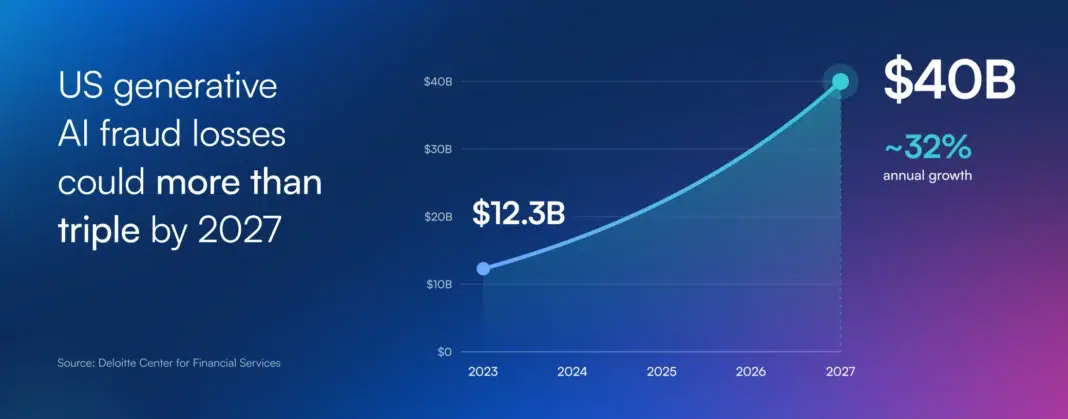
According to Deloitte’s Center for Financial Services, annual generative AI-enabled fraud losses in the United States could grow from an estimated $12.3 billion in 2023 to $40 billion by 2027.
That represents approximately 32% annual growth.
The projection reflects a fundamental change in the cost of executing fraud. Activities that once required specialized technical skills, including producing manipulated images, impersonating executives, or crafting persuasive scams, are becoming easier to automate.
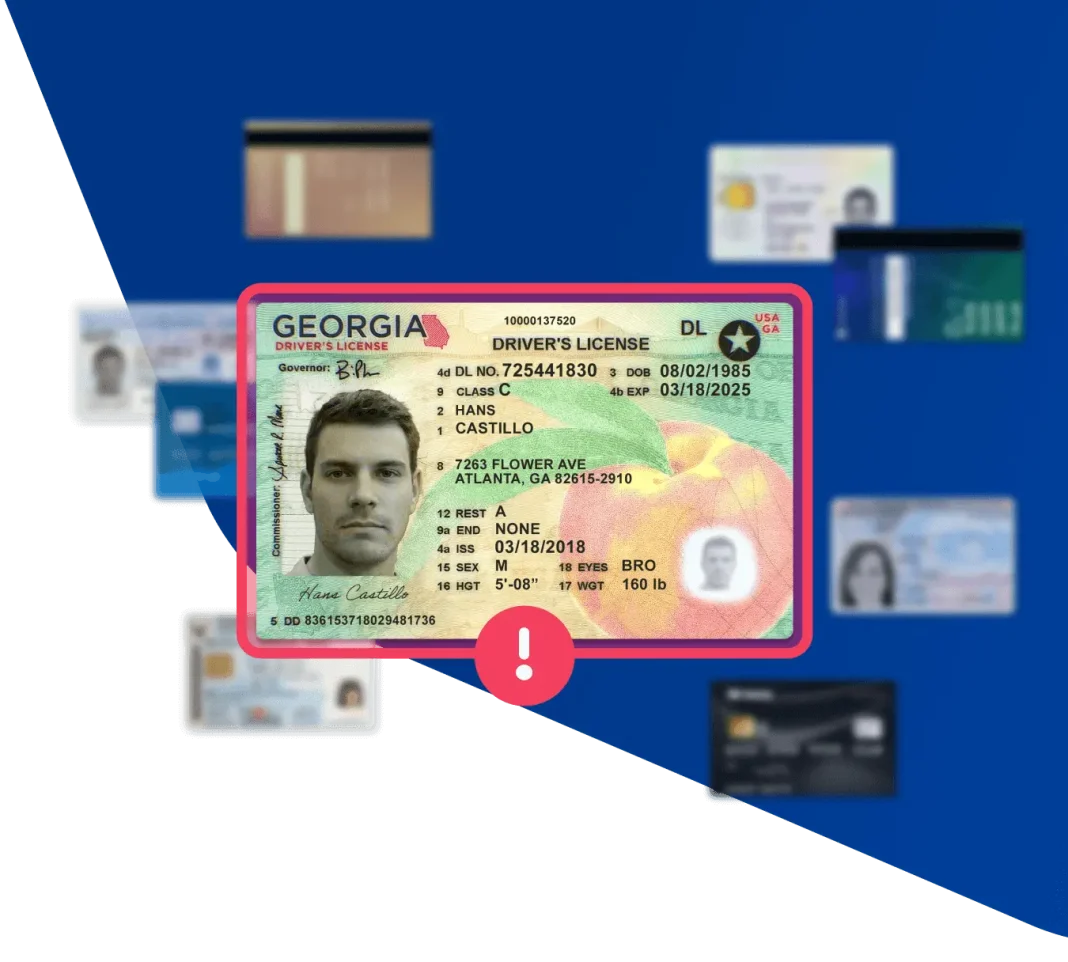
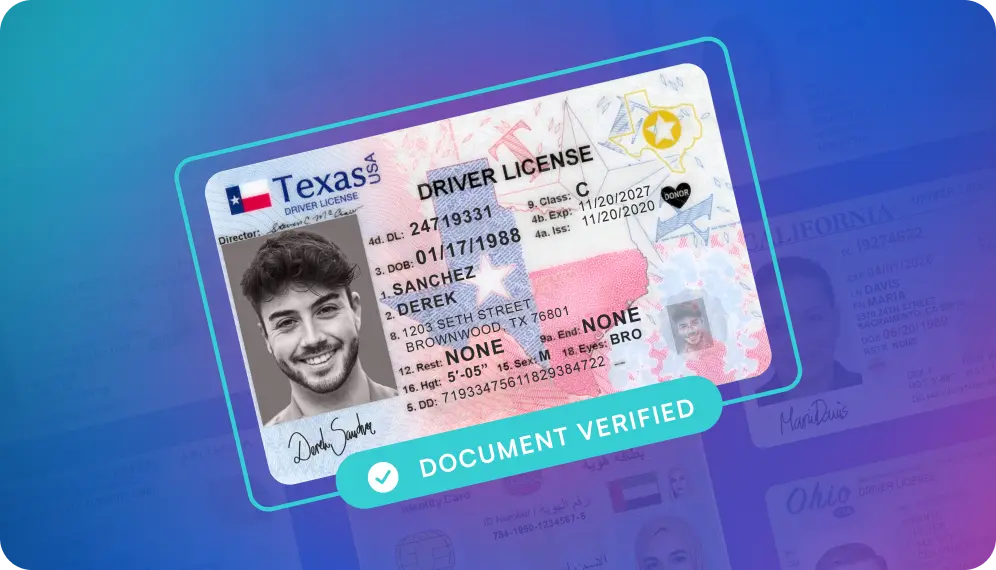
According to Microblink data, passports are the top document that fraudsters use Gen AI to alter or imitate, followed by National ID cards and driver’s licenses in second and third, respectively.
Fraudsters can generate multiple versions of fraudulent content, tailor messages to individual victims, and experiment with different approaches at relatively low cost. This doesn’t guarantee successful attacks. But it allows criminals to scale their efforts without proportionally increasing their resources.
For financial institutions and digital businesses, the concern isn’t simply that individual attacks are becoming more convincing. It’s that the volume and variety of attempted attacks may increase substantially.
FBI: AI-Related Fraud Generated $893 Million in Reported Losses
The FBI’s 2025 Internet Crime Report included a dedicated artificial intelligence section for the first time.
The agency recorded 22,364 AI-related complaints, representing approximately $893.3 million in adjusted losses.
Reported tactics included synthetic identities, manipulated videos, voice cloning, and AI-generated communications.
These numbers offer an important government-backed measure of AI’s involvement in financial crime. However, they almost certainly do not capture every AI-assisted incident.
Victims may never report fraud, and investigators may not always identify whether AI was involved. An attack that uses AI-generated phishing to steal credentials, for example, may ultimately be recorded as account takeover.
The distinction matters because AI is increasingly embedded within familiar fraud schemes rather than operating as a completely separate category.
Deepfake Impersonation Is Creating New Financial Risks
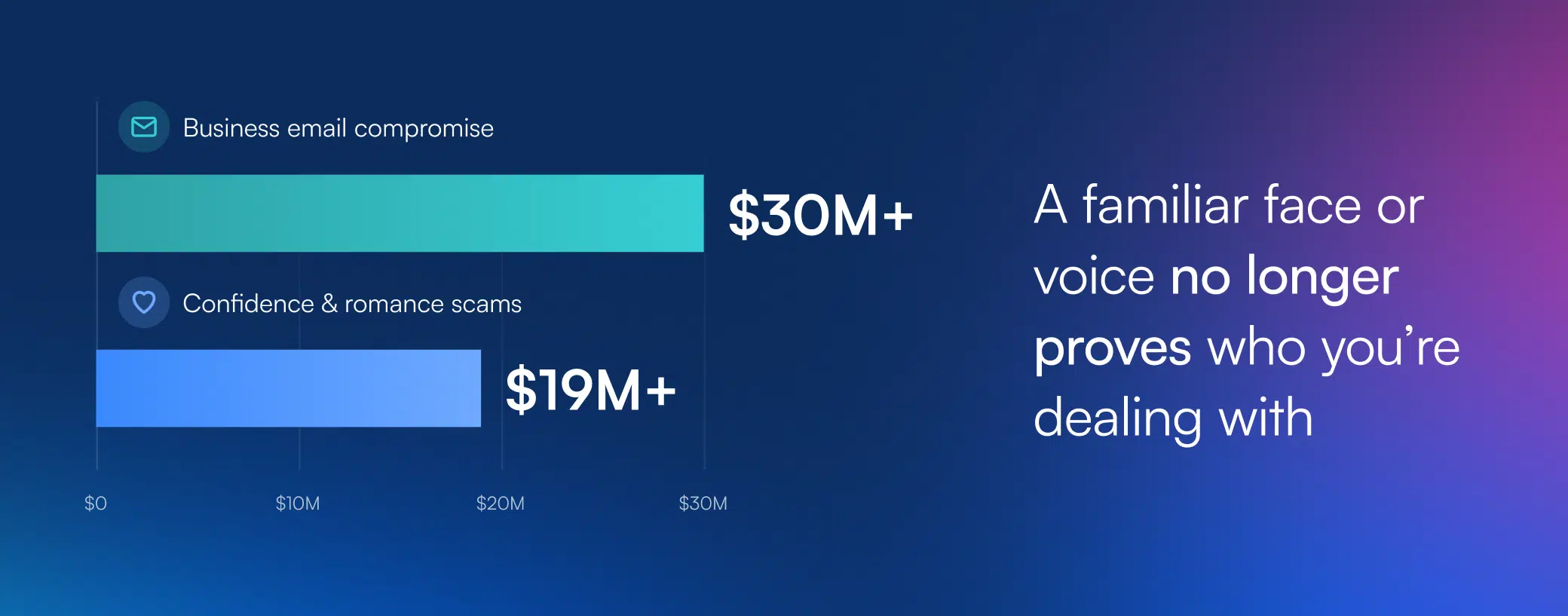
Generative AI is weakening traditional signals of identity, particularly the assumption that a recognizable face or voice belongs to the person it represents.
The FBI reported more than $30 million in losses from AI-related business email compromise in 2025. It also identified more than $19 million in confidence and romance scam losses with a likely AI connection.
A widely reported 2024 incident in Hong Kong demonstrated the potential consequences. An employee transferred approximately $25 million after participating in a video conference featuring deepfake impersonations of company personnel.
These attacks reveal an increasingly important distinction between recognizing an individual and verifying their authority.
A familiar voice may be synthetic. A video call may feature manipulated participants. A convincing message may have been generated automatically.
Businesses can no longer rely exclusively on whether a communication appears authentic. They must also establish whether the individual requesting an action is legitimate and authorized.
New-Account Fraud Victims Increased 31% in 2025
Javelin Strategy & Research’s 2026 Identity Fraud Study found that new-account fraud affected 5.4 million U.S. consumers in 2025, compared with 4.2 million in 2024. Losses reached approximately $7 billion, increasing 13% year over year. Financial services and telecom are the most targeted industries with new account fraud, according to Microblink data.
These figures encompass new-account fraud generally, not exclusively AI-enabled attacks. Nevertheless, they highlight a particularly vulnerable point in the customer lifecycle.
Generative AI can help criminals fabricate identity information, manipulate document photographs, and create synthetic biometric content intended to deceive remote onboarding systems.
The challenge becomes more complex across international markets, where document formats, security features, and capture conditions vary considerably.
Organizations must distinguish genuine documents and customers from manipulated evidence without creating unnecessary friction for legitimate users.
Government Regulators Are Warning About AI-Generated Identity Documents
In November 2024, the U.S. Treasury’s Financial Crimes Enforcement Network (FinCEN) issued an alert about fraud schemes involving deepfake media.
FinCEN identified increased suspicious activity reporting involving suspected deepfakes, particularly fraudulent identity documents used to circumvent verification and authentication controls.
This is significant because it connects generative AI directly to financial crime investigations.
An attacker might alter an identity document, replace a portrait, submit a synthetic selfie, or attempt to inject manipulated video into a verification workflow.
These methods create different detection challenges. A realistic-looking document is not necessarily authentic, and a convincing video does not establish that the footage originated from a legitimate live camera session.
Effective verification must evaluate both the authenticity of submitted evidence and the integrity of the process used to capture it.
AI-Related Vulnerabilities Are Becoming a Leading Cybersecurity Concern
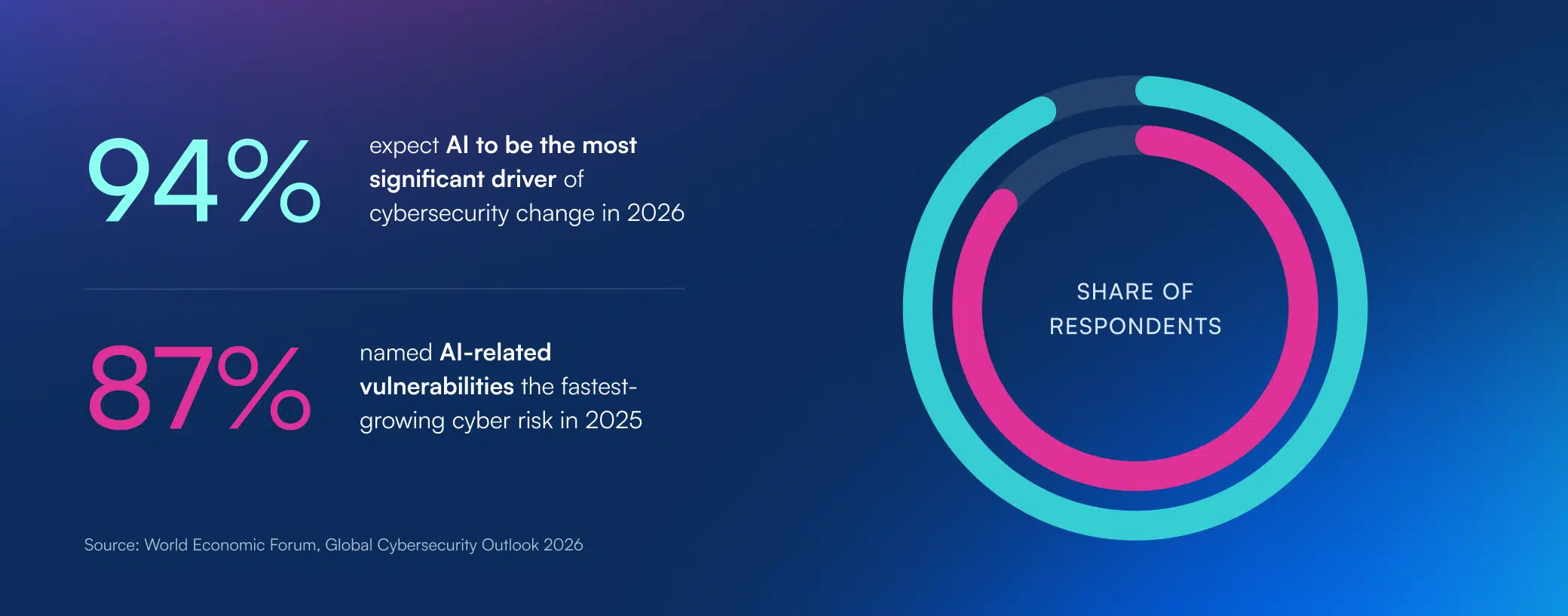
The World Economic Forum’s Global Cybersecurity Outlook 2026 found that 87% of respondents identified AI-related vulnerabilities as the fastest-growing cyber risk during 2025.
Additionally, 94% expected AI to be the most significant driver of cybersecurity change in 2026.
Organizations are responding. The proportion assessing the security of AI tools increased from 37% in 2025 to 64% in 2026.
Although these statistics encompass cybersecurity risks beyond fraud, they reflect growing recognition that AI changes both the capabilities available to attackers and the defenses organizations need.
The implications extend across banking, e-commerce, telecommunications, travel, and employment, where businesses increasingly depend on remote identity and authentication processes.
Why Generative AI Fraud Requires Continuous Identity Intelligence
The statistics reveal a common problem: fraud no longer occurs at a single, predictable point in the customer journey.
Generative AI can help criminals establish accounts, steal credentials, impersonate legitimate customers, and manipulate evidence during high-value transactions.
Passing an identity check during onboarding doesn’t guarantee that an account remains trustworthy months later.
Likewise, successful authentication doesn’t necessarily mean a subsequent action is legitimate.
Businesses need to connect identity document verification, biometrics, liveness detection, device intelligence, behavioral signals, and transaction context to evaluate risk throughout the customer relationship.
This is the principle behind Microblink’s Know Your Actor approach: understanding who or what is interacting with a business, what authority that actor has, and whether its behavior aligns with legitimate intent.
As AI agents increasingly participate in digital commerce, that distinction becomes even more important. Businesses will need to recognize legitimate automated activity while detecting unauthorized agents and fraudulent instructions.
The objective isn’t to add friction to every interaction. It’s to apply appropriate verification when risk changes.
What Generative AI Fraud Statistics Mean for 2026 and Beyond
The available evidence points to three developments.
First, AI-enabled fraud is already producing substantial reported financial losses. Second, its potential impact extends well beyond the incidents explicitly classified as AI-related. Third, generative AI is strengthening established fraud methods rather than replacing them.
The result is an environment where convincing digital evidence is no longer sufficient proof of identity or authorization.
Organizations that combine accurate verification with continuous risk assessment will be better positioned to detect sophisticated attacks while preserving legitimate customer experiences.
Frequently Asked Questions About Generative AI Fraud
How much money is lost to generative AI fraud?
The FBI recorded more than $893 million in losses associated with AI-related complaints in 2025. Deloitte separately projects annual U.S. generative AI-enabled fraud losses could reach $40 billion by 2027.
What are the most common types of generative AI fraud?
Common techniques include deepfake impersonation, voice cloning, AI-generated phishing, synthetic identities, manipulated identity documents, and fraudulent biometric submissions.
How does generative AI enable identity fraud?
Attackers can use generative AI to fabricate or manipulate identity evidence, create synthetic personas, and impersonate legitimate individuals during onboarding, authentication, or account recovery.
Can identity verification prevent AI-generated fraud?
Identity verification can help identify manipulated documents, biometric inconsistencies, and suspicious activity. However, no single control detects every attack. Combining multiple verification signals with ongoing risk assessment provides stronger protection.
Why is continuous identity verification important?
AI-enabled fraud can occur after onboarding, including during account recovery, authentication, and transactions. Continuous identity verification allows businesses to reassess trust as circumstances and risk change.