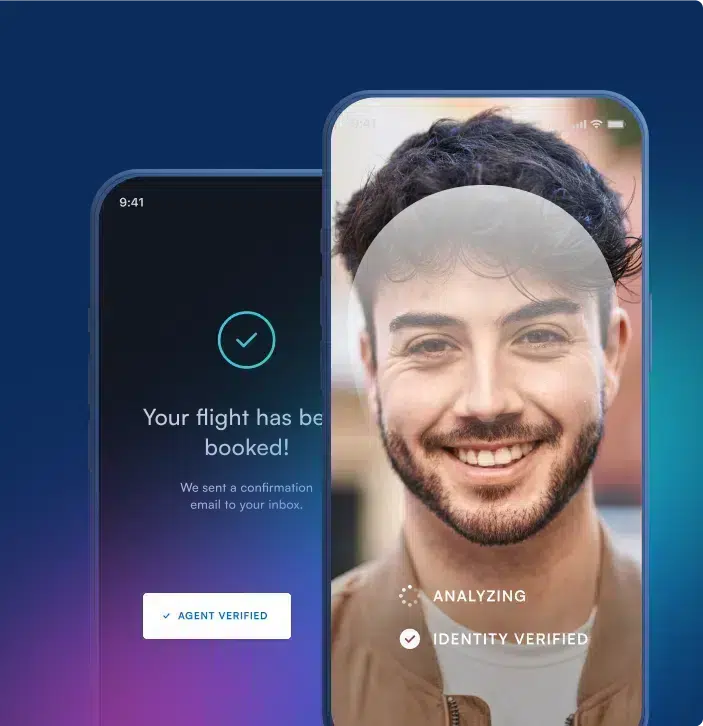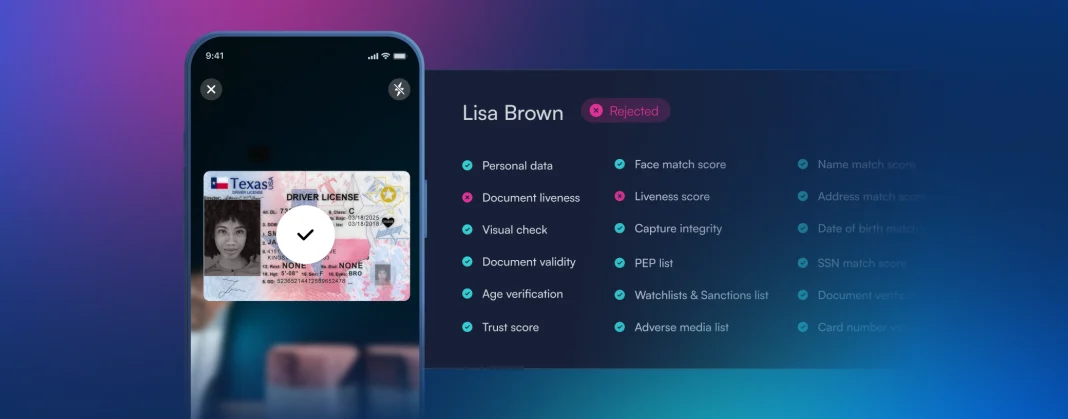

Crypto platforms verify a user base with no home market — applicants from everywhere, documents your team has never seen, and traffic that arrives in spikes rather than a steady line.
Microblink verifies identity documents from 2,500+ types in under three seconds, on-device, and holds that performance through a listing-day surge. Two of the five largest crypto exchanges already run it.








Platform Reality
A listing, an airdrop, or a sharp market move can multiply signups overnight. Verification capacity has to absorb that without a queue forming, because the users arriving in a spike are the least patient ones you will ever onboard.
Applicants arrive from everywhere, presenting documents your team has never seen, from countries with no queryable identity database. Data-based verification runs out of coverage long before your users do.
Airdrops, referral bonuses, and fee tiers make one person holding many accounts a business model rather than an edge case. Nothing in the account behaviour looks wrong, because each account is behaving exactly as designed.
Verifying at signup and never again leaves the moment that actually matters unprotected. Once funds move off-platform, there is no reversal and no chargeback to fall back on.
One Platform, Every Model
An exchange, a self-custody wallet, a DeFi front end, and an NFT marketplace face the same underlying question — is this a real, unique person who is allowed to be here — with very different tolerances for friction and very different regulatory footprints. Microblink runs on-device or through regional endpoints, so the same verification adapts to each. For the regulatory obligations specifically, see KYC verification for crypto.
High-volume onboarding with fiat on- and off-ramps, where verification has to survive listing-day surges without becoming the bottleneck.
Binding a wallet to a verified person, and re-establishing that person before recovery or a change of device hands over control of the keys.
Selective verification where regulation or treasury policy requires it, without collecting more personal data than the use case justifies.
Verifying sellers and high-value participants, where a single bad actor with many accounts does disproportionate damage to the market’s credibility.
Attack Patterns
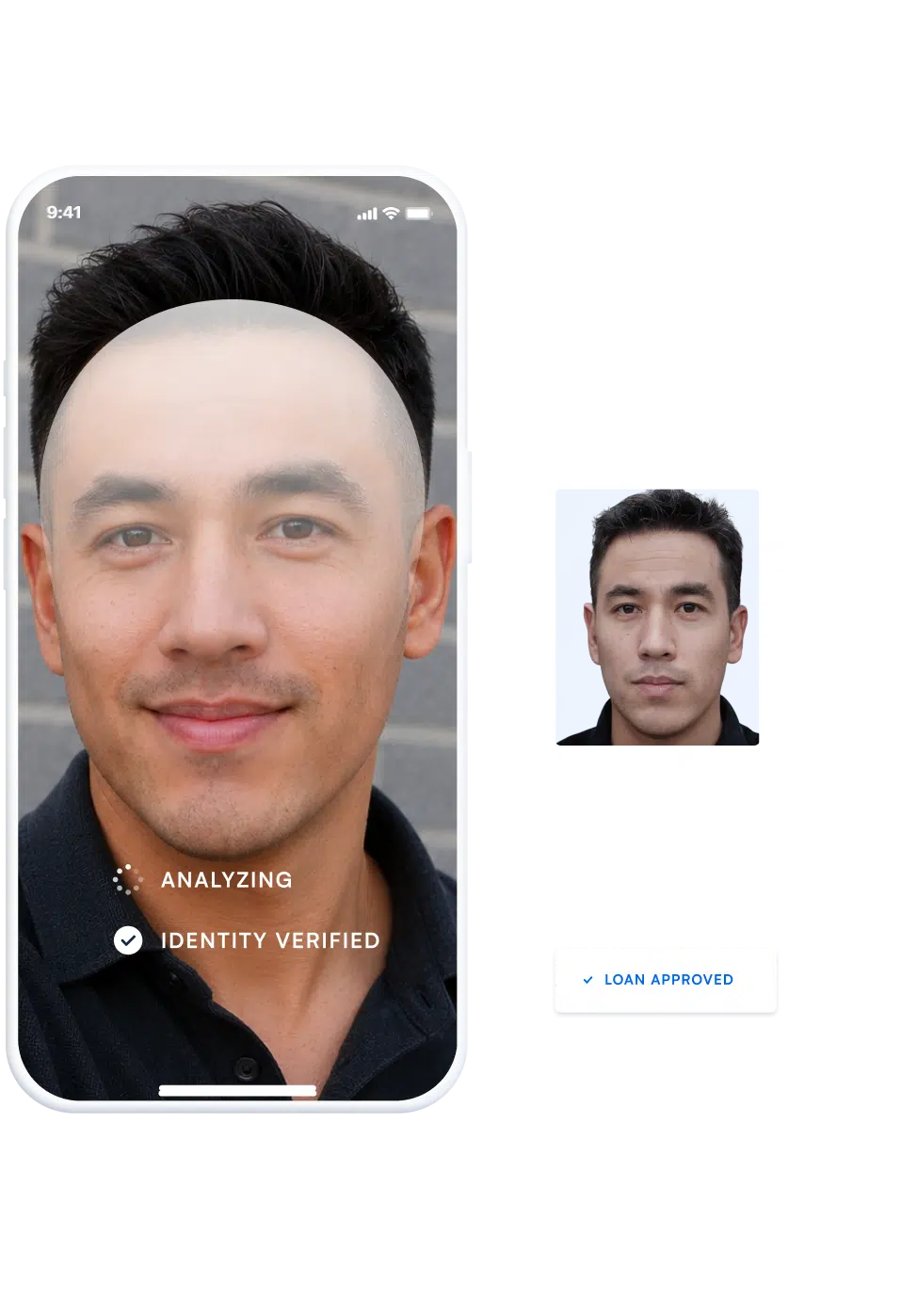
One operator running hundreds of accounts to harvest airdrops, referral rewards, and fee-tier benefits. Each account looks legitimate in isolation, so behavioural analysis rarely catches it. What exposes the pattern is the same document or the same face appearing again under different applicant details.
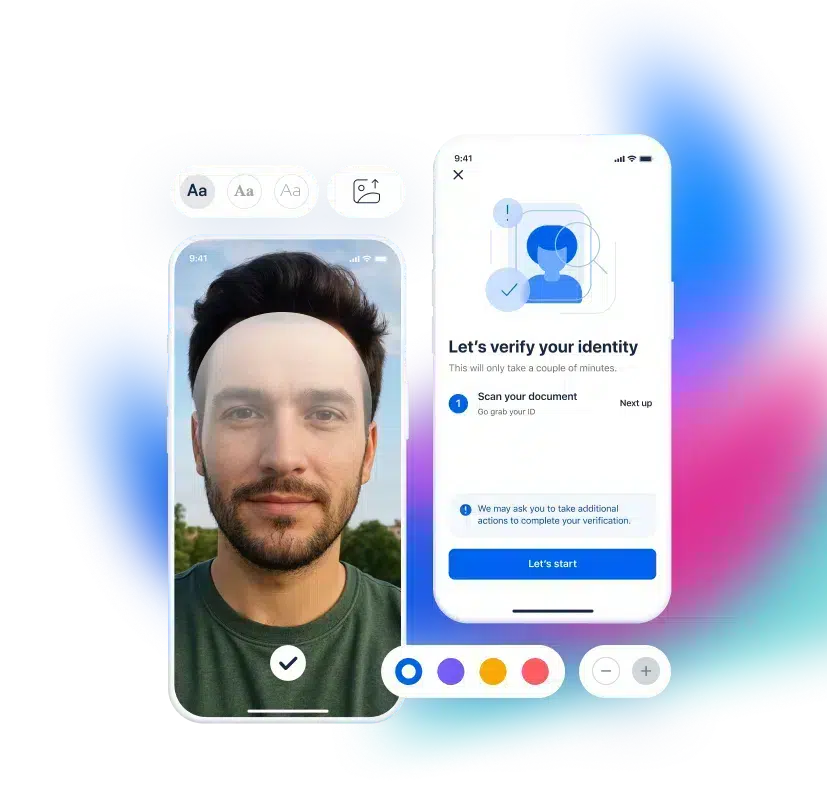
Fabricated identities and bought document templates used to open accounts that will later move other people's money. Document authenticity checks and biometric liveness are the controls that work here, because the identity data itself is often plausible enough to clear a database lookup.
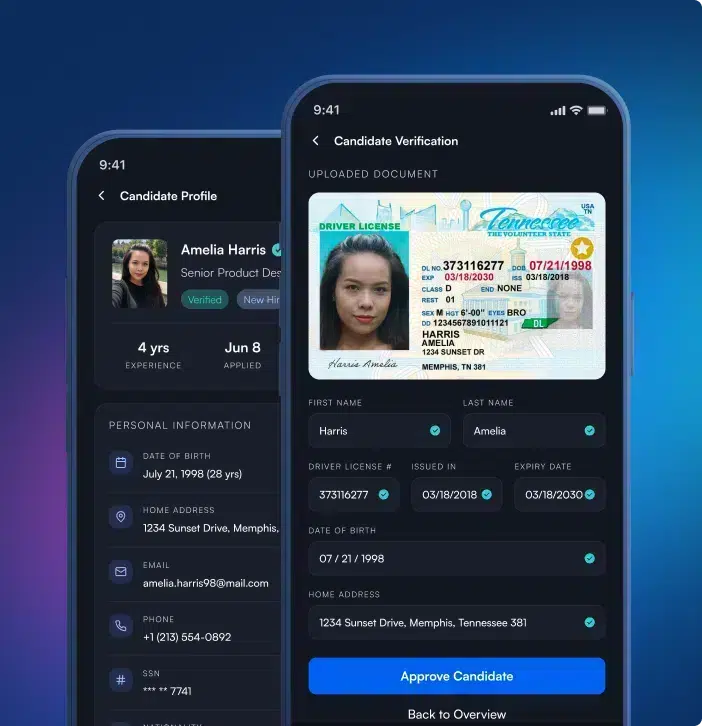
A compromised account is quiet until the moment funds leave, and a one-time passcode proves only that someone controls a phone number. Step-up verification at withdrawal, address changes, and limit increases re-establishes the actual holder at the point where a mistake is irreversible.
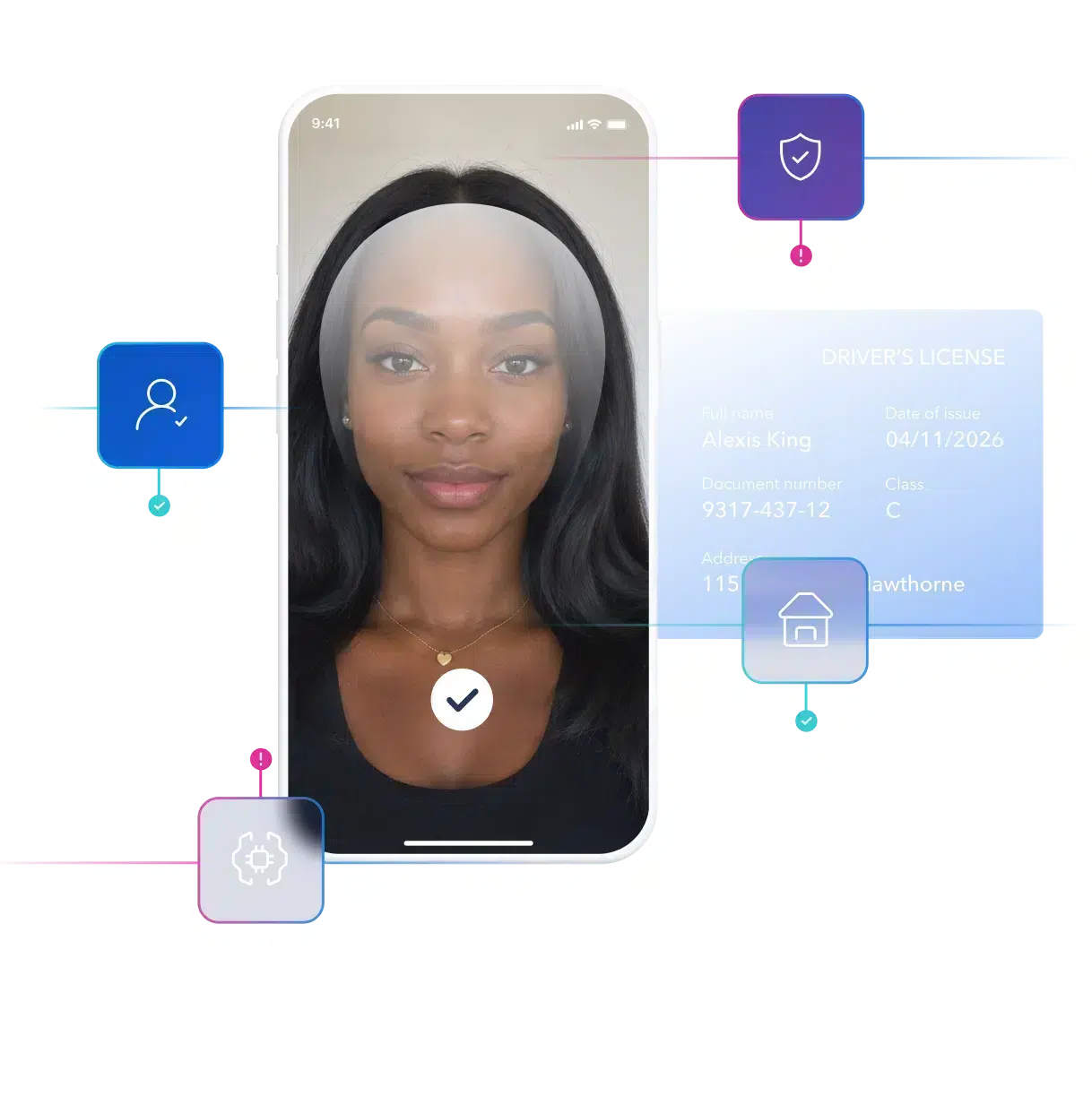
Generated faces and injected video aimed squarely at the selfie step, now cheap enough to run at volume. Microblink recorded 100% deepfake detection on the DHS-backed IDNet benchmark, and its Fraud Lab generates over 100,000 attack images a month to keep models current.
Where Verification Runs

Document authentication and biometric liveness before the account exists.

Confirming the funding instrument belongs to the verified account holder, not just that it works.

Step-up at the irreversible moment, including a card-in-hand check that proves physical possession.

Deeper verification only when a user asks for more, rather than applying it to everyone at signup.

Dormant accounts waking up, or a risk rating that has moved, checked back against the enrolled identity. See crypto KYC requirements.
Document authentication and biometric liveness before the account exists.
Confirming the funding instrument belongs to the verified account holder, not just that it works.
Step-up at the irreversible moment, including a card-in-hand check that proves physical possession.
Deeper verification only when a user asks for more, rather than applying it to everyone at signup.
Dormant accounts waking up, or a risk rating that has moved, checked back against the enrolled identity. See crypto KYC requirements.
Proven in Crypto

Adaptive capture lifted first-attempt ID capture success by 40%, which is the difference between a verification users complete and one they abandon mid-signup.

Microblink verifies identities for two of the five biggest crypto exchanges, alongside 2.9 billion identities processed across all industries in 2025.

The only vendor to meet every threshold in the U.S. Department of Homeland Security’s RIVR evaluation, with a 0.00% system error rate — results Microblink did not generate itself.
Adaptive capture lifted first-attempt ID capture success by 40%, which is the difference between a verification users complete and one they abandon mid-signup.
Microblink verifies identities for two of the five biggest crypto exchanges, alongside 2.9 billion identities processed across all industries in 2025.
The only vendor to meet every threshold in the U.S. Department of Homeland Security’s RIVR evaluation, with a 0.00% system error rate — results Microblink did not generate itself.

First Abu Dhabi Bank partners with Microblink to accelerate ID scanning during KYC verification.

Discover how Attain is transforming the consumer-permissioned future with BlinkReceipt.

Discover how BlinkID revolutionized Jurat’s user experience and contributed to their success in the digital notary industry.

Quick and accurate ID verification, ensuring a seamless and secure registration process

Meet regulatory requirements with ID document verification and non-documentary signals


Verify identity and prevent unauthorized transactions through secure document scanning

Detect stolen or synthetic identities with precision and verify IDs to prevent fraudulent account creation and transactions

Ensure compliance and prevent underage access by instantly verifying customer ages through secure ID scanning

With 12 years of expertise in computer vision R&D, Microblink has been at the forefront of AI-driven identity verification, continuously innovating to deliver fast and accurate solutions.

We pioneered AI-driven identity verification, setting the standard for fast, secure, and accurate ID scanning solutions.

We develop our AI in-house, using proprietary data and a dedicated team of machine learning specialists to ensure unmatched accuracy and performance in identity verification.
With 12 years of expertise in computer vision R&D, Microblink has been at the forefront of AI-driven identity verification, continuously innovating to deliver fast and accurate solutions.
We pioneered AI-driven identity verification, setting the standard for fast, secure, and accurate ID scanning solutions.
We develop our AI in-house, using proprietary data and a dedicated team of machine learning specialists to ensure unmatched accuracy and performance in identity verification.
Latest
The process crypto platforms use to confirm a user is a real, unique person before letting them trade, deposit, or withdraw. In practice it means authenticating a government-issued document, confirming a live person is presenting it, and matching the two — usually at signup and again at higher-risk moments.
Most jurisdictions require it of exchanges and custodial services under anti-money-laundering law. Beyond the obligation, verification is what makes airdrop farming, mule accounts, and account takeover measurably harder, all of which cost platforms directly.
Yes, and this is where document-based verification matters most. Data-based checks depend on queryable records that many markets do not have. Authenticating the physical document and matching it to a live face works regardless of whether a database exists to check against.
Behavioural analysis rarely catches it, because each account behaves plausibly on its own. What exposes the pattern is recognising the same document or the same face returning under different applicant details — a check that operates at the identity layer rather than the account layer.
Yes. Verification can run entirely on-device, so identity documents and biometric data never leave the user’s handset. Regional cloud endpoints are available where a specific jurisdiction requires processing to happen locally.
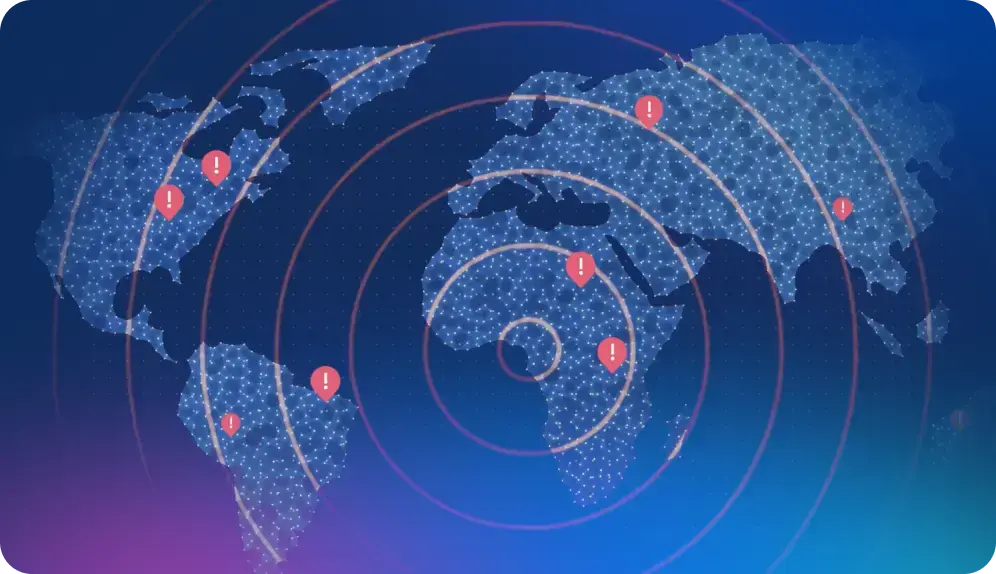
لم يقتصر دور الذكاء الاصطناعي على تسريع عمليات الاحتيال فحسب، بل جعلها نظامًا متكاملًا. فقد قمنا بتحليل ملايين التفاعلات المتعلقة بالهوية لرسم خريطة لكيفية تطور هجمات الهوية عبر المناطق وأنواع الهجمات ومستويات تعقيدها — وما يتعين على المؤسسات إعادة النظر فيه لمواكبة هذه التطورات.
اطلع على البيانات