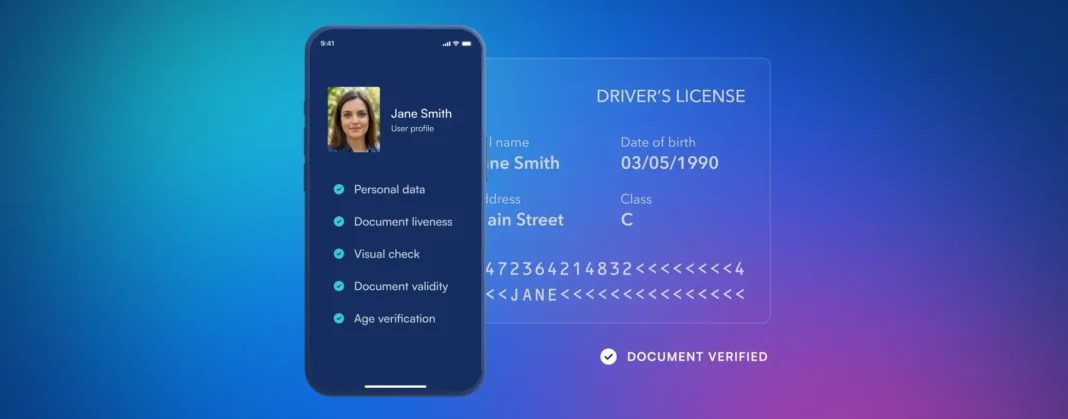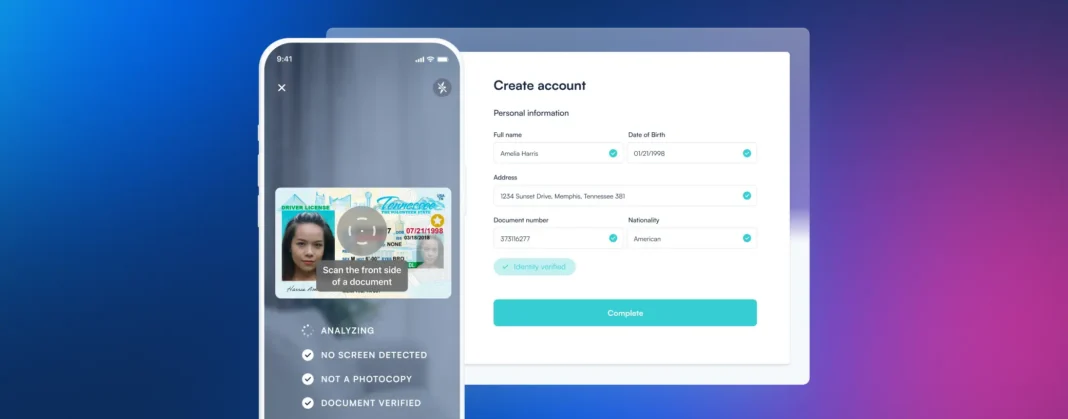

AML and KYC get bought together and described as one thing, but they are not one product. KYC establishes who a customer is. AML is the wider programme built on top of that answer — screening, monitoring, reporting.
Microblink supplies the layer everything else depends on: verified identity at onboarding, with evidence retained for every decision. When that layer is weak, screening and monitoring inherit the weakness.








Programme Reality
“AML/KYC software” describes a category, not a product. Most institutions discover mid-procurement that the layers they need — verification, screening, monitoring, case management — rarely come well-built from a single vendor.
Sanctions and PEP screening compares the name you were given against a list. If the identity behind that name was never properly established, the screen returns a clean result on a person who does not exist.
Poor identity data at onboarding produces noisier alerts downstream — mismatched records, duplicate customers, and false hits that consume the analyst capacity meant for genuine risk.
When an examiner asks why a customer was accepted, most programmes reconstruct the answer from several systems. The reconstruction itself is what turns a routine question into a finding.
Terminology
The two terms are used interchangeably in vendor marketing, which makes evaluation harder than it needs to be. They describe different obligations with different tooling, and knowing which one a given product actually addresses is the fastest way to compare quotes honestly. For the regulatory detail specifically, see our KYC regulatory compliance page.
Proving a customer is who they claim to be, at onboarding and at higher-risk moments afterwards. Document authentication, biometric verification, and identity data checks.
The wider obligation: risk rating, sanctions and PEP screening, transaction monitoring, suspicious activity reporting, record-keeping, and staff training.
Identity verification is one component of an anti-money-laundering programme — the first one, and the one every later control quietly assumes has been done properly.
Selling “AML/KYC” as a single category is commercially convenient. Asking which specific layers a product covers is what separates comparable quotes from incomparable ones.
Stack Anatomy
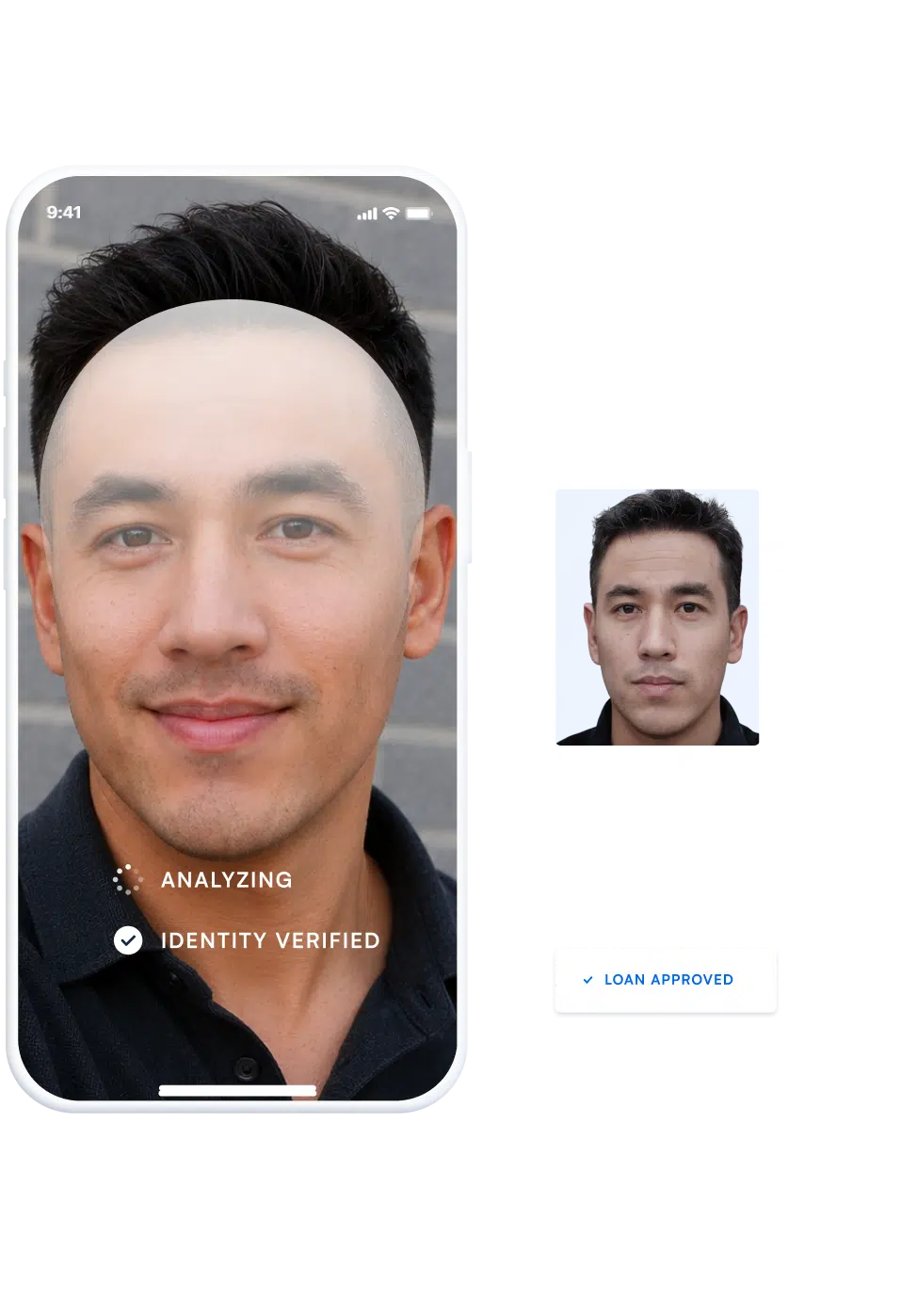
Establishing that a customer is a real, unique person before the relationship begins — document authenticity, biometric liveness, and matching the two. This is the layer Microblink provides, and it is the one that determines how reliable everything after it can be.
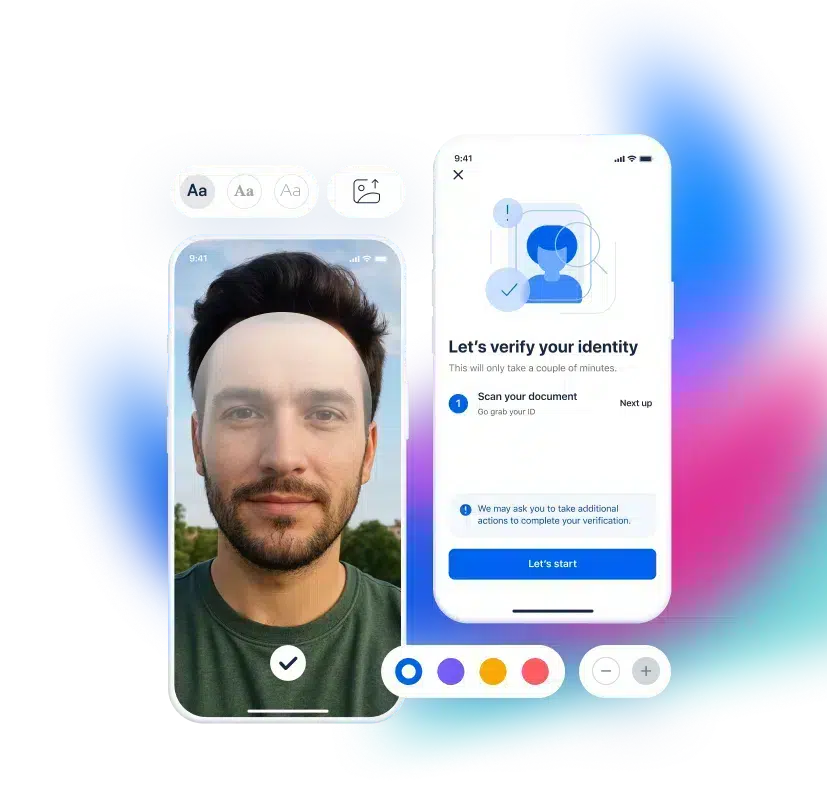
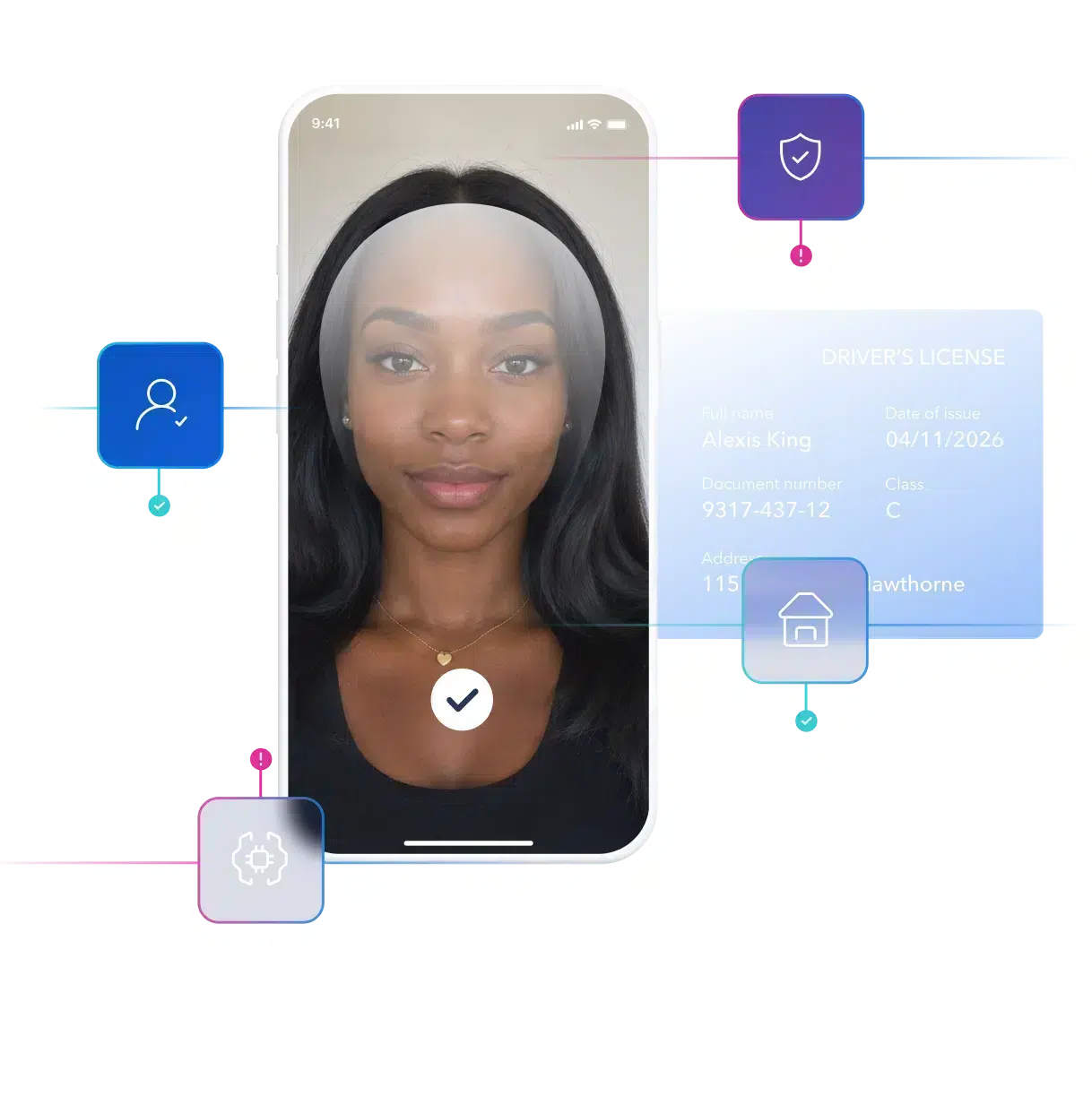
Checking the verified identity against sanctions lists, politically exposed person databases, and adverse media, then re-checking as those lists change. Microblink offers screening alongside verification, so the name being screened is one that has actually been established rather than simply submitted.
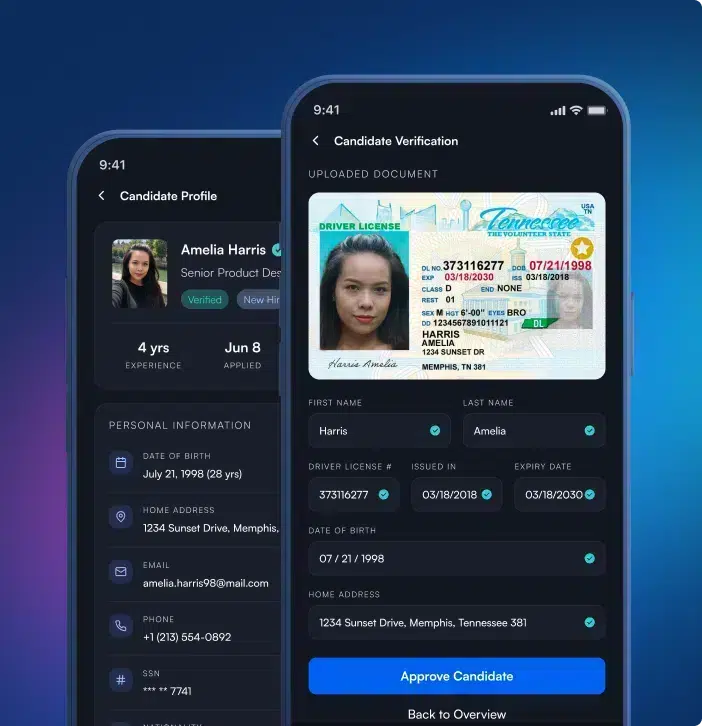
Watching account activity for patterns that suggest laundering — structuring, unusual velocity, unexpected counterparties, rapid movement through accounts. This belongs to a dedicated monitoring platform. Microblink does not provide it, and any vendor claiming both this and best-in-class capture is worth pressing on.
Investigation queues, escalation workflows, suspicious activity reporting, and the audit trail that supports them. Also a separate platform. What Microblink contributes is the evidence those cases rest on: component-level verification results retained against every decision.
What Microblink Delivers in an AML/KYC Programme

Whether the document itself is genuine — printing, fonts, and embedded features across 2,500+ types. See document fraud detection.

Liveness plus face-to-document matching, so a genuine document held by the wrong person fails. See biometric authentication.

Screening run against an identity that has been verified rather than merely asserted. See sanctions screening.

Component-level results and a transparent 0–100 Trust Score kept against every verification.

Results pass downstream to screening, monitoring, and case tools through the API.
Whether the document itself is genuine — printing, fonts, and embedded features across 2,500+ types. See document fraud detection.
Liveness plus face-to-document matching, so a genuine document held by the wrong person fails. See biometric authentication.
Screening run against an identity that has been verified rather than merely asserted. See sanctions screening.
Component-level results and a transparent 0–100 Trust Score kept against every verification.
Results pass downstream to screening, monitoring, and case tools through the API.
Why It Compounds

A sanctions check is only as meaningful as the name it screens. Verify the identity first and the screen becomes a real control rather than a procedural step.

Duplicate and mismatched customer records generate alerts that were never risk. Clean identity data at the front removes a category of noise your analysts currently absorb.

Examiners ask why a specific customer was accepted. Retained, component-level verification evidence answers that directly, without assembling it from three systems.
A sanctions check is only as meaningful as the name it screens. Verify the identity first and the screen becomes a real control rather than a procedural step.
Duplicate and mismatched customer records generate alerts that were never risk. Clean identity data at the front removes a category of noise your analysts currently absorb.
Examiners ask why a specific customer was accepted. Retained, component-level verification evidence answers that directly, without assembling it from three systems.

First Abu Dhabi Bank partners with Microblink to accelerate ID scanning during KYC verification.

Discover how Attain is transforming the consumer-permissioned future with BlinkReceipt.

Discover how BlinkID revolutionized Jurat’s user experience and contributed to their success in the digital notary industry.

Quick and accurate ID verification, ensuring a seamless and secure registration process

Meet regulatory requirements with ID document verification and non-documentary signals


Verify identity and prevent unauthorized transactions through secure document scanning

Detect stolen or synthetic identities with precision and verify IDs to prevent fraudulent account creation and transactions

Ensure compliance and prevent underage access by instantly verifying customer ages through secure ID scanning

With 12 years of expertise in computer vision R&D, Microblink has been at the forefront of AI-driven identity verification, continuously innovating to deliver fast and accurate solutions.

We pioneered AI-driven identity verification, setting the standard for fast, secure, and accurate ID scanning solutions.

We develop our AI in-house, using proprietary data and a dedicated team of machine learning specialists to ensure unmatched accuracy and performance in identity verification.
With 12 years of expertise in computer vision R&D, Microblink has been at the forefront of AI-driven identity verification, continuously innovating to deliver fast and accurate solutions.
We pioneered AI-driven identity verification, setting the standard for fast, secure, and accurate ID scanning solutions.
We develop our AI in-house, using proprietary data and a dedicated team of machine learning specialists to ensure unmatched accuracy and performance in identity verification.
Latest
Software used to meet anti-money-laundering and know-your-customer obligations. In practice it spans four layers: identity verification at onboarding, sanctions and PEP screening, transaction monitoring, and case management with reporting. Most institutions assemble these from more than one vendor.
KYC establishes who a customer is — document authentication, biometric checks, identity data. AML is the wider programme built on that answer: risk rating, screening, transaction monitoring, suspicious activity reporting, record-keeping and training. KYC is one component of AML, and it is the first one.
No. Microblink covers identity verification and screening. Transaction monitoring and case management belong to dedicated platforms. Any vendor claiming to lead in all four layers is worth pressing on, because the engineering behind document capture and behavioural monitoring is not the same discipline.
Every later control assumes the identity was correctly established. Screening compares a name against lists — if the identity behind it was never verified, a clean result is meaningless. Poor extraction also creates duplicate and mismatched records that generate alerts which were never real risk.
Each verification retains component-level results — what was captured, what each check returned, and which threshold applied — alongside a transparent Trust Score. That turns “why did you accept this customer” from a reconstruction across systems into a single lookup.

لم يقتصر دور الذكاء الاصطناعي على تسريع عمليات الاحتيال فحسب، بل جعلها نظامًا متكاملًا. فقد قمنا بتحليل ملايين التفاعلات المتعلقة بالهوية لرسم خريطة لكيفية تطور هجمات الهوية عبر المناطق وأنواع الهجمات ومستويات تعقيدها — وما يتعين على المؤسسات إعادة النظر فيه لمواكبة هذه التطورات.
اطلع على البيانات