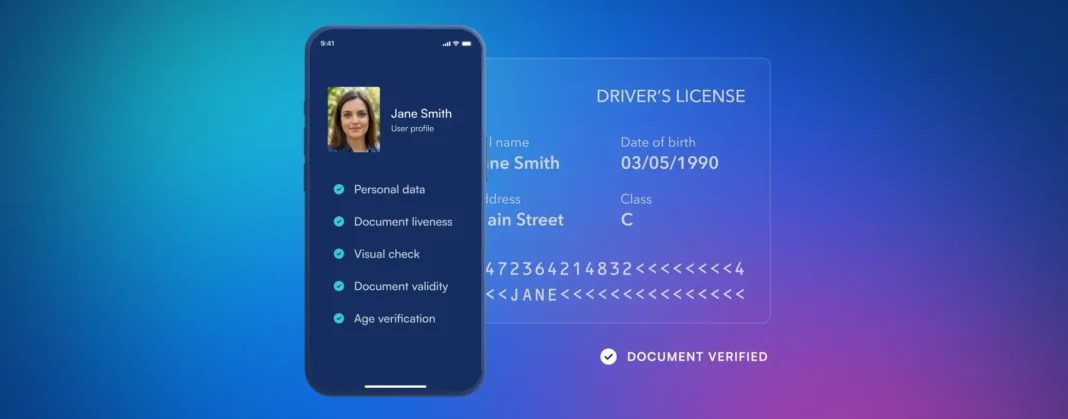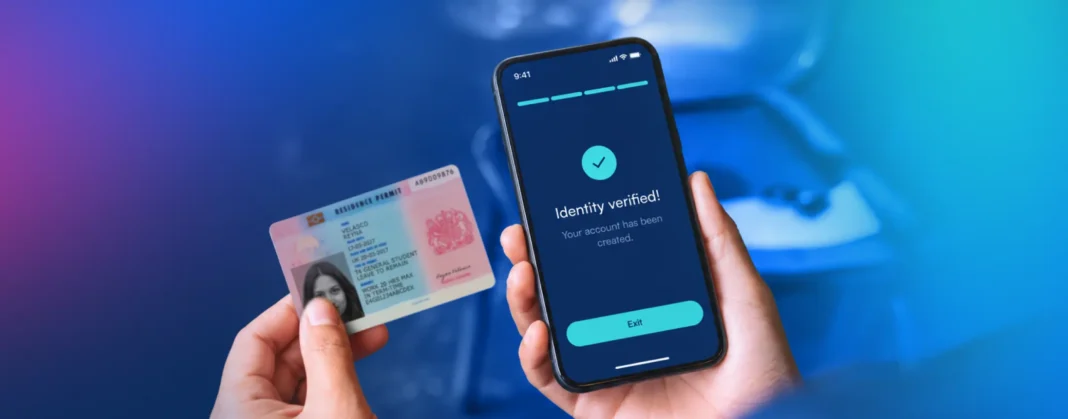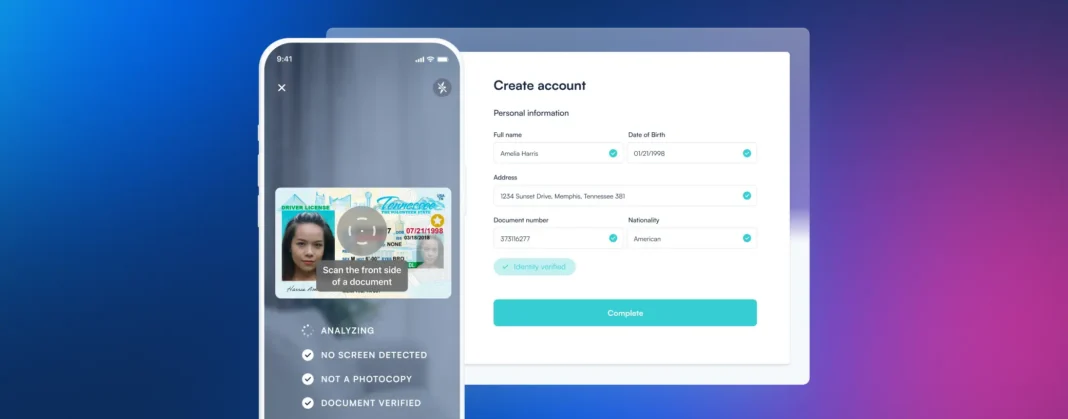

An examiner expects the same identity assurance from a phone camera that they would expect at a branch counter. Applicants expect it to take seconds. Microblink handles the identity layer of account opening—capturing and authenticating the ID, confirming a live applicant behind it, and producing the evidence your compliance team needs.
Most abandonment in digital account opening is not caused by the checks themselves. It is caused by the retakes.








The Account Opening Problem
Most applicants who quit a digital account opening do it at the ID step, after a capture fails and they are asked to try again. The abandonment is rarely a decision to stop banking with you—it is a decision to stop photographing a driving licence in poor light.
Customer Identification Program obligations do not soften because the customer is remote. The evidence standard is the same, but the capture conditions are worse and there is no colleague to check the document by hand.
Synthetic identities are assembled to pass exactly the checks most onboarding flows run. They open cleanly, behave normally, and reveal themselves only at the point of loss.
Every control added to protect the institution costs completed applications, and every control relaxed to win them adds exposure. Teams end up trading one target for the other rather than moving both.
One Platform, Every Charter
Account opening looks different at a national bank, a community credit union, and a mobile-first neobank—but the identity layer underneath is the same problem: prove a real person holds a genuine document, fast enough that they finish the application. Microblink runs on-device or through regional cloud endpoints, so the same verification works whether it sits inside a core banking platform, a digital banking vendor’s flow, or an app you built yourself.
Retail and commercial account opening with the audit trail examiners expect, across 2,500+ document types.
Member onboarding that holds its own against larger institutions, without a fraud team the size of theirs.
Mobile-first signup where every additional second measurably costs completions—and where synthetic identity pressure is heaviest.
Verifying the individuals behind an entity—signatories, beneficial owners, and authorised users—at the point they are added.
Where Verification Fits in the Account Lifecycle

Capture and authenticate the ID, match it to a live applicant, and satisfy CIP evidence in a single pass.

Confirm the funding instrument belongs to the person who just opened the account, before money moves.

Step up on transfers, wires, and limit increases—the moments where losses concentrate. See bank fraud prevention.

Bind a card to a verified holder at activation rather than relying on a one-time passcode.

Re-establish identity for password resets and account recovery without routing the member to a call centre.
Capture and authenticate the ID, match it to a live applicant, and satisfy CIP evidence in a single pass.
Confirm the funding instrument belongs to the person who just opened the account, before money moves.
Step up on transfers, wires, and limit increases—the moments where losses concentrate. See bank fraud prevention.
Bind a card to a verified holder at activation rather than relying on a one-time passcode.
Re-establish identity for password resets and account recovery without routing the member to a call centre.
Beyond Account Opening
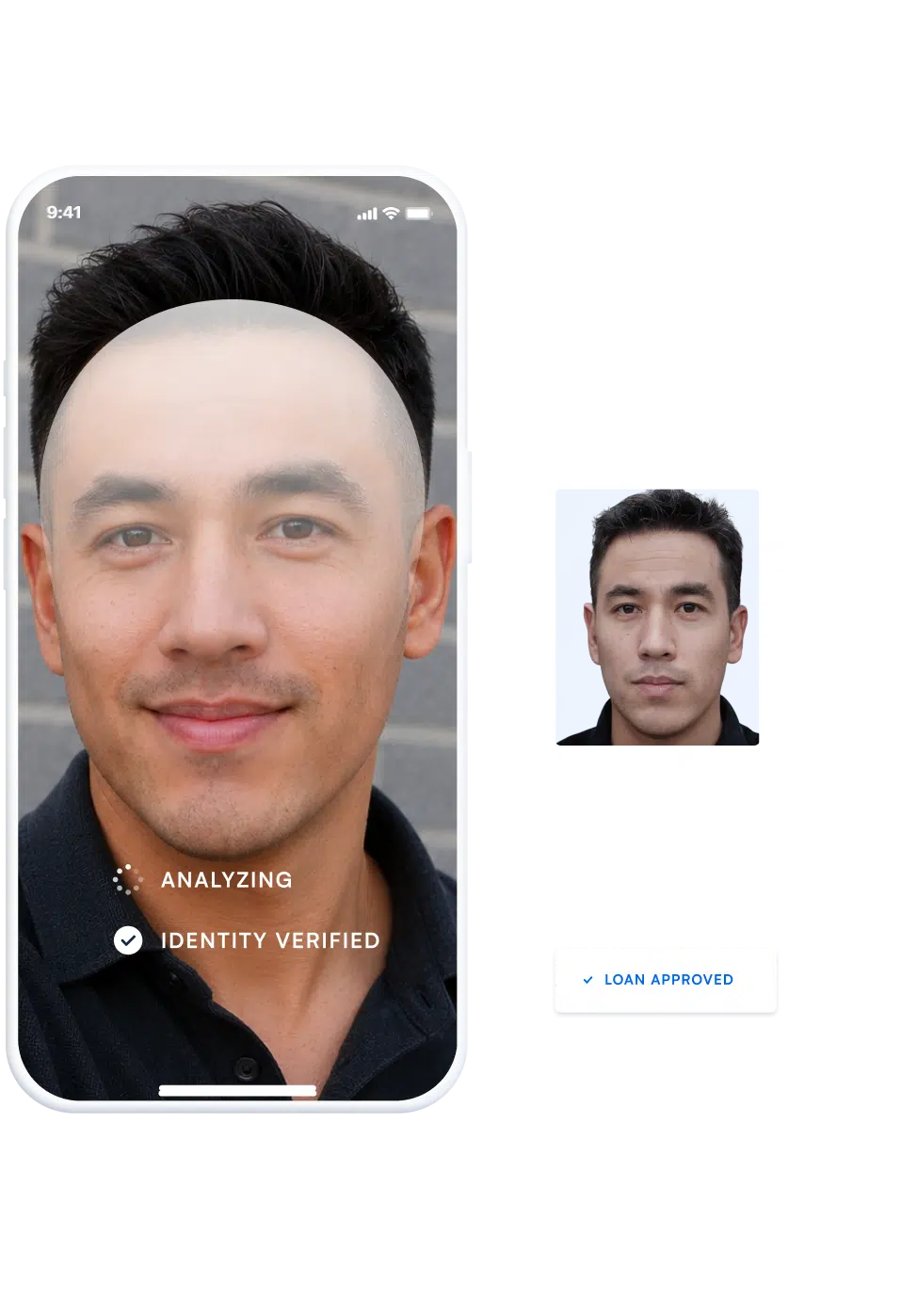
Multifactor guidance expects a possession factor—something the customer physically has. A verified payment card or identity document satisfies that without issuing hardware tokens or standing up a passkey programme. Smaller banks, credit unions, and neobanks tend to carry the widest gaps here, because token programmes were never economic at their scale.
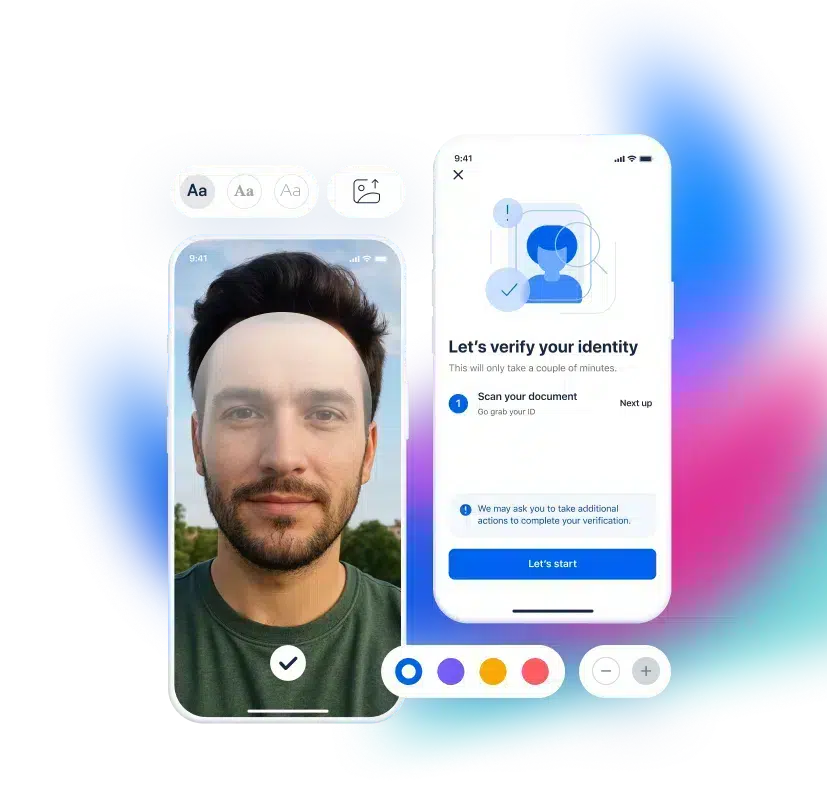
Transfers, wires, and instant payments are where losses concentrate, and a one-time passcode proves only that someone controls a phone number. Confirming the actual person at the moment of movement gives you stronger evidence in a fraud claim, and a defensible answer when a customer disputes a transfer they authorised.
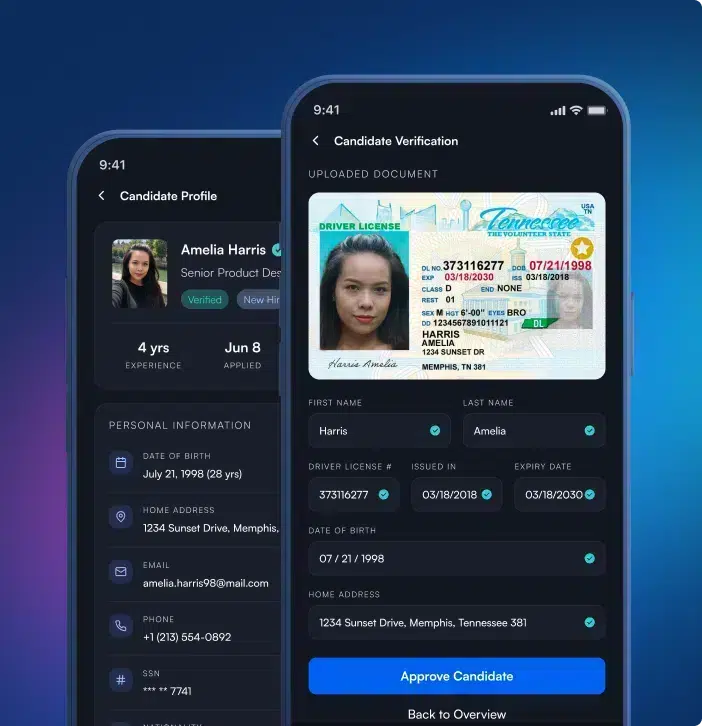
Account recovery is the softest target in most institutions: a caller who knows enough personal detail can often talk their way past a call-centre agent. Self-service identity re-verification closes that path and takes the interaction out of the queue, which is where servicing cost sits.
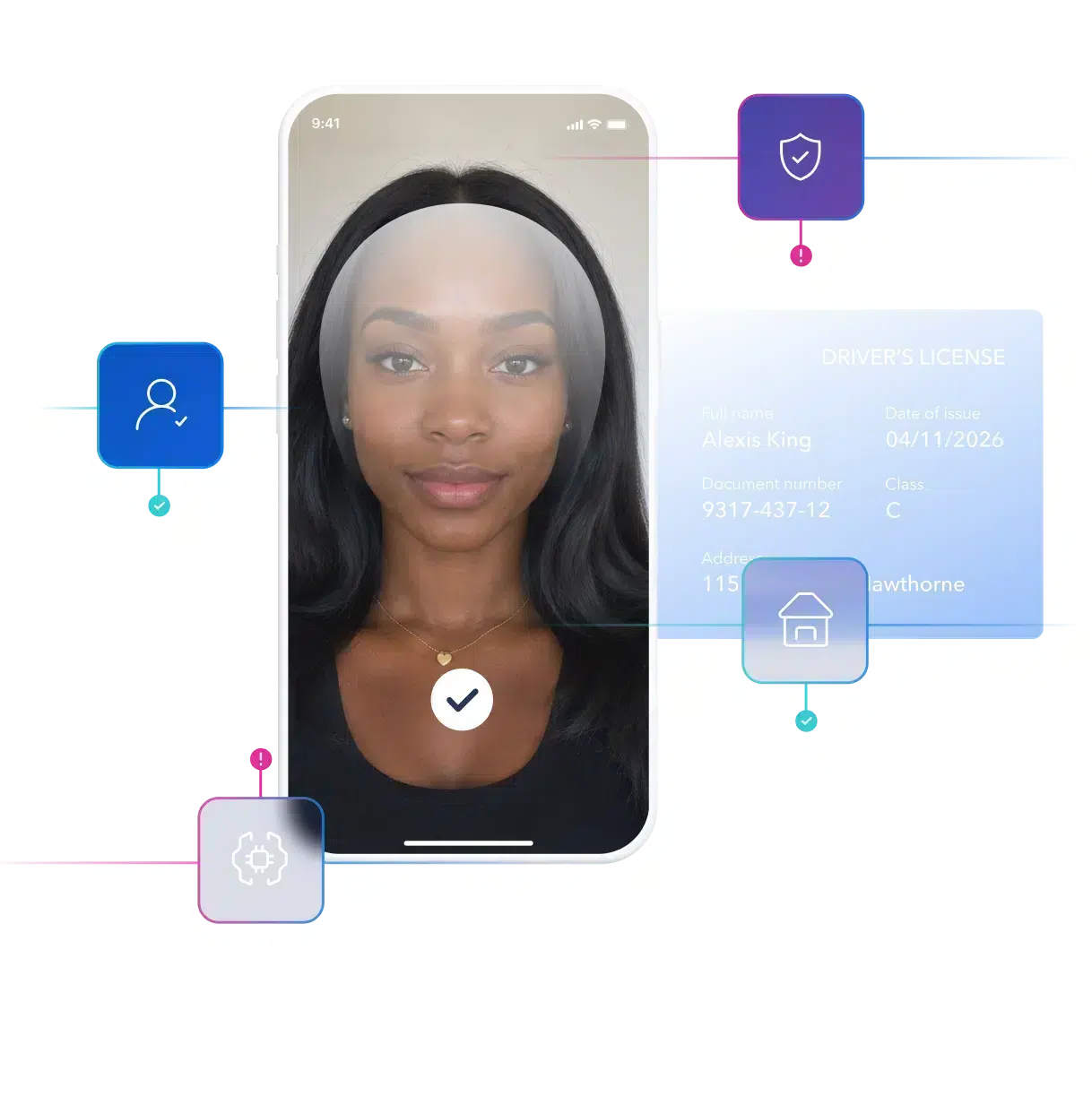
Customers are beginning to delegate banking tasks to AI agents, and an agent presenting valid credentials is indistinguishable from the customer under traditional authentication. Know Your Actor extends verification to cover whether the actor is a human, an authorised agent, or neither—and whether it is doing what the customer actually asked.
Proven in Banking

Deployed across multiple mobile applications for both account opening and loan applications, reaching a 98% verification success rate.

Partnered with Microblink to accelerate ID scanning during KYC verification, reporting smoother operations and materially better customer experience.

Alongside The Benefit Company, which rebuilt digital onboarding security on Microblink. More on the regulatory side in our KYC for banks guide.
Deployed across multiple mobile applications for both account opening and loan applications, reaching a 98% verification success rate.
Partnered with Microblink to accelerate ID scanning during KYC verification, reporting smoother operations and materially better customer experience.
Alongside The Benefit Company, which rebuilt digital onboarding security on Microblink. More on the regulatory side in our KYC for banks guide.

First Abu Dhabi Bank partners with Microblink to accelerate ID scanning during KYC verification.

Discover how Attain is transforming the consumer-permissioned future with BlinkReceipt.

Discover how BlinkID revolutionized Jurat’s user experience and contributed to their success in the digital notary industry.

Quick and accurate ID verification, ensuring a seamless and secure registration process

Meet regulatory requirements with ID document verification and non-documentary signals


Verify identity and prevent unauthorized transactions through secure document scanning

Detect stolen or synthetic identities with precision and verify IDs to prevent fraudulent account creation and transactions

Ensure compliance and prevent underage access by instantly verifying customer ages through secure ID scanning

With 12 years of expertise in computer vision R&D, Microblink has been at the forefront of AI-driven identity verification, continuously innovating to deliver fast and accurate solutions.

We pioneered AI-driven identity verification, setting the standard for fast, secure, and accurate ID scanning solutions.

We develop our AI in-house, using proprietary data and a dedicated team of machine learning specialists to ensure unmatched accuracy and performance in identity verification.
With 12 years of expertise in computer vision R&D, Microblink has been at the forefront of AI-driven identity verification, continuously innovating to deliver fast and accurate solutions.
We pioneered AI-driven identity verification, setting the standard for fast, secure, and accurate ID scanning solutions.
We develop our AI in-house, using proprietary data and a dedicated team of machine learning specialists to ensure unmatched accuracy and performance in identity verification.
Latest
Bank customer onboarding is the process of opening and activating a new account—collecting the applicant’s details, verifying their identity to Customer Identification Program standards, screening them, funding the account, and enabling access. The identity verification step is where most digital abandonment occurs.
The applicant photographs a government-issued ID and takes a selfie. The document is authenticated for security features, tampering, and signs of synthetic generation; biometric liveness confirms a real person is present; and their face is cross-matched to the document portrait. Microblink completes this in under three seconds across 2,500+ document types.
Usually at the ID capture step, after a first attempt fails and they are asked to retake the photo. That is why capture success rate matters more than the number of checks: adaptive capture lifts first-attempt success by 40%, which removes the retake loop where abandonment concentrates.
Document authentication and biometric verification support the identity-proofing element of a Customer Identification Program, and Microblink retains component-level evidence for each decision. The full program also covers customer risk rating, screening, and ongoing monitoring, so verification is one layer rather than the whole obligation.
Yes. The identity problem is the same across charters; what differs is scale and resourcing. Credit unions and neobanks often benefit most, because they face the same fraud and examination pressure as large banks without equivalent fraud teams or hardware token programmes.
Banks typically see a 20–40% reduction in onboarding abandonment rates, 50–70% faster account opening times, and improved NPS and CSAT scores after implementing modern onboarding solutions. Automated verification also reduces manual review costs and errors.

لم يقتصر دور الذكاء الاصطناعي على تسريع عمليات الاحتيال فحسب، بل جعلها نظامًا متكاملًا. فقد قمنا بتحليل ملايين التفاعلات المتعلقة بالهوية لرسم خريطة لكيفية تطور هجمات الهوية عبر المناطق وأنواع الهجمات ومستويات تعقيدها — وما يتعين على المؤسسات إعادة النظر فيه لمواكبة هذه التطورات.
اطلع على البيانات