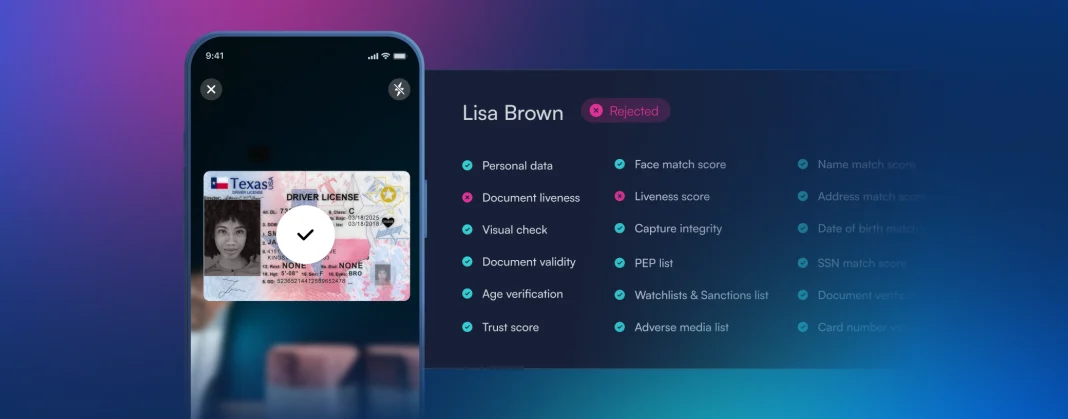

Requisitos para a integração digital no setor de serviços financeiros


In financial services, the onboarding experience is no longer just a convenience issue; it’s a compliance, fraud, and growth issue. As more institutions shift from traditional branch-based account opening to fully digital workflows, onboarding has become one of the most critical (and risky) moments in the customer lifecycle. It’s where banks must verify identities, meet strict regulatory requirements, prevent synthetic fraud, and still deliver a fast, frictionless user experience that won’t push customers away.
Done well, digital onboarding in financial services accelerates customer acquisition and improves operational efficiency. Done poorly, it increases fraud exposure, drives up false rejects, frustrates customers, and leads to audit failures or regulatory penalties. The stakes have never been higher.
This guide explores what digital onboarding really requires today, how financial institutions can reduce risk while improving customer experience, and why automated identity verification platforms like Microblink are becoming essential for modern compliance teams.
O que é integração digital em serviços financeiros?
Digital onboarding is the process of verifying, approving, and activating a new banking customer entirely online. It typically includes:
- Pre-application – Data collection, eligibility checks, explanation of requirements
- Application – Submission of personal information, documents, and account details
- Identity Verification – ID capture, biometric authentication, and fraud screening
- Regulatory Compliance – CIP, KYC, CDD, sanctions checks, and AML monitoring
- Account Activation – Approval, product selection, and initial setup
The goal mirrors traditional in-branch onboarding, but must be completed remotely, securely, and almost instantly.
Digital onboarding isn’t just a growth tool. It’s a regulatory obligation under frameworks such as:
- Bank Secrecy Act (BSA)
- FATF guidance
- AMLD6 (EU)
- FinCEN CDD Rule
- CIP/KYC/AML mandates in global markets
Compliance teams must ensure these digital onboarding requirements are met without overwhelming customers or creating bottlenecks that lead to abandonment.
The Growing Challenges of Digital Onboarding
1. Identity Verification Is Getting Harder, Not Easier
Verifying identities online has become significantly more complex due to:
- Synthetic identity fraud (now one of the fastest-growing forms of financial crime)
- Deepfake-enabled impersonation attempts
- Document fraud using AI-generated IDs
- High false-rejection rates caused by legacy verification tools
Traditional verification methods, like manual reviews, knowledge-based questions, low-quality OCR, can’t keep up with today’s threat landscape.
2. Regulatory Pressure Keeps Increasing
Compliance professionals must ensure:
- CIP requirements are met across every onboarding flow
- CDD and EDD decisions are documented and defensible
- Sanctions checks are completed in real time
- High-risk signals trigger the right workflows
Audit-ready onboarding isn’t optional—it’s expected.
3. Manual Reviews Slow Everything Down
A growing number of institutions struggle with:
- Long review queues
- Inefficient handoffs
- Repetitive document checks
- Customer drop-off due to delays
Digital onboarding must be accurate, fast, and automated.
Best Practices for Secure and Compliant Digital Onboarding
Automate Identity Verification and Reduce Manual Reviews
Digital onboarding financial services platforms increasingly rely on automated tools powered by OCR, biometrics, and machine learning. These systems:
Flag high-risk patterns automatically the digital process.
Verify identity documents in seconds
Detect tampering or AI-generated artifacts
Match faces and IDs with high accuracy
Microblink’s BlinkID Verify, for example, captures and validates identity documents using advanced AI and deep-learning models.
Reduce costly false rejects
Incorporate Multi-Layered Authentication
Modern onboarding requires more than ID checks:
- Biometrics (selfie match, liveness detection)
- Two-factor authentication (2FA)
- Device intelligence signals
- Behavioral analytics
These layers help financial institutions identify anomalies such as mismatched biometrics, repeated device fingerprints, or unusual behavioral patterns.
Strengthen Compliance With Automated KYC/AML Workflows
Compliance-focused onboarding teams benefit from:
- Automated CIP checks
- CDD/EDD workflows with configurable risk scoring
- Integrated AML monitoring
- Full audit logs and decision trails
- Sanctions and PEP screening
Automation reduces errors, inconsistencies, and regulatory exposure.
Build a Frictionless Customer Experience
Security alone isn’t enough. An overly complex onboarding process drives customers to abandon applications. Leading financial institutions now focus on:
- Simplified document submission (e.g., auto-capture, smart cropping, one-step scanning)
- Clear UI/UX cues
- Omnichannel onboarding (mobile, web, branch-assisted)
- Real-time assistance (chat, video verification)
Chime, HSBC, and Capital One all provide examples of financial institutions that have modernized onboarding with automation, biometrics, and seamless digital flows.
Traga o Microblink a bordo para uma experiência de primeira classe
Digital onboarding in financial services demands speed, accuracy, and bulletproof compliance, and today’s fraud threats make this impossible without automation.
Microblink’s identity platform delivers:
Scalable KYC/AML compliance across channels
Automated document verification
Highly accurate face matching
Deepfake- and tamper-resistant checks
Faster onboarding with fewer drop-offs
Saiba mais com nosso guia de integração digital – e agende uma demonstração para ver o que oferecemos em primeira mão.