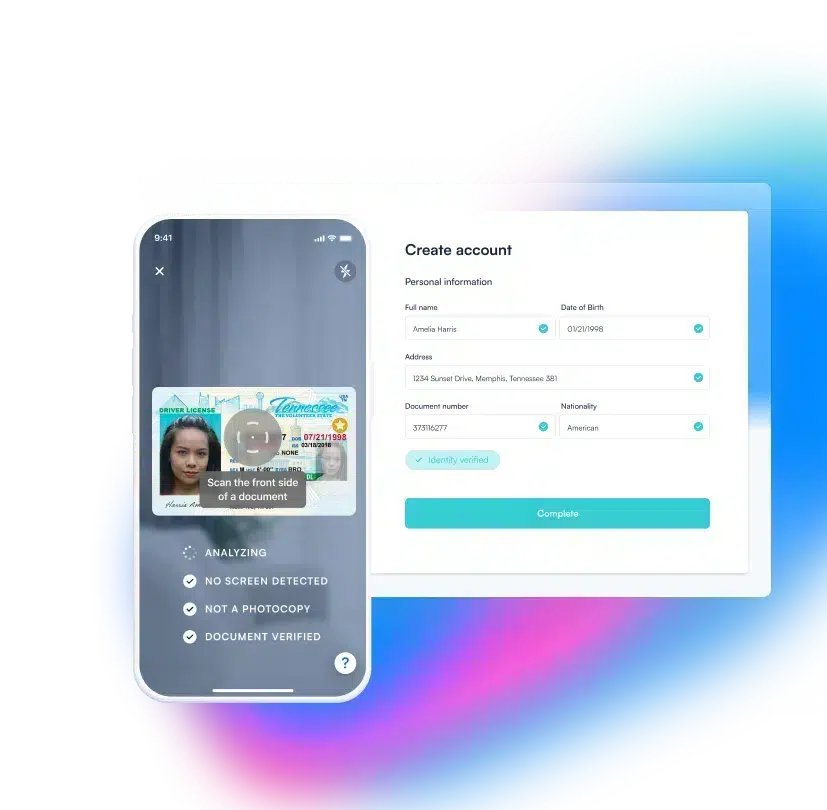
Fintechs carry a bank’s fraud exposure with a fraction of a bank’s fraud team. Most already run transaction monitoring. The gap is earlier — at signup, where synthetic identities and forged documents get through before there is any transaction to score.
Microblink covers that layer. It verifies the document and the person at account creation, so the accounts reaching your monitoring tools are ones you actually verified.








The Fintech Problem
A fintech moving real money attracts the same fraud a bank does, but usually without a dedicated fraud department to meet it. Controls have to work without a team of analysts behind them.
Transaction monitoring can only score activity that has happened. A synthetic identity that opens cleanly behaves normally for months, which is precisely what makes it expensive when it finally doesn’t.
Fintechs live on signup conversion. Every control added at onboarding gets measured against activation rates, so anything that adds a step has to justify itself twice.
Most fintech fraud stacks were built vendor by vendor as problems appeared. The result is overlapping tools with a gap in the middle, and nobody entirely certain which layer owns which decision.
Honest Scope
Fintech fraud prevention is not one product. It is three or four layers doing different jobs, and vendors who claim all of them rarely do any of them well. Microblink owns one layer deliberately — the identity check at account creation — and is built to hand off cleanly to the tools that own the rest. If you are still comparing vendors across the whole stack, our fintech fraud prevention tools roundup covers the wider market.
Authenticate the document, confirm a live person holds it, and match the two before an account exists.
Scoring payments, velocity, and behavioural anomalies after the account is open belongs to a monitoring platform. We feed it verified identities rather than replacing it.
Queues, investigations, and SAR workflows live in your fraud ops or AML platform. We supply the evidence those reviews depend on.
Verification results, component-level checks, and a Trust Score pass downstream through the API, so later layers inherit what was already established.
What Gets Caught at Account Creation

Fabricated identities assembled from real and invented data. See synthetic identity detection.

Purchased templates, edited fields, and photocopies presented as originals.

Generated faces and injected video that defeat basic liveness checks.

Someone using a legitimate ID belonging to another person. Data checks pass; face matching does not.

The same person or document returning under new details to open accounts at volume.
Fabricated identities assembled from real and invented data. See synthetic identity detection.
Purchased templates, edited fields, and photocopies presented as originals.
Generated faces and injected video that defeat basic liveness checks.
Someone using a legitimate ID belonging to another person. Data checks pass; face matching does not.
The same person or document returning under new details to open accounts at volume.
Attack Patterns
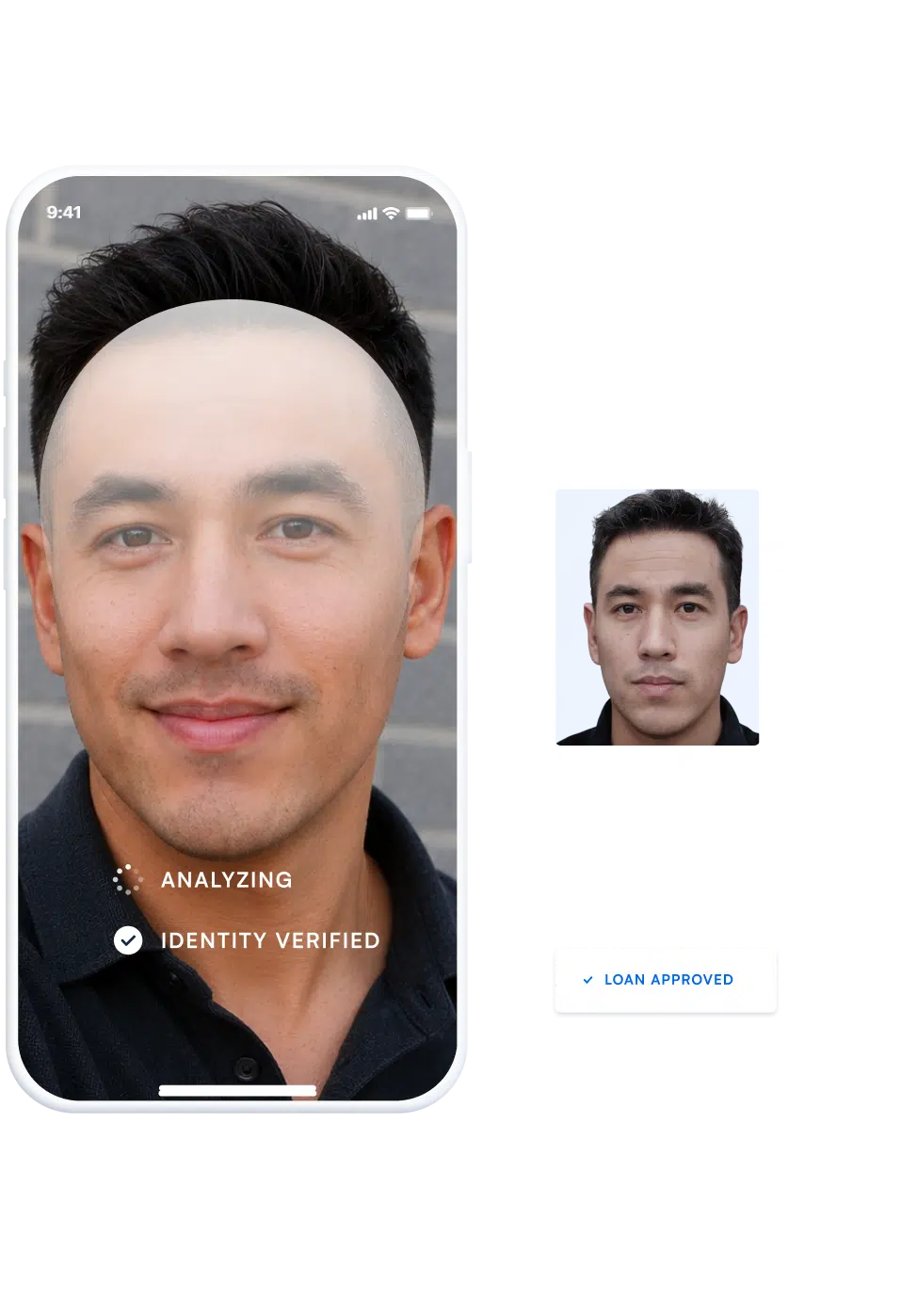
A fabricated person built from a mix of real and invented details, often nurtured for months before it is used. Because the identity has no victim to report it, nothing flags until the loss. Catching it means testing whether the document is genuine and whether a real person is presenting it — at the point of application, not afterwards.
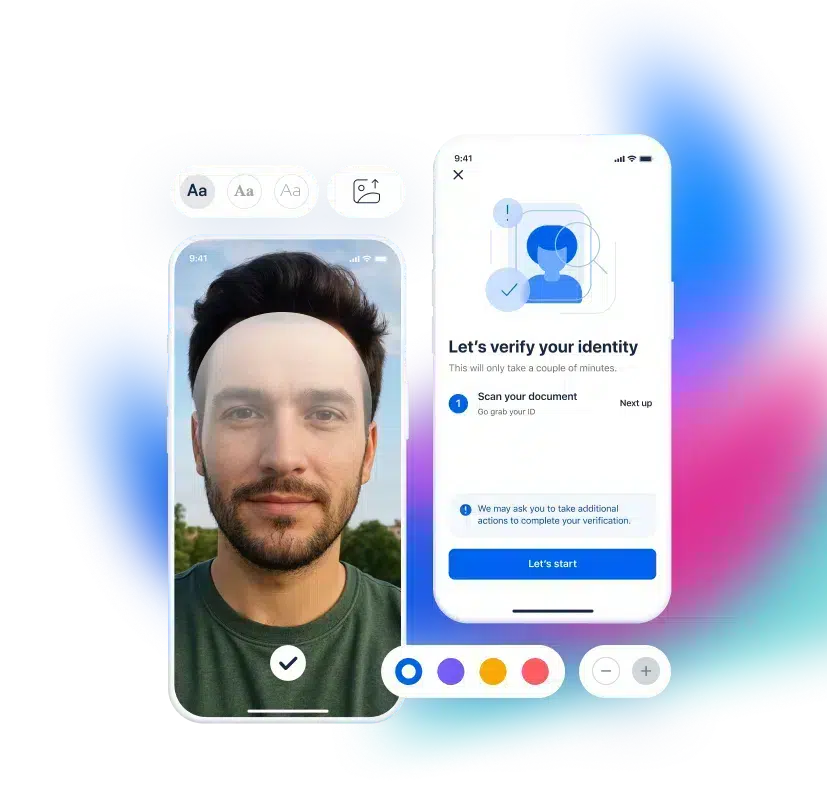
Real credentials obtained through breach or phishing, used to open an account in someone else's name. Data checks pass because the data is genuine. What fails is the person: face-to-document matching and liveness are what separate the holder from whoever bought their details.
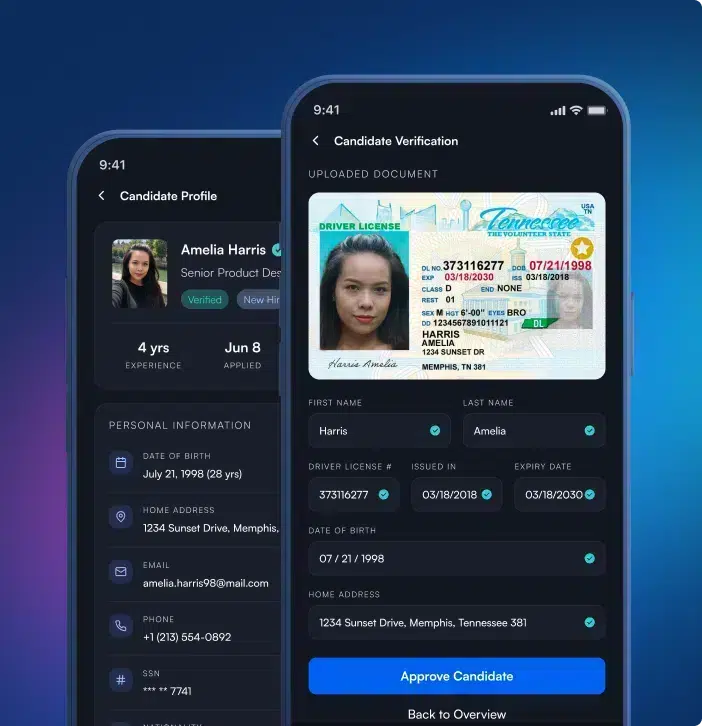
One person opening many accounts to farm signup incentives, referral bonuses, or trading limits. It rarely registers as fraud in a monitoring tool because each account behaves plausibly. Recognising the same document or face returning under new details is what makes it visible.
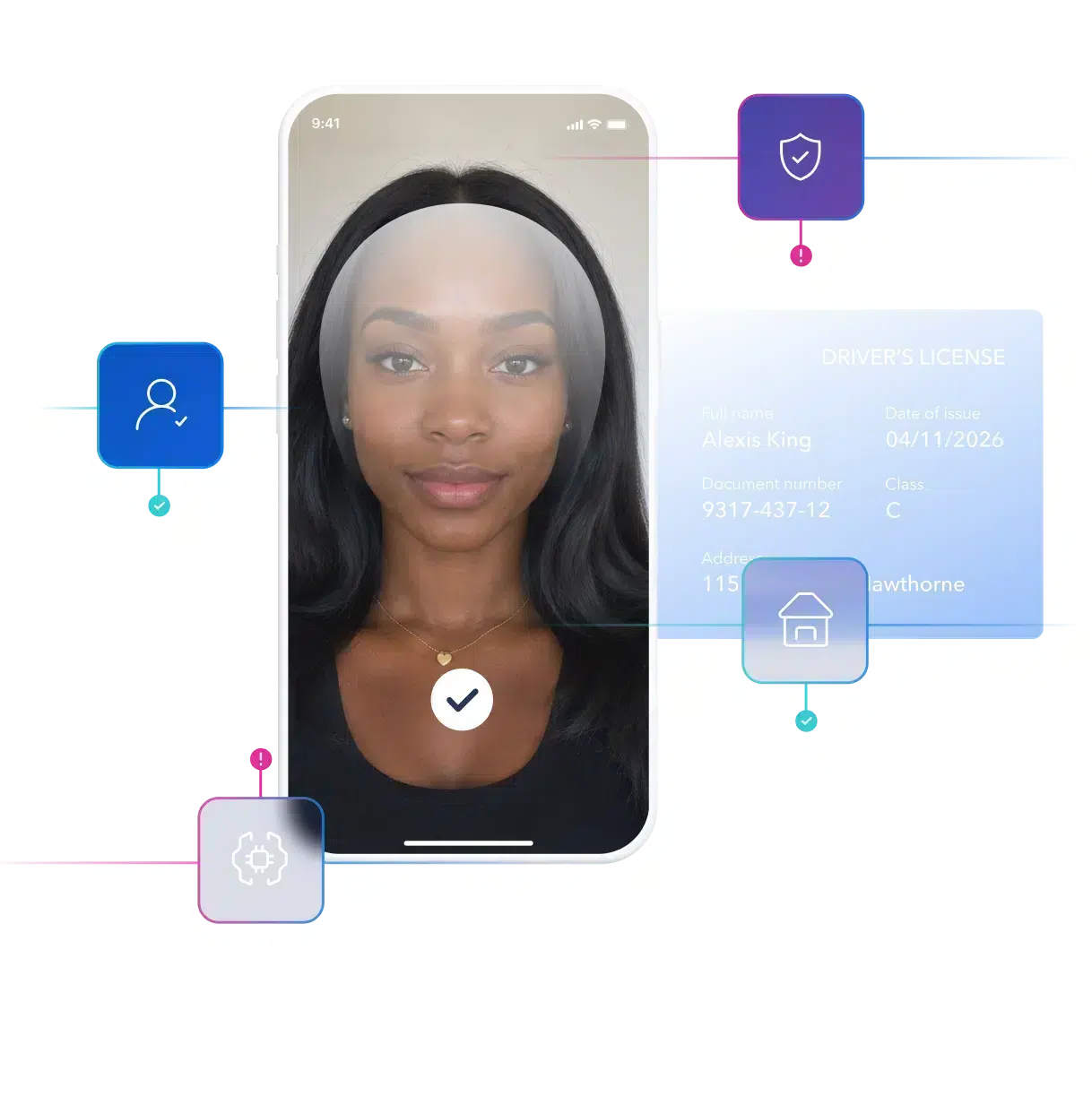
Accounts opened by real, verified people who then hand over access — sometimes knowingly, sometimes after being recruited. Identity verification at onboarding will not catch every case, but it does establish who actually opened the account, which is the evidence any later investigation depends on.
Fit

Thresholds and workflows are configuration, not a staffing model. Routine decisions resolve without a queue, which is the only way controls hold up on a small team.

Public documentation, a sandbox, and SDKs from 2.5MB mean a working integration is an engineering afternoon rather than a procurement quarter.

Verification stays consistent through growth spurts and launch surges, when manual review capacity is exactly what a fintech does not have spare.
Thresholds and workflows are configuration, not a staffing model. Routine decisions resolve without a queue, which is the only way controls hold up on a small team.
Public documentation, a sandbox, and SDKs from 2.5MB mean a working integration is an engineering afternoon rather than a procurement quarter.
Verification stays consistent through growth spurts and launch surges, when manual review capacity is exactly what a fintech does not have spare.

First Abu Dhabi Bank partners with Microblink to accelerate ID scanning during KYC verification.

Discover how Attain is transforming the consumer-permissioned future with BlinkReceipt.

Discover how BlinkID revolutionized Jurat’s user experience and contributed to their success in the digital notary industry.

Quick and accurate ID verification, ensuring a seamless and secure registration process

Meet regulatory requirements with ID document verification and non-documentary signals


Verify identity and prevent unauthorized transactions through secure document scanning

Detect stolen or synthetic identities with precision and verify IDs to prevent fraudulent account creation and transactions

Ensure compliance and prevent underage access by instantly verifying customer ages through secure ID scanning

With 12 years of expertise in computer vision R&D, Microblink has been at the forefront of AI-driven identity verification, continuously innovating to deliver fast and accurate solutions.

We pioneered AI-driven identity verification, setting the standard for fast, secure, and accurate ID scanning solutions.

We develop our AI in-house, using proprietary data and a dedicated team of machine learning specialists to ensure unmatched accuracy and performance in identity verification.
With 12 years of expertise in computer vision R&D, Microblink has been at the forefront of AI-driven identity verification, continuously innovating to deliver fast and accurate solutions.
We pioneered AI-driven identity verification, setting the standard for fast, secure, and accurate ID scanning solutions.
We develop our AI in-house, using proprietary data and a dedicated team of machine learning specialists to ensure unmatched accuracy and performance in identity verification.
Latest
Software that detects and blocks fraud against fintech platforms, spanning several distinct layers: identity verification at account opening, transaction monitoring after the account is live, and case management for investigations. Most fintechs assemble these from more than one vendor rather than buying a single platform.
No. Microblink covers the identity layer — verifying the document and the person at account creation. Transaction scoring, velocity checks, and behavioural monitoring after the account opens belong to a monitoring platform. The two are complementary: verified identities make everything downstream more reliable.
Synthetic identities, forged and altered documents, deepfaked or borrowed selfies, genuine documents presented by someone other than the holder, and repeat applicants opening accounts at volume. It will not stop fraud committed by a legitimately verified user, which is what transaction monitoring is for.
The check itself is rarely the friction — failed captures are. Adaptive capture lifts first-attempt success by 40%, and verification completes in under three seconds with passive liveness, so most users experience it as taking a photo rather than as a verification step.
SDKs start at 2.5MB with a documented REST API and a public sandbox, so a working proof of concept is typically same-day. Most of the real integration effort goes into deciding how you handle the cases that need review, not into the happy path.
Ask for results the vendor did not generate. In the U.S. Department of Homeland Security’s RIVR evaluation, Microblink was the only system to meet every performance threshold, including a 0.00% system error rate — and it scored 100% deepfake detection on the DHS-backed IDNet benchmark.
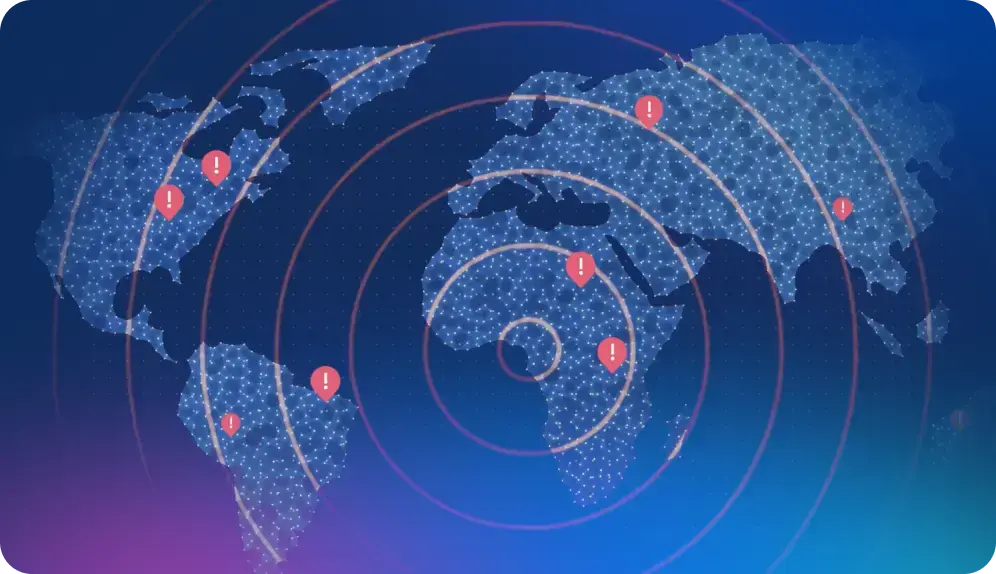
L'IA n'a pas seulement accéléré la fraude. Elle en a fait un véritable système. Nous avons analysé des millions d'interactions liées à l'identité afin de cartographier l'évolution des attaques d'usurpation d'identité selon les régions, les types d'attaques et les niveaux de sophistication — et d'identifier ce que les organisations doivent repenser pour rester dans la course.
Consultez les données